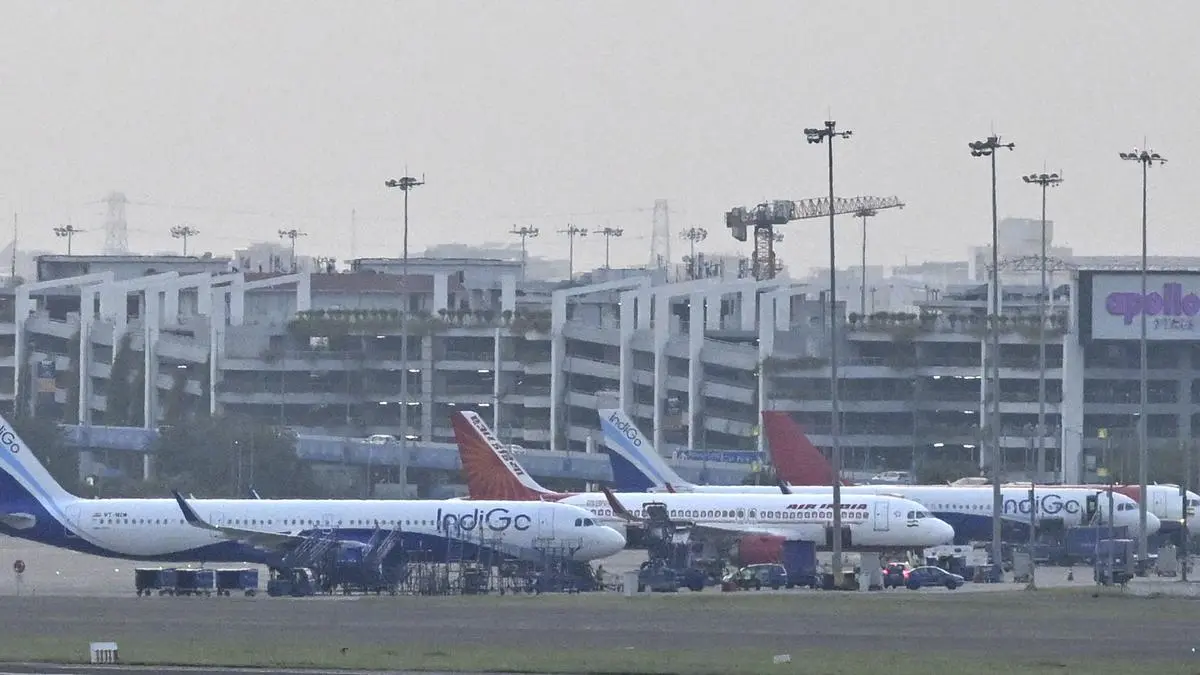
Delhi IGI Airport unveils cargo city plan to strengthen logistics infrastructure
Delhi’s Indira Gandhi International (IGI) Airport is set to become home to the country’s first-ever Cargo City and Special Economic Zone (SEZ), in a landmark move to catapult India’s global trade ambitions and cut rising logistics costs, — a bold infrastructure step designed to turn the capital’s airport into a pan-Asian logistics powerhouse.
Announced by Delhi International Airport Ltd. (DIAL), the “Cargo City” project will span 50 acres and integrate general and express warehousing, cold chain infrastructure, bonded storage, office complexes, and dedicated e-commerce zones — all wrapped within a SEZ framework offering duty-free imports and fiscal incentives to logistics and export players. The project will be developed in phased stages, with the first phase slated for completion by Q1 of FY2028. At its core, the Cargo City reflects a shift in India’s infrastructure priorities — from just building to enabling. It’s not just about more cargo, but smarter cargo. Faster turnarounds. Lower costs. Global-grade efficiency.
According to DIAL officials, this project is not just an infrastructure upgrade — it’s a systemic pivot. The airport’s vision is to integrate passenger and cargo ecosystems, mirroring global logistics hubs like Dubai and Singapore. By locating cargo operations directly at the airport, India aims to drastically reduce first-mile and last-mile costs, long seen as the weakest links in the country’s trade supply chain. If executed successfully, the project could directly support India’s ‘Make in India’ ambitions by enhancing the global competitiveness of Indian exports. The logistics cost-to-GDP ratio, currently hovering between 14–18%, may finally inch closer to single digits — a national goal.
DIAL has already built Tier-1 cargo capacity of 1.8 million tonnes per annum, with Tier-2 infrastructure expanding by another 0.5 million square feet. The Cargo City is expected to add further bandwidth, while introducing a new wave of modern infrastructure designed to global compliance standards. Planned under the SEZ Act of 2005, the project will allow companies operating within its zone to enjoy duty exemptions, simplified customs processes, and faster regulatory clearances — crucial for time-sensitive industries such as pharma, perishables, electronics, and high-value exports.
But it’s not just the government or the big exporters who stand to gain. The downstream impact of this project could redefine job creation, MSME participation in exports, and urban logistics integration in the NCR region. For small traders and freight-forwarders, this means more access, less friction.
This is, without exaggeration, India’s boldest logistics pivot at an airport, and possibly a template for replication across major urban centers — especially Mumbai, Bengaluru, and Hyderabad. The Cargo City project underscores a simple truth: India is no longer content playing catch-up in global logistics. It’s designing the runway for a future where infrastructure is not the bottleneck, but the launchpad.