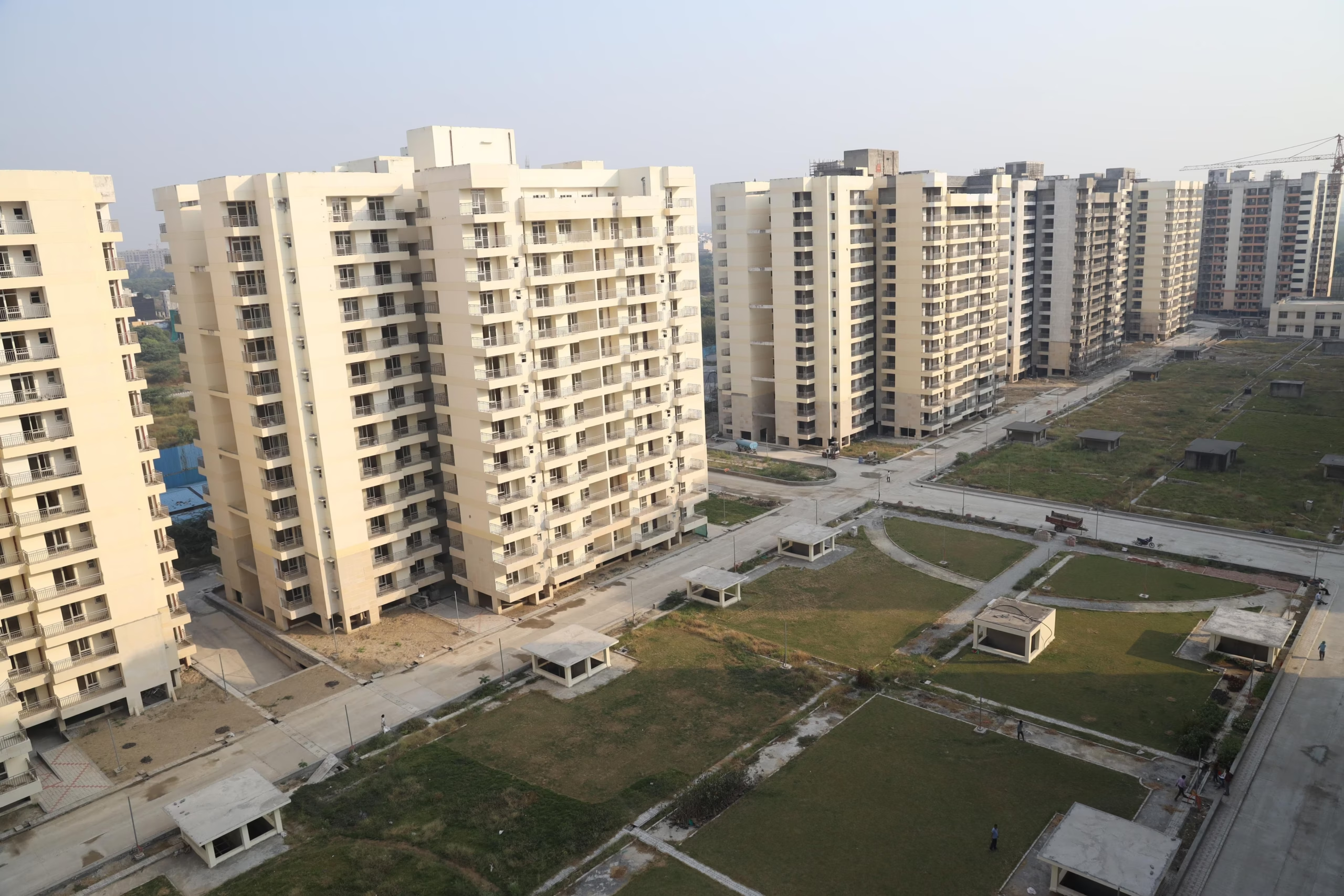
Delhi’s public housing pipeline received a notable boost this week as the city’s planning authority opened a new tranche of residential properties for sale through a digital auction process. The move places more than 580 homes across multiple neighbourhoods into the market, with entry prices beginning near ₹10 lakh and extending beyond ₹2 crore, at a time when affordability and supply constraints remain central to the capital’s urban debate.
The housing release spans a wide spectrum of income categories, from compact entry-level units to premium apartments in established districts. Urban policy officials say the objective is to unlock long-completed but unsold stock while broadening access to formal housing in areas supported by existing civic infrastructure. For buyers, particularly first-time homeowners, the scheme offers a rare opportunity to access regulated housing within the city limits rather than peripheral suburbs. The properties are distributed across south, west and north Delhi, including transit-linked zones that have seen sustained demand due to proximity to employment hubs. Market analysts point out that such supply injections can temper speculative pricing, especially in mid-income segments where private inventory has tightened over the past two years. The structured auction format also brings greater price discovery, reflecting real demand rather than administratively fixed allotments.
A notable addition this cycle is the separate auctioning of parking garages in dense residential pockets. Transport planners see this as a pragmatic response to chronic curbside congestion and unsafe on-street parking in older colonies. By monetising formal parking, the authority is addressing a long-standing urban design gap that affects both mobility and neighbourhood liveability. The Delhi DDA housing scheme also reflects a gradual shift towards digital governance. Applications, deposits and bidding are being conducted entirely online, reducing discretionary allocation and improving transparency. According to housing economists, such mechanisms are essential in restoring public trust in large-scale government housing programmes, particularly in high-value urban markets.
From a sustainability perspective, planners note that directing demand towards existing developments limits outward sprawl and reduces pressure on fringe ecosystems. Homes located within serviced areas make more efficient use of water, energy and transport networks, aligning with climate-resilient city planning goals even when sustainability features are not explicitly highlighted. However, affordability remains relative. While the lowest-priced units widen access, rising reserve prices in several middle-income categories underscore the broader challenge of land scarcity in Delhi.
Experts caution that without parallel investment in rental housing and redevelopment of underused land, ownership-led schemes alone may not fully address housing stress. As bidding unfolds over the coming weeks, market watchers will closely track participation levels across segments. The outcome is likely to shape future releases and signal whether public-sector housing can still influence price stability and inclusion in one of India’s most constrained real estate markets.
Delhi Housing Supply Expands With DDA Auction