


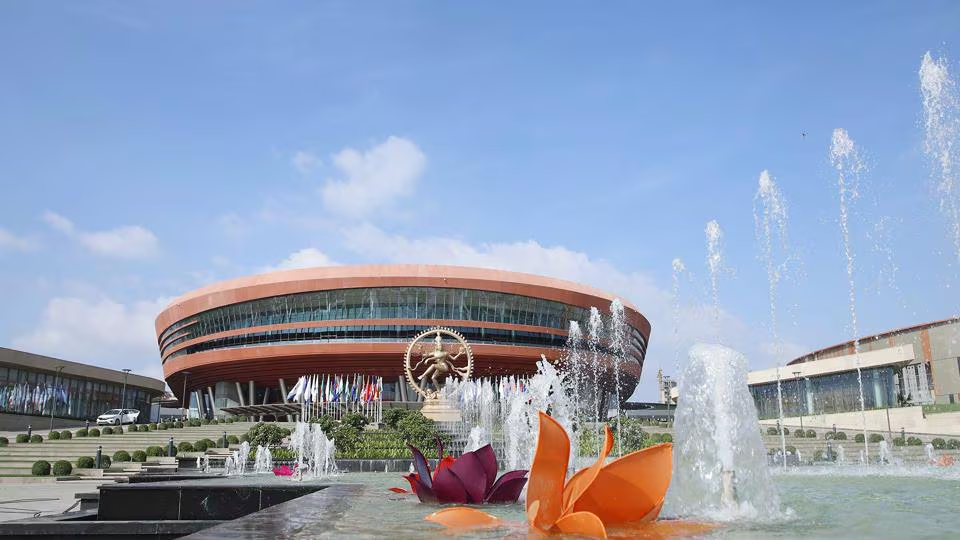
Delhi’s premium hospitality market is experiencing an unusual demand shock as the city prepares to host one of the world’s largest artificial intelligence gatherings later this month. With tens of thousands of international delegates expected for a multi-day global summit at the redeveloped Pragati Maidan complex, room availability across the capital’s top hotels has tightened sharply, pushing tariffs to historic highs.
Industry data and booking platforms indicate that luxury hotels in central and diplomatic zones are approaching full occupancy for peak event days in mid-February. Standard rooms that typically fall within upper-premium pricing bands are now being listed at multiples of their usual rates, while high-end suites are either sold out or available only through restrictive booking conditions such as minimum stays. Hospitality consultants tracking the market say the surge reflects a rare convergence of factors: a large-scale international event, heightened security protocols limiting accommodation spillover, and the concentration of venues within a compact urban core. Unlike seasonal tourism peaks, summit-driven demand is both time-bound and inflexible, leaving little room for price moderation. The event itself has drawn exceptional global interest, with registrations running into the tens of thousands and representation expected from governments, technology firms, research institutions, and investment bodies across continents. Such summits place intense pressure on city infrastructure, particularly in global capitals where luxury hotel supply is finite and land constraints limit rapid capacity expansion.
From an urban economics perspective, the spike in Delhi hotel tariffs highlights how knowledge-led events increasingly shape real estate micro-markets. Short-term demand surges benefit hospitality operators but also expose structural gaps in conference-linked accommodation planning. Mid-scale hotels and serviced apartments in surrounding districts are also reporting increased enquiries, suggesting demand is cascading outward from traditional luxury clusters. Urban planners note that cities positioning themselves as global convening hubs must align hospitality capacity with transport, energy efficiency, and climate resilience goals. Temporary demand shocks often lead to higher resource consumption, increased traffic congestion, and strain on civic services unless managed through coordinated mobility planning and decentralised lodging options. For regular travellers and domestic tourists, the impact is already visible. Many have postponed or redirected travel plans due to limited availability and elevated prices, underscoring how global events can crowd out routine urban activity. This dynamic raises questions about how cities can balance economic gains from international summits with equitable access to urban services.
Looking ahead, hospitality analysts suggest that Delhi’s experience may influence future investment patterns, including greater interest in mixed-use developments, conference-linked hotel districts, and sustainable accommodation models that can flex with episodic demand. As India positions itself as a destination for global knowledge and technology forums, the ability of its cities to absorb such demand without distortion will become an increasingly important measure of urban readiness.
Also Read: Pune MHADA Lottery Brings Relief to Buyers
Delhi Hospitality Market Stretches Under AI Summit
