


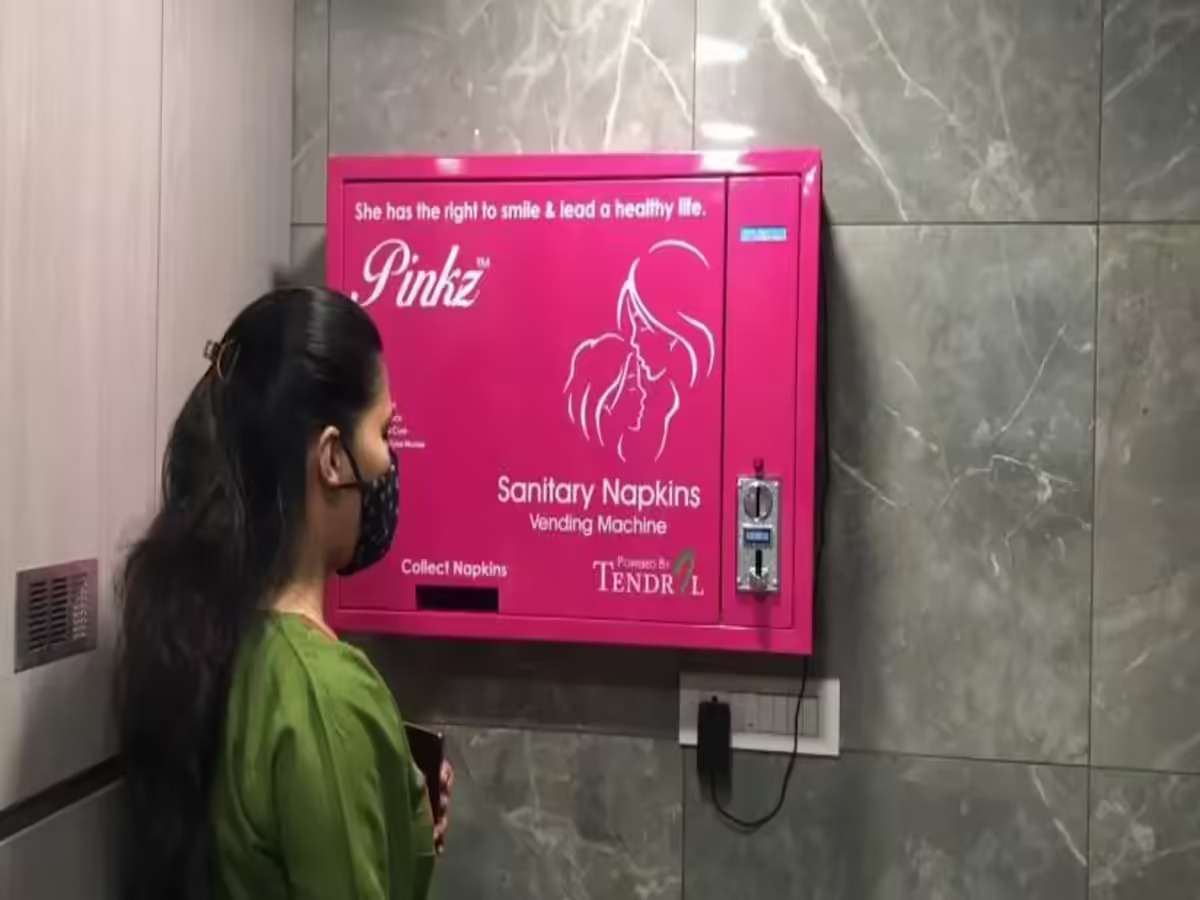
The Delhi High Court has sought a detailed response from the Delhi Metro Rail Corporation (DMRC), the Delhi government, and the Centre on a petition demanding the installation of sanitary pad vending machines in all women’s restrooms at metro stations across the capital. Officials have been asked to provide the total number of vending machines and disposal units currently installed, along with the number that are fully operational. The matter is scheduled for further hearing on September 24.
The petition highlights the disparity between the number of women commuters and the availability of menstrual hygiene infrastructure. With over 3.5 million women using the metro daily, only 14 out of 286 stations reportedly have vending machines, and only half of those are functional. Legal experts argue that this lack of access to basic menstrual hygiene products undermines women’s fundamental rights to equality, health, and dignified public facilities. The plea asserts that sanitary pads constitute a basic necessity and are critical for enabling an inclusive and safe environment in public transport. Officials emphasised that the metro’s mandate extends beyond transport efficiency to ensuring gender-sensitive facilities, reflecting broader urban equity goals. Inadequate menstrual hygiene infrastructure not only affects commuter convenience but also highlights systemic neglect of women-specific health needs in public spaces.
Experts note that the issue aligns with national and international commitments to gender-equitable urban planning. Public transport authorities are increasingly expected to integrate sustainable, inclusive solutions, such as eco-friendly disposal units for sanitary products, to ensure safe, hygienic, and environmentally responsible operations. The installation of functional vending machines at metro stations would mark a significant step towards gender-sensitive urban mobility. The Delhi government has been called upon to allocate appropriate resources and support implementation. Observers point out that the intersection of public transport and women’s health facilities is critical for inclusive urban development. By addressing gaps in sanitary infrastructure, the metro system can enhance commuter confidence, promote dignity, and foster equitable access to public amenities.
Officials have been urged to submit their response within two weeks, with a week allocated for filing rejoinders. The court’s notice underscores the judiciary’s recognition of the importance of accessible menstrual hygiene products in promoting gender equality and public health in urban transport networks. Urban development specialists argue that this move could set a precedent for metro systems nationwide to adopt standardized menstrual hygiene facilities. Advocates emphasise that ensuring functional vending machines and proper disposal units is both a legal responsibility and a marker of progressive city planning.
As Delhi continues to expand its metro network and accommodate growing ridership, integrating gender-sensitive infrastructure remains a critical measure. Functional sanitary pad vending machines at all stations would ensure a dignified commuting experience for millions of women, reflecting the city’s commitment to equitable, sustainable, and inclusive public transport.
Also Read : Delhi Metro to Begin Early Services on Independence Day at 4 AM
