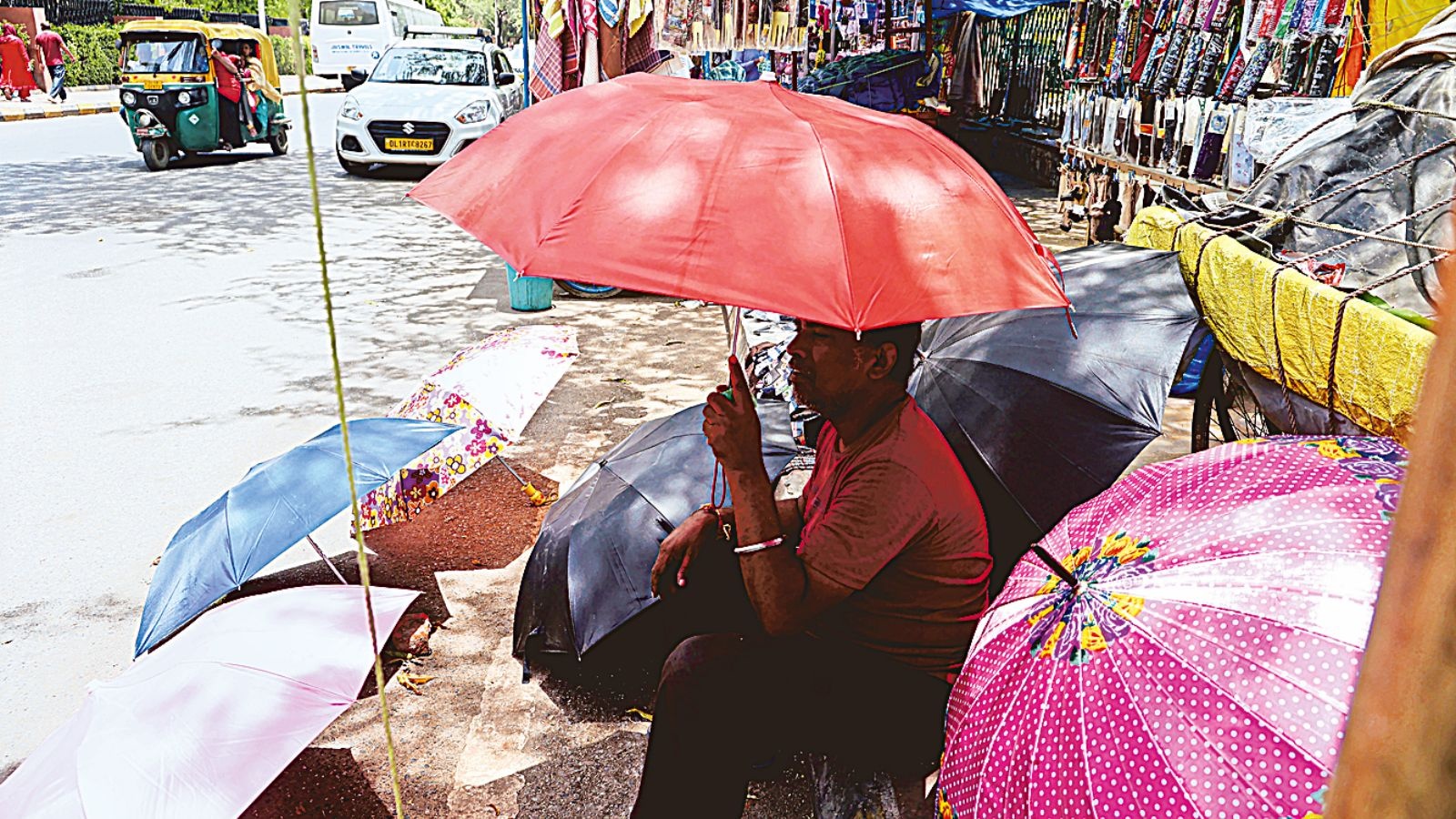
Delhi Heatwave Signals Rising Climate Risks For Capital
Rising temperatures across the national capital have intensified concerns over urban climate resilience, as Delhi recorded above-normal heat conditions even while weather officials forecast light rain and gusty winds in the coming hours. The early-season Delhi heatwave highlights the growing pressure on dense metropolitan regions where shifting climate patterns increasingly influence health, infrastructure performance and daily urban life. Meteorological observations on Sunday showed the city’s maximum temperature reaching around 36 degrees Celsius, several degrees higher than the seasonal average for late March. The national weather agency simultaneously issued a yellow alert signalling the possibility of brief rainfall and strong winds, indicating unstable atmospheric conditions typically associated with the transition from spring to pre-summer weather.
For a rapidly expanding city like Delhi, early spikes in temperature are becoming a recurring phenomenon that urban planners say demands stronger heat-adaptation strategies. Experts note that the Delhi heatwave pattern is closely linked to the urban heat island effect — a process where dense construction, limited vegetation and extensive paved surfaces absorb and retain heat, raising local temperatures beyond surrounding rural areas. Environmental analysts explain that even moderate rainfall events may provide only temporary relief. Without structural changes in urban planning, temperature extremes are likely to intensify during the approaching summer months. Measures such as expanded green cover, reflective roofing materials, shaded pedestrian corridors and climate-sensitive building design are increasingly viewed as essential components of future city planning. Air quality readings during the day remained within the “moderate” category, with the national pollution monitoring system reporting an Air Quality Index of around 194. While this level does not fall into the most hazardous categories, public health experts caution that pollution combined with heat stress can still place vulnerable populations at risk, particularly children, the elderly and outdoor workers.
Humidity levels remained relatively low in the late afternoon, hovering close to one-third of atmospheric moisture levels typically seen during the monsoon season. Such dry conditions often intensify heat perception, contributing to higher discomfort levels in densely populated urban districts. Climate researchers observing regional patterns say the increasing frequency of heat spikes in northern Indian cities is consistent with broader global warming trends. The interaction between urban expansion, vehicular emissions and changing wind circulation patterns further complicates the environmental outlook for megacities. Urban policy specialists argue that addressing rising temperatures requires coordination across multiple sectors, including housing, transport, public health and energy systems. Efficient public transit, tree-lined streets and energy-efficient buildings can significantly reduce heat absorption while lowering long-term emissions.
With the summer season still weeks away, the current Delhi heatwave serves as an early indicator of the challenges facing India’s largest urban centres. City authorities and planners are expected to monitor conditions closely, particularly as unpredictable rainfall, dust storms and temperature fluctuations become increasingly intertwined with the realities of climate-driven urban weather.