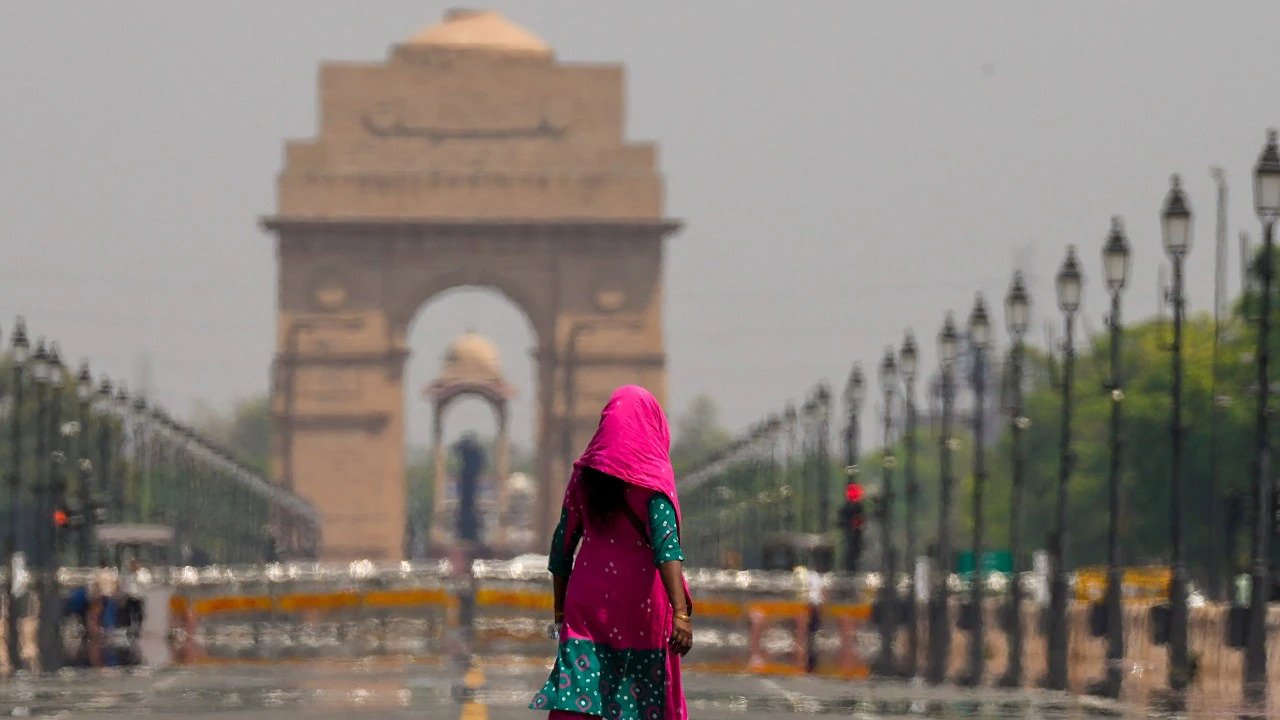
Delhi Heatwave Risk Rises As March Temperatures Climb
An unusual rise in early spring temperatures has pushed Delhi temperature readings significantly above seasonal averages, signalling the possibility of an early onset of summer-like conditions in the national capital. Weather monitoring agencies reported that both daytime and night-time temperatures climbed sharply this week, highlighting the growing influence of warmer air currents and changing atmospheric patterns over northern India. According to data released by the national meteorological service, night-time temperatures in Delhi recently reached around 19°C noticeably higher than what is typically expected during the first half of March. Daytime conditions also remained unusually warm, with the maximum temperature crossing 35°C, several degrees above the seasonal benchmark.
Meteorologists say the upward movement in Delhi temperature is likely to continue in the coming days, with daytime readings potentially approaching the upper 30s Celsius before midweek. Although a western disturbance moving across the western Himalayan region could bring a slight cooling effect later in the week, experts suggest the relief may be limited across the plains. A western disturbance refers to a weather system originating in the Mediterranean region that travels eastward, often bringing cloud cover, rainfall or cooler winds to northern India. However, current forecasts indicate that the system may only marginally influence Delhi’s weather conditions. Weather specialists attribute the recent warmth partly to shifting wind patterns that transported moisture from the Arabian Sea into north India. These winds, combined with relatively low local wind speeds, created conditions that allowed warm air and suspended dust particles to linger over the city. For a dense and rapidly expanding metropolis such as Delhi, rising Delhi temperature levels have broader implications beyond short-term weather discomfort. Urban planners and climate researchers say persistent heat during the early months of the year can intensify the urban heat island effect — a phenomenon where built-up areas retain more heat due to concrete infrastructure, reduced vegetation and heavy traffic emissions.
Higher temperatures also influence electricity demand as households and businesses increasingly rely on cooling systems earlier in the season. Energy analysts warn that extended periods of heat can place additional pressure on urban power grids while raising operational costs for commercial buildings and residential communities. Real estate and infrastructure experts note that such trends reinforce the need for climate-responsive urban design. Features such as reflective roofing materials, expanded urban tree cover, shaded pedestrian corridors and energy-efficient building standards are increasingly seen as essential for maintaining liveable urban environments. Historical records show that March temperatures in Delhi have occasionally approached or crossed the 40°C mark during extreme years. With projections suggesting that peak readings later this month could approach that range again, meteorologists continue to closely track evolving atmospheric conditions.
For city administrators and residents alike, the current Delhi temperature spike offers an early reminder of the climate pressures facing large urban centres. As warmer seasons lengthen across many parts of India, adaptive urban planning and climate-resilient infrastructure are becoming critical elements in safeguarding public health and sustaining city life
Delhi Heatwave Risk Rises As March Temperatures Climb