


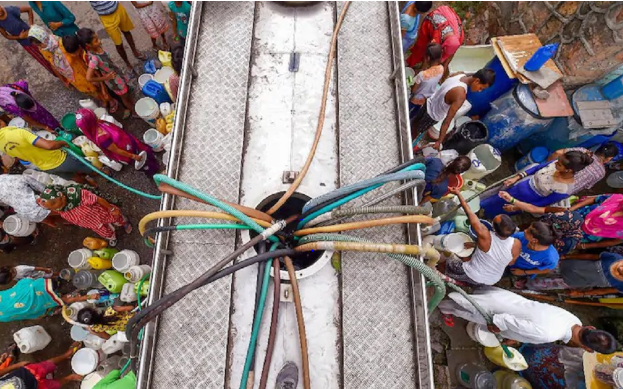
Delhi’s water management landscape faces a crucial juncture as the Delhi Jal Board (DJB) prepares to receive an anticipated influx of water from Himachal Pradesh.
With the Supreme Court’s directive paving the way for HP’s contribution to Delhi’s water supply, concerns arise regarding the capital’s capacity to efficiently process the additional raw water and augment production. Despite achieving a commendable milestone of producing 1,002 million gallons per day (MGD) of water, surpassing the collective capacity of its nine water treatment plants by approximately 47 MGD, DJB officials express reservations about effectively utilizing the extra water from Himachal Pradesh. Operating at maximum capacity, the existing treatment plants present limited scope for accommodating and processing the additional volume.
The 137 cusecs of raw water slated for release by Himachal Pradesh equates to approximately 70 MGD, a significant addition to Delhi’s water supply. However, with the Wazirabad barrage expected to receive around 65 MGD after accounting for water losses, the city faces the challenge of treating this surplus water amidst saturated treatment plant capacities. Estimates suggest that only around 30 MGD of the anticipated 65 MGD will be readily available in the coming days, posing a formidable task for DJB. While accusations fly between political factions over water supply disruptions, DJB grapples with delays in completing critical infrastructure projects, including two major water treatment plants at Chandrawal and Dwarka.
The delayed completion of these projects exacerbates the strain on Delhi’s water treatment infrastructure, with DJB’s own target of producing 1,000 MGD falling short of the city’s overall water requirement of 1,290 MGD, as per the Economic Survey Report 2023. The current water shortage, aggravated by scorching summer temperatures, underscores the urgency of addressing capacity constraints to ensure uninterrupted water supply for Delhi’s residents. As Delhi navigates its water crisis, attention turns to the collaborative efforts between DJB and the concerned authorities to expedite infrastructure projects and optimize water management strategies to meet the city’s burgeoning demands.
