


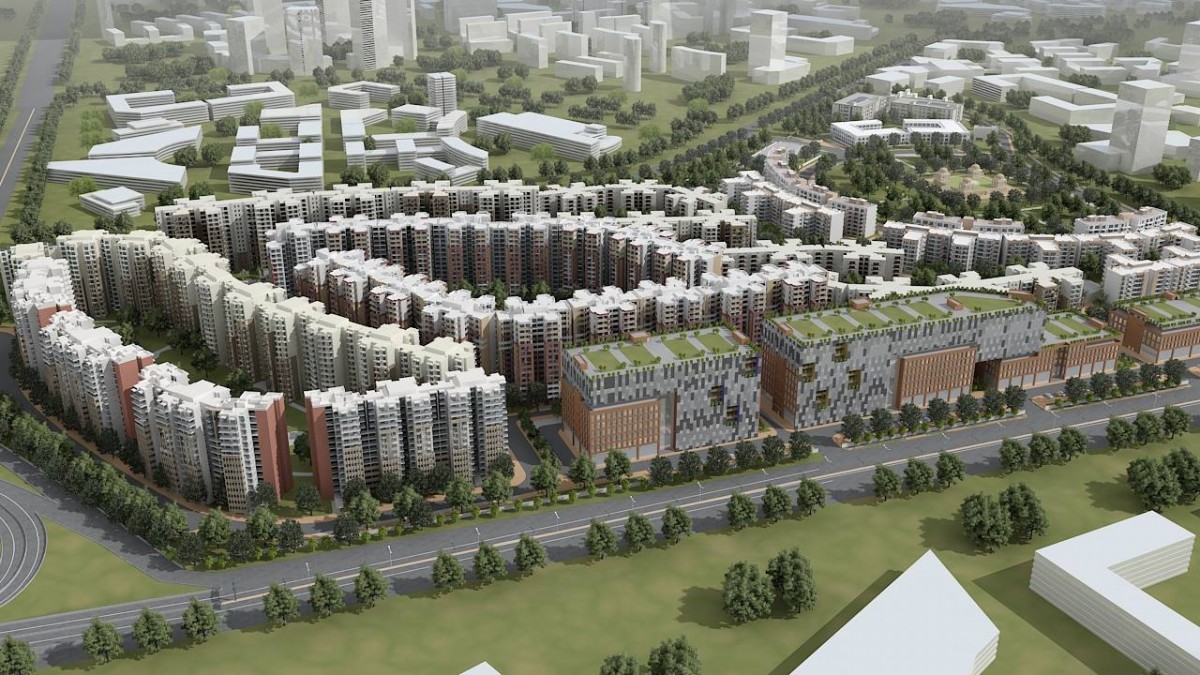
Delhi’s R.K. Puram constituency is set for a broad civic upgrade after the city government cleared development works worth nearly Rs 100 crore, signalling a renewed focus on neighbourhood-level infrastructure after years of constrained public spending. The initiative targets everyday urban essentials such as roads, parks, community spaces and recreational facilities, reflecting a shift towards people-centric local development in one of south Delhi’s dense residential zones.
Officials overseeing the programme said the works cover resurfacing of internal roads, upgrades to ageing community centres, installation of open-air fitness facilities and redevelopment of public parks. Together, these interventions aim to improve walkability, safety and access to shared spaces, while also addressing long-standing maintenance gaps that have affected quality of life for residents across income groups. Urban planners note that R.K. Puram presents a complex planning challenge. The area combines planned housing, institutional land, informal settlements and high footfall public spaces. Targeted infrastructure investment in such mixed-use neighbourhoods is increasingly seen as critical for making cities more inclusive and resilient, particularly as climate stress and population density place added pressure on public assets. Government officials indicated that the funding marks a departure from earlier years when elected representatives had limited discretionary budgets for local works, resulting in stalled or piecemeal projects. The current approach seeks to ensure predictable financing for each assembly constituency, allowing projects to be planned as integrated packages rather than isolated repairs.
A key focus area within R.K. Puram is the improvement of basic services in informal housing clusters. Senior administrators said the objective is to link physical infrastructure upgrades with broader social outcomes, including access to sanitation, safe public spaces and dignified housing solutions. Such measures, they added, are essential for reducing urban inequality and ensuring that redevelopment does not bypass vulnerable communities. Beyond physical works, the broader city programme also aligns with ongoing reforms in welfare delivery and urban services. Officials pointed to the restoration of social security schemes, expansion of household utility access and increased use of electric public transport as parallel efforts aimed at reducing economic stress and environmental impact. Together, these initiatives form part of a wider attempt to modernise Delhi’s urban systems while lowering emissions and improving public health. Urban economists observe that neighbourhood-scale investments often deliver higher social returns than large flagship projects, particularly when they enhance everyday mobility, green cover and community interaction. Well-maintained parks and streets not only improve liveability but can also stabilise property values and encourage local economic activity.
As work begins in R.K. Puram, the challenge will lie in timely execution and coordination between civic agencies. If implemented effectively, the project could offer a replicable model for upgrading established neighbourhoods across Delhi, demonstrating how focused public investment can strengthen urban resilience and restore trust in local governance.
Also Read: Bengaluru Homebuyers Question Livability Of New Apartments
Delhi Government Pushes Neighbourhood Infrastructure Renewal
