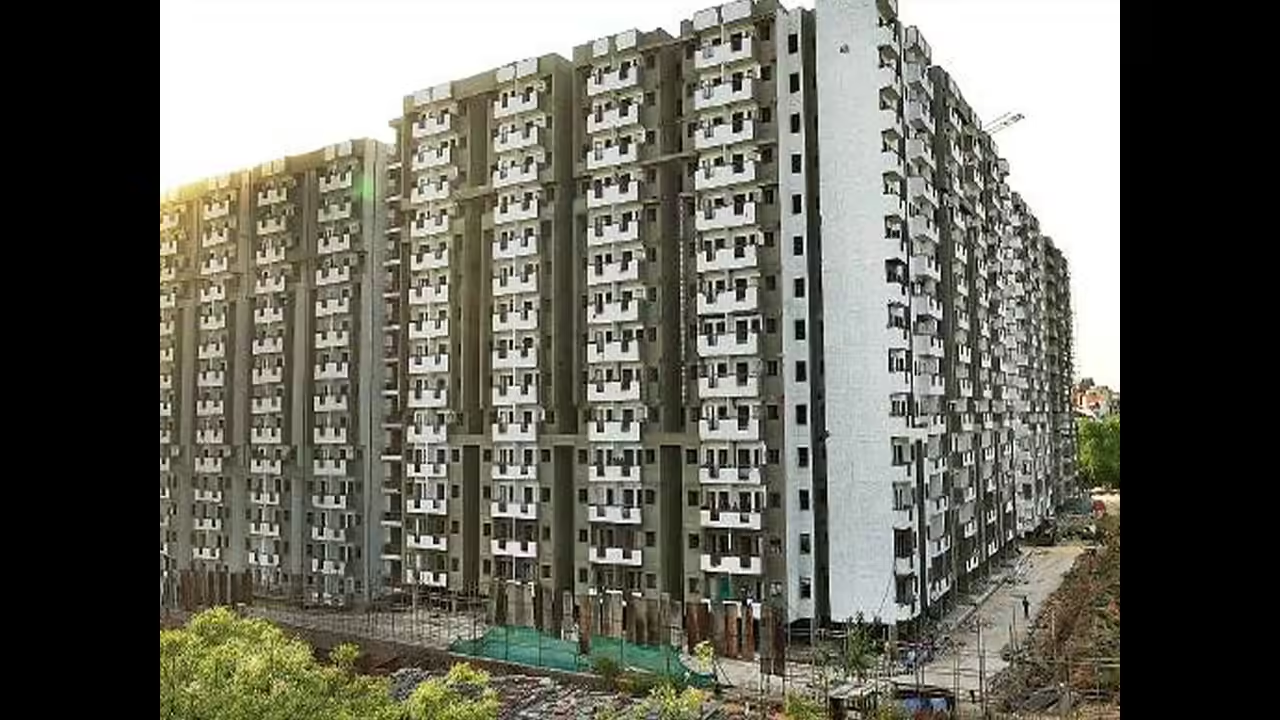
Delhi has taken another step in a large-scale transformation of government residential districts with the delivery of thousands of newly constructed flats and the launch of additional housing projects across several central neighbourhoods. The latest phase of the GPRA redevelopment programme introduces new residential units in Kasturba Nagar and Sarojini Nagar while initiating construction of thousands more across multiple government housing colonies.
The newly completed homes are part of the General Pool Residential Accommodation system, which provides housing for central government employees posted in the national capital. Urban development officials confirmed that more than 2,700 apartments have now been completed and handed over, while construction has been initiated for over 6,600 additional units in Netaji Nagar, Sarojini Nagar, Kasturba Nagar and Sriniwaspuri. The broader GPRA redevelopment initiative is among the largest public housing modernisation projects undertaken in Delhi. When completed, the programme will deliver nearly 25,000 housing units, replacing around 13,000 ageing government residences that were originally built decades ago. Many of these older quarters had limited infrastructure and lower housing density, prompting authorities to redesign the colonies to accommodate modern living standards and better land use.
Urban planners say the redevelopment reflects a shift in how government housing is designed in dense metropolitan environments. The new projects involve mid- and high-rise apartment blocks integrated with improved civic infrastructure, including upgraded internal roads, utilities, green areas and community amenities. Higher residential density allows authorities to utilise valuable urban land more efficiently while modernising public housing. The initiative is being implemented through a self-financing model led by the Central Public Works Department, with commercial development playing a role in funding residential construction. Under this structure, certain parcels of land within the redevelopment zones are being used for commercial office complexes developed by a public sector construction firm. Revenue generated from leasing or selling these commercial properties helps offset project costs.
One such project under development is a large office complex known as Bharat Business Park, designed to create modern workspaces in central Delhi. The planned development will include several office towers with a built-up area exceeding 200,000 square metres. Officials say the commercial district is intended to provide contemporary office infrastructure with energy-efficient building systems and updated workplace facilities. Real estate analysts note that redevelopment of older government colonies has increasingly become a key element of Delhi’s urban renewal strategy. Many of these neighbourhoods occupy prime locations close to transport corridors, diplomatic zones and commercial districts. By rebuilding them with higher-density housing and modern utilities, planners aim to support both housing demand and improved urban infrastructure.
Experts also point out that projects under the GPRA redevelopment programme can influence surrounding property markets. Upgraded infrastructure and new office developments often attract retail activity, services and improved transport links in nearby areas.
As construction continues across multiple colonies, policymakers face the challenge of ensuring that redevelopment balances housing density with open space, environmental performance and liveability. Urban designers argue that integrating energy-efficient buildings, pedestrian-friendly layouts and green infrastructure will be critical to ensuring these redeveloped districts contribute to a more sustainable and resilient Delhi.
Delhi Government Housing Redevelopment Adds Thousands Of Flats