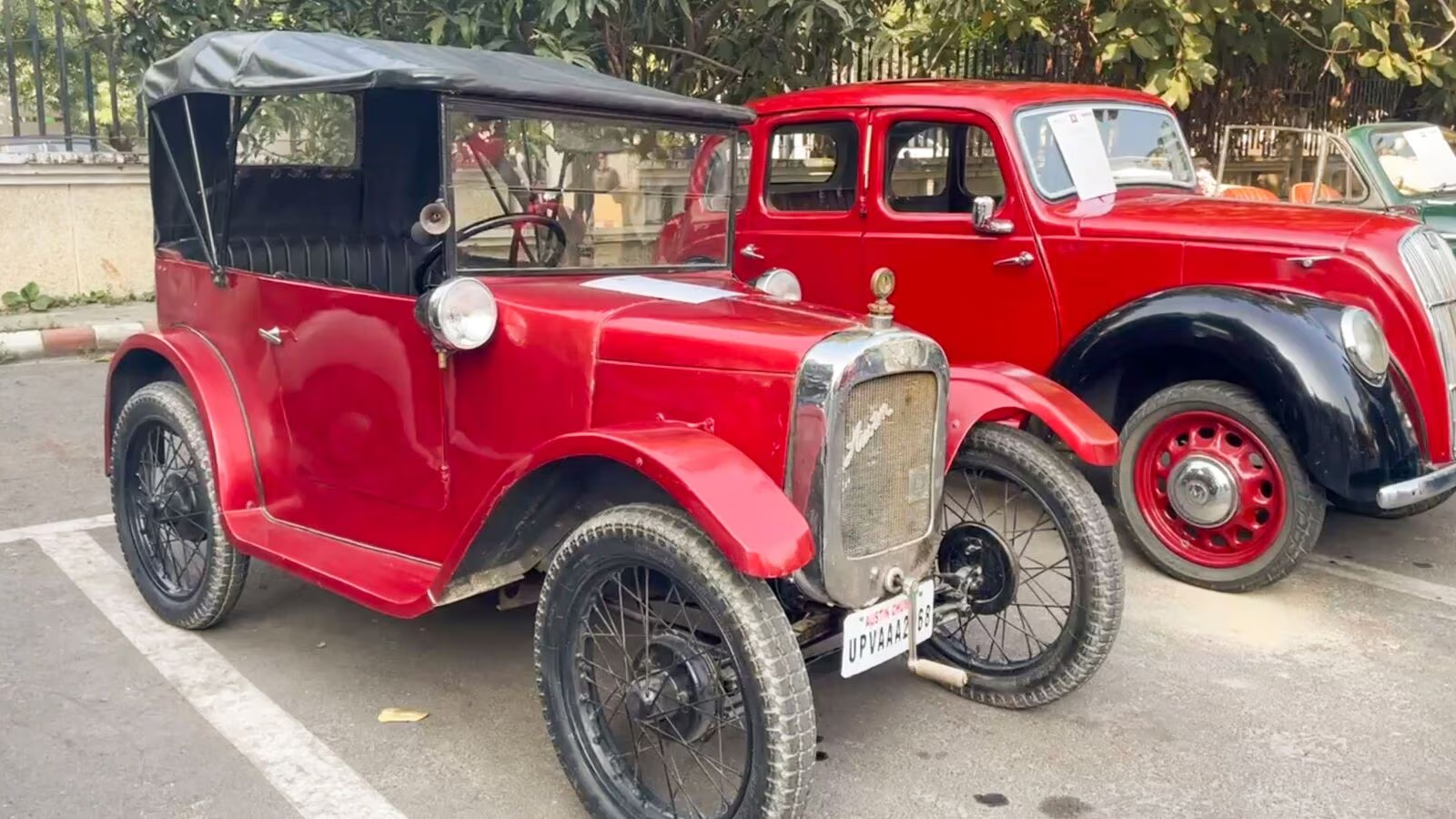
Delhi Government Doubles Renewal Fee For Vehicles Older Than 20 Years
The Ministry of Road Transport and Highways has doubled the renewal fee for motor vehicles older than 20 years, taking the charge for light motor vehicles to ₹10,000. The revised rule, notified this week, is aimed at discouraging the use of ageing, polluting vehicles while nudging citizens towards cleaner and more sustainable mobility.
For motorcycles crossing the 20-year mark, the renewal fee now stands at ₹2,000, up from ₹1,000. The cost for three-wheelers and quadricycles has been revised to ₹5,000 from ₹3,500. Imported two- and three-wheelers will attract a renewal charge of ₹20,000, while imported four-wheelers and above will cost ₹80,000 for registration renewal. Officials emphasise that the higher costs are designed to act as a deterrent against holding on to vehicles beyond their intended life cycle.
This measure comes against the backdrop of India’s growing struggle with vehicular emissions, particularly in metropolitan centres like Delhi, Mumbai, Bengaluru and Chennai. Studies by environmental experts indicate that older vehicles contribute disproportionately to urban air pollution, with inefficient engines releasing higher levels of particulate matter and greenhouse gases. By making registration renewals significantly costlier, the government intends to accelerate the phasing out of outdated vehicles and encourage a shift towards electric, hybrid or fuel-efficient alternatives.
The notification follows the draft amendment issued earlier this year and builds on previous fee hikes announced in 2021. According to officials, the revenue generated from these fees will support the implementation of scrappage and green mobility policies, which form a cornerstone of India’s commitment to achieving net-zero emissions by 2070. Analysts note that while this step will impose short-term financial pressure on owners of older vehicles, it is also likely to create momentum in the used-vehicle and electric vehicle markets. Transport economists suggest that the rising costs of retaining an older vehicle could influence consumer behaviour, encouraging households and small businesses to embrace cleaner mobility solutions. However, experts also caution that equitable policies must ensure that lower-income groups, who often rely on older vehicles for their livelihoods, are not disproportionately burdened. Affordable access to electric two-wheelers, improved public transport, and structured scrappage incentives could make this transition fairer and more inclusive.
The debate on vehicular lifespan gained traction earlier this month when the country’s top court directed authorities not to take coercive action against owners of diesel vehicles older than 10 years and petrol vehicles older than 15 years in Delhi-NCR. While that order addressed regulatory enforcement, the latest fee hike seeks to address the economic side of the equation by making it financially less viable to hold on to polluting vehicles. Officials highlight that with India’s cities choking under poor air quality, a multi-pronged approach combining policy, incentives and behavioural nudges is vital. The enhanced fee structure, though strict, is seen as part of a broader framework to build cities that are cleaner, healthier, and more liveable for future generations.