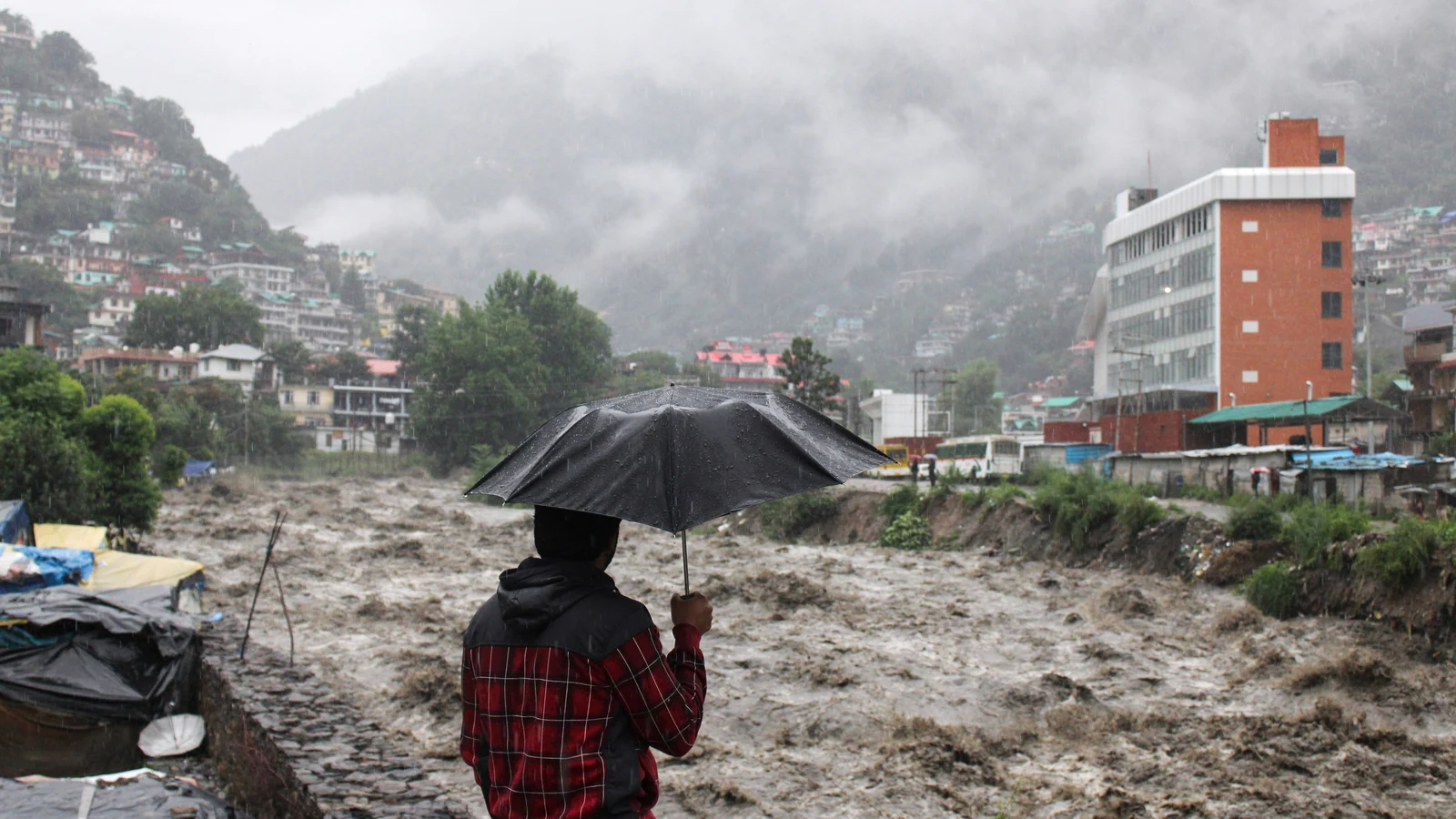
Delhi Gets Light Showers but Himachal Faces Heavy Rainfall and Destruction
Delhi is likely to see a humid Wednesday marked by cloudy skies and intermittent light rain, according to the India Meteorological Department (IMD). As the monsoon progresses slowly across the northern plains, the national capital appears to have found temporary relief from the punishing heatwaves that marked the earlier part of summer. No weather warning has been issued for Delhi-NCR so far, and the IMD has forecast generally cloudy conditions through the first week of July.
Patchy light rain, occasional thunderstorms, and lightning are expected to persist, creating a relatively cooler but highly humid climate for the city’s residents. The maximum temperature in Delhi is likely to hover between 34 to 36 degrees Celsius, while minimums are expected to remain steady at around 27 degrees. The IMD does not anticipate any heatwave conditions in the coming days, making this phase a brief but welcome break from scorching conditions that characterized June.
Beyond marginal thermal relief, the spell of light rain has also contributed to an improvement in Delhi’s air quality. As per data from the Central Pollution Control Board (CPCB), the Air Quality Index (AQI) was recorded at 85 at 10 am on July 2, placing it firmly in the ‘satisfactory’ category. This is a notable improvement from the ‘moderate’ or ‘poor’ AQI levels seen over the past month. As per the weekly forecast, Delhi is unlikely to see any weather alerts until at least July 6, with the IMD predicting daily spells of very light to light rainfall accompanied by occasional thunderstorms and lightning. Temperatures are expected to remain slightly below the seasonal average, further aiding in air quality improvement and heat mitigation.
In stark contrast to Delhi’s moderate monsoon activity, Himachal Pradesh has been pummeled by relentless downpours, causing extensive damage and prompting red and orange alerts across multiple districts. The state continues to reel from the aftermath of monsoon-triggered devastation, including landslides, flash floods, and large-scale infrastructure disruptions. According to the Himachal Pradesh State Disaster Management Authority (HPSDMA), at least 259 roads have been blocked across the state, cutting off access to remote and tourist-heavy regions. The district of Mandi has emerged as the worst-hit zone, with more than 139 roads rendered impassable and over 300 power transformers knocked offline. Similar disruptions have been reported in Kullu and Sirmaur districts, where water supply schemes have failed and connectivity has been severely hampered.
The situation is equally alarming in Spiti, where 139 transformers have gone out of service, effectively plunging several villages into darkness and communication blackouts. The Shimla Regional Meteorological Centre has issued an orange alert for districts including Mandi, Kangra, and Hamirpur, suggesting a high probability of continued heavy rainfall and resulting disruptions. Meanwhile, a yellow alert remains in effect for other districts like Chamba, Solan, Shimla, Kullu, and Bilaspur. Authorities in these regions have warned residents and tourists to avoid travel and remain alert to further landslide risks. Local administrations are also working round-the-clock to clear debris and restore power and water connections, but progress has been slow due to the unrelenting rain.
The IMD has extended its weather warnings beyond Himachal to other parts of central and northern India, highlighting the risk of above-normal monsoon rainfall in July. States such as Uttarakhand, Madhya Pradesh, Haryana, and parts of eastern Rajasthan have been flagged for potential heavy downpours that could trigger flash floods and localized disasters. As July accounts for 34.5% of India’s total monsoon rainfall, the IMD noted that any disruption during this critical phase could adversely affect agriculture, especially the kharif crop cycle, which heavily depends on seasonal rain. Farmers across central India are being advised to prepare for waterlogging and potential crop damage in case of prolonged heavy rain events.
In contrast, the northeastern region of India and parts of the southern peninsula may experience below-normal rainfall during the same period. This forecast has raised concerns over possible drought-like conditions in states such as Bihar, Assam, and parts of Tamil Nadu and Karnataka. The IMD also warned that any major rainfall deviation in July or August could severely impact the sowing and yield of kharif crops, including paddy, pulses, and oilseeds. With climate variability playing an increasingly disruptive role in monsoon patterns, agricultural experts are calling for urgent steps to provide irrigation support and crop insurance to vulnerable regions.
While Delhi residents may be lulled into complacency by this brief spell of comfortable weather, the grim situation in Himachal Pradesh and other hill states serves as a stark reminder of the monsoon’s dual-edged nature—providing relief in one part of the country while unleashing destruction in another. The days ahead will test the readiness of disaster management systems, the efficiency of weather prediction models, and the resilience of both urban and rural communities across India. The IMD has urged residents in high-risk zones to stay updated with real-time advisories and exercise caution during travel, especially in landslide-prone areas.
As July begins in earnest, the subcontinent stands at a delicate juncture between relief and risk, with the monsoon season expected to unfold in wildly varying intensities across different geographies. In Delhi, the rain may cool the air and cleanse the skies temporarily, but for the hill states battered by floods and landslides, the monsoon remains a force of relentless and unforgiving disruption.