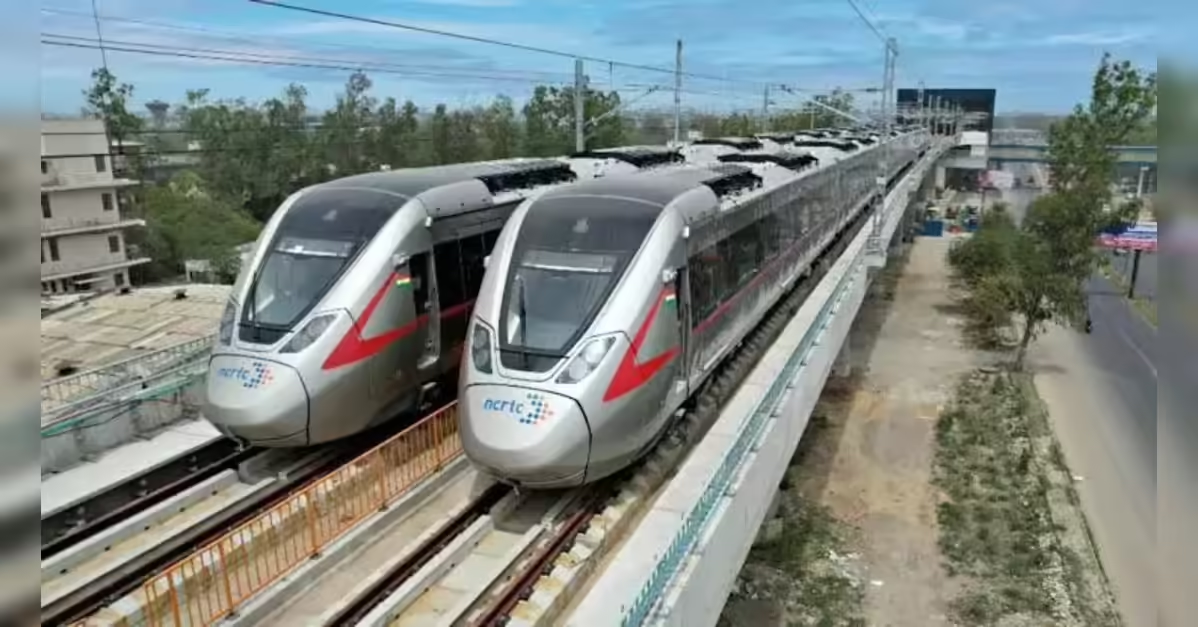
Delhi’s regional mobility grid is poised for a significant upgrade as the Meerut Metro integrates with the capital’s fast-expanding rapid rail system, enabling sub-one-hour travel between central Delhi and Meerut. The launch strengthens Delhi’s position as the core of a more tightly connected National Capital Region (NCR), with implications for commuting patterns, real estate demand and environmental sustainability.
The new corridor connects Meerut South with Modipuram across 23 kilometres and links directly with the Namo Bharat regional rapid rail service operating from Sarai Kale Khan in Delhi. With trains capable of running at speeds up to 120 km/h, the system is expected to reduce the Delhi–Meerut journey to approximately 55 minutes, depending on interchange time. For Delhi, the significance lies in regional integration rather than city expansion alone. Sarai Kale Khan is emerging as a multimodal transit hub, bringing together intercity rail, rapid rail and metro connectivity. Urban mobility experts suggest that such nodes are critical for redistributing travel demand and reducing dependency on private vehicles entering the capital from satellite towns.
The Meerut Metro also introduces single-ticket interoperability between metro services within Meerut and the Namo Bharat rapid rail corridor. Transport planners say this approach reduces friction for daily commuters working in Delhi while living in western Uttar Pradesh. Seamless ticketing and predictable headways five to ten minutes during peak periods are expected to encourage modal shift from road to rail, a key requirement for tackling congestion and emissions in Delhi NCR.
Each train can carry around 700 passengers, increasing corridor capacity at a time when vehicular traffic on highways linking Delhi to Ghaziabad and Meerut remains high. With electrified operations, the corridor contributes to long-term decarbonisation goals embedded within NCR’s regional transport strategy.
The impact on Delhi’s housing and labour markets could be gradual but meaningful. Real estate analysts observe that faster connectivity may expand the capital’s effective labour catchment area, enabling professionals to reside in comparatively affordable locations while accessing employment hubs in Delhi. Over time, this may ease pressure on inner-city housing supply while stimulating peripheral growth. Infrastructure specialists caution, however, that last-mile connectivity within Delhi remains essential.
Without efficient feeder buses, pedestrian pathways and integrated station-area planning, the potential gains from high-speed regional rail could be diluted.
As Delhi continues to grapple with air quality challenges and rising commuter volumes, the operationalisation of the Meerut Metro corridor marks another step towards a more distributed, rail-led mobility framework. The next phase of expansion and the performance of integrated ticketing systems will determine how deeply this regional link reshapes daily life in the capital.
Delhi gains faster Meerut Metro link