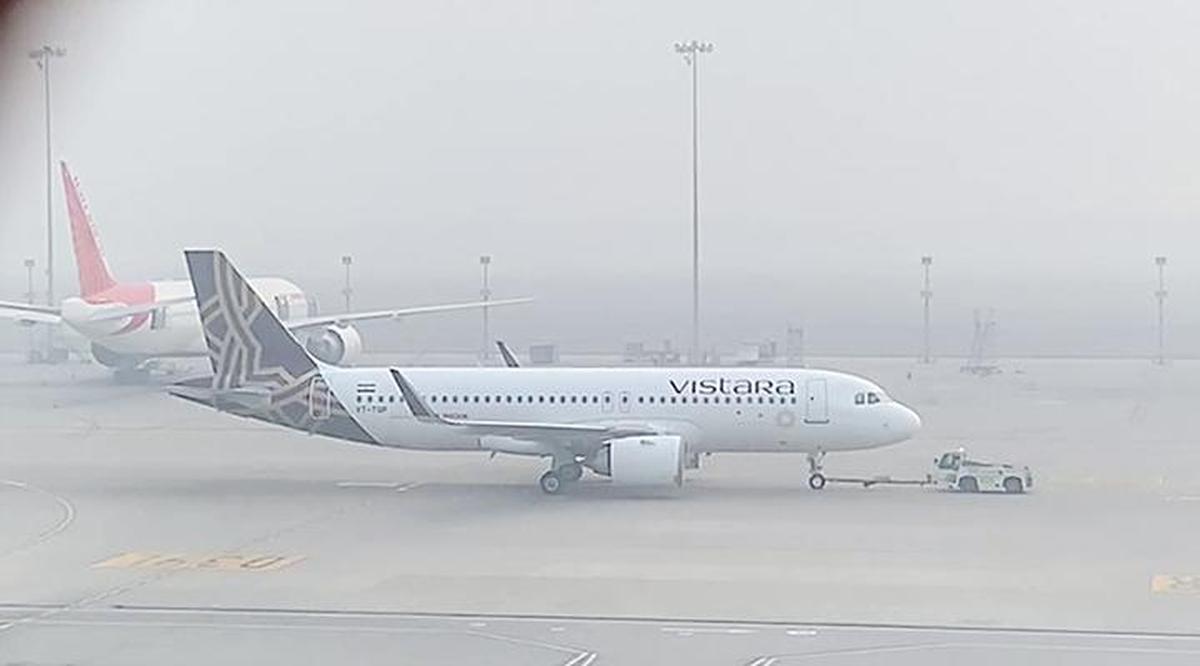
Persistent winter fog and hazardous air quality continued to disrupt India’s aviation network on Wednesday, with Delhi’s Indira Gandhi International Airport witnessing multiple flight cancellations, underscoring the growing vulnerability of urban mobility systems to climate and environmental stress.
Airport authorities confirmed that at least ten flights were cancelled at Delhi’s main airport during the morning hours as visibility levels dropped sharply. Dense fog, compounded by stagnant weather conditions and elevated pollution levels, reduced runway visibility and forced airlines to suspend both arrivals and departures. While such disruptions are common during North India’s winter months, aviation experts say the frequency and scale of cancellations are increasing.The impact extended beyond the capital. Flight operations at Chennai International Airport were also affected as aircraft scheduled to operate between southern and northern cities were grounded due to weather conditions in Delhi and neighbouring states. According to airport officials, several flights connecting Chennai with major northern destinations were cancelled, leaving passengers stranded and triggering knock-on delays across airline schedules.
An aviation official said flight diversions and cancellations were unavoidable as safety protocols require strict visibility thresholds for landing and take-off. “When fog persists for several hours, aircraft are either diverted or cancelled entirely, which disrupts the wider network,” the official explained. Industry experts noted that while advanced landing systems help mitigate some risk, they cannot fully offset severe atmospheric conditions worsened by pollution. Delhi’s air quality remained a major contributing factor. Data from pollution monitoring agencies showed the city’s Air Quality Index staying firmly in the ‘very poor’ category on Wednesday morning, despite a marginal improvement from the previous day. Toxic smog continued to blanket large parts of the city, reducing visibility and raising concerns about public health alongside transport efficiency.
Urban planners argue that the recurring winter disruption highlights deeper structural challenges facing Indian cities. Heavy reliance on weather-sensitive transport systems, combined with rising emissions and limited regional coordination, exposes both passengers and economic activity to repeated shocks. Delays and cancellations not only inconvenience travellers but also affect business productivity, logistics chains and tourism flows. From a sustainable cities perspective, experts say the situation reinforces the need for cleaner urban air, climate-resilient infrastructure and better multimodal planning.
Reducing vehicular emissions, improving public transport, and investing in cleaner aviation fuels could help mitigate the severity of such disruptions over time. At the same time, better passenger communication and integrated scheduling across airports may reduce the human cost of weather-related cancellations. As Indian cities expand and air travel demand grows, managing the intersection of climate, pollution and mobility will remain a critical test for urban governance. The latest disruption at Delhi airport serves as a reminder that environmental resilience is no longer separate from economic and infrastructure planning.
Delhi Fog And Pollution Cancel Ten Flights At IGI Disrupting Air Travel