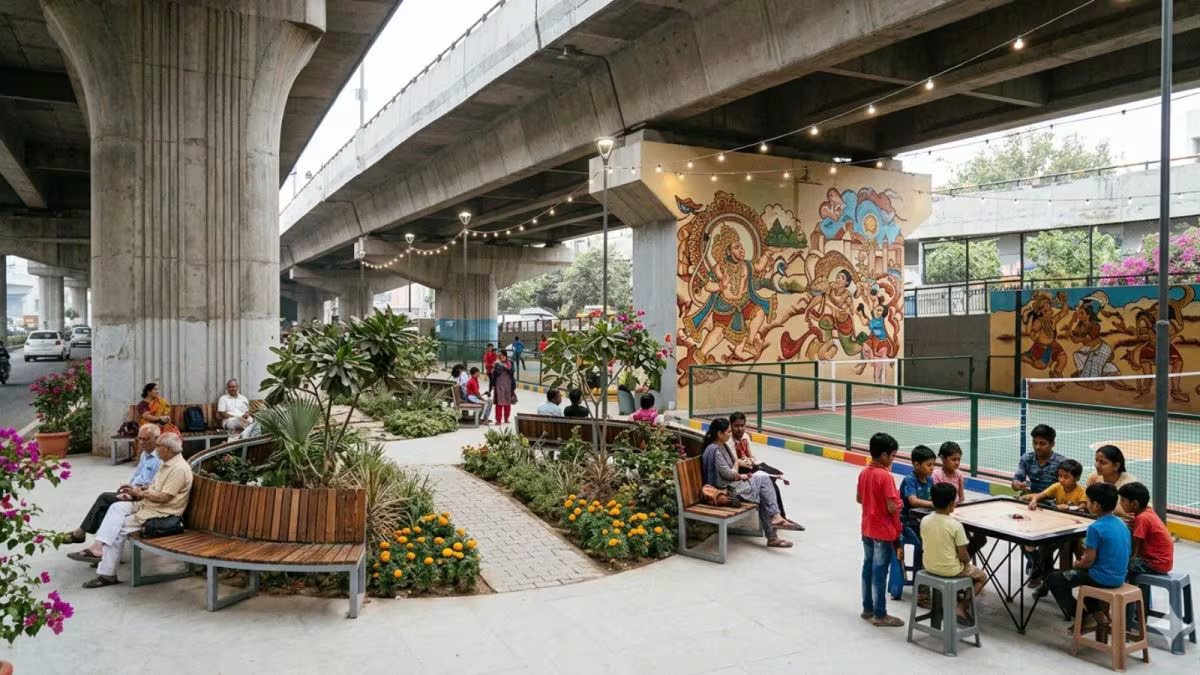
Delhi Flyover Redevelopment Adds Green Zones And Murals
Authorities in the national capital have begun a new urban design initiative to revitalise underused spaces beneath several major flyovers, combining public infrastructure upgrades with landscaping and cultural installations. The Delhi flyover redevelopment programme will initially cover six locations across the city, aiming to transform neglected underpass areas into safer, organised and more accessible public spaces. Urban planners say the initiative reflects a broader effort to improve the quality of public environments in dense metropolitan corridors where elevated road infrastructure often leaves large areas underutilised. By introducing structured layouts, green landscaping and public amenities, the project seeks to convert these spaces into functional zones rather than informal dumping grounds or encroached land.
The redevelopment programme will include landscaping, improved lighting systems, seating areas and sanitation facilities. These improvements are expected to address common problems associated with under-flyover spaces, including poor visibility, waste accumulation and limited pedestrian accessibility. Several corporate entities are participating in the initiative under corporate social responsibility partnerships, each contributing to the redesign of specific locations. These collaborations are expected to support faster implementation while reducing the financial burden on public authorities responsible for maintaining urban infrastructure. Among the areas included in the Delhi flyover redevelopment plan are stretches near prominent traffic corridors in central and east Delhi as well as key junctions in the northern districts. Officials overseeing the project say that careful site design will help ensure these areas remain accessible while maintaining traffic safety along the flyovers above. A distinctive element of the programme is the introduction of cultural artwork within selected locations. One of the redeveloped sites will feature large murals inspired by episodes from the Ramayan, intended to create a visual identity for the space while reflecting aspects of India’s cultural heritage.
Urban design specialists say such public art installations can improve civic engagement by encouraging citizens to view infrastructure not only as functional assets but also as shared cultural spaces. Experts in urban development note that flyover underpasses represent a significant but often overlooked category of urban land. In cities with extensive elevated road networks, these spaces collectively occupy large areas that can potentially be repurposed for community uses such as recreation zones, small public plazas or urban green pockets. The Delhi flyover redevelopment project also aligns with a wider global trend toward improving the design quality of transport infrastructure. Integrating greenery, lighting and pedestrian-friendly layouts into transport corridors can enhance safety and contribute to climate-sensitive planning by increasing vegetation cover in dense city districts. Authorities responsible for overseeing the project say similar interventions in other parts of Delhi have helped reduce misuse of underpass areas while improving neighbourhood safety. By formalising these spaces with lighting and landscaping, the city aims to create environments that encourage legitimate public use rather than abandonment.
If the pilot locations prove successful, urban planners expect similar design interventions to expand to other flyover corridors in the future. Such efforts could gradually reshape how infrastructure spaces are perceived—shifting them from overlooked by-products of road construction to valuable components of the city’s public realm.