Delhi Flyover Collapses On NH 44 After Heavy Rainfall Flooding
A portion of a flyover on National Highway 44 in New Delhi caved in after continuous rainfall, exposing the fragility of the city’s infrastructure and amplifying the risks posed by extreme weather events. Fortunately, no major casualties were reported, but the incident disrupted traffic and triggered fresh debate on the capital’s preparedness for climate-induced emergencies.
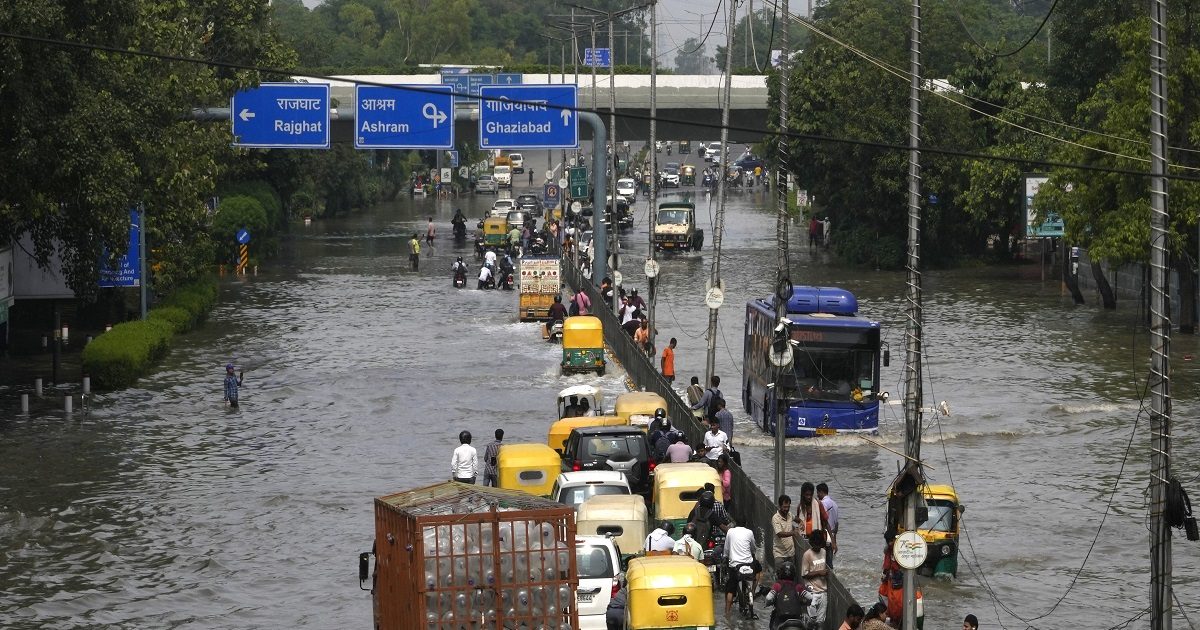
The collapse occurred hours after heavy rain battered the national capital and adjoining areas, paralysing movement across arterial stretches such as Krishna Menon Marg, Feroz Shah Kotla Road and Arjangarh. Vehicles crawled through waterlogged stretches on Mathura Road, while major underpasses were submerged, further intensifying commuter woes.Compounding the crisis, the Yamuna river continued to flow above the danger level of 205.33 metres, reaching nearly 207 metres at the Old Railway Bridge. This rekindled fears of further flooding, recalling the historic peak level of 208.66 metres recorded last year. Relief agencies moved swiftly to monitor vulnerable zones and relocate residents from low-lying areas.
Meteorological forecasts offer little respite. The India Meteorological Department predicted a generally cloudy sky with moderate rain for the next two days, with thunderstorms expected on September 6. Experts warn that sustained rainfall, coupled with weakened civic infrastructure, could trigger more such collapses, adding to the city’s flood risk.Urban planners argue that the collapse of the NH 44 flyover is emblematic of systemic neglect in maintaining infrastructure exposed to changing weather patterns. They emphasise that unchecked urbanisation, poor drainage networks, and delayed repairs have heightened the vulnerability of flyovers, bridges, and underpasses across the capital. With climate change intensifying rainfall patterns, Delhi faces the dual challenge of safeguarding infrastructure and ensuring public safety.
Officials from the civic administration have assured that immediate inspections of other key flyovers and bridges are underway. Engineers are expected to conduct structural audits to assess vulnerabilities in light of the collapse. Traffic police have diverted vehicles to alternative routes, but bottlenecks remain a daily struggle for thousands of commuters.Environmental experts say the incident underscores the need for a holistic approach to urban planning. Beyond reactive measures, the capital requires resilient construction standards, eco-friendly drainage solutions, and transparent monitoring systems to withstand the pressures of erratic weather. They caution that unless Delhi reimagines its urban design around sustainability, such incidents will remain an annual reminder of systemic fragility.
For now, Delhi residents continue to navigate flooded streets, stalled vehicles, and collapsing infrastructure as rains persist. The flyover collapse may not have caused large-scale casualties, but it has become a symbolic warning of what unchecked climate stress and neglected infrastructure can cost India’s capital.