


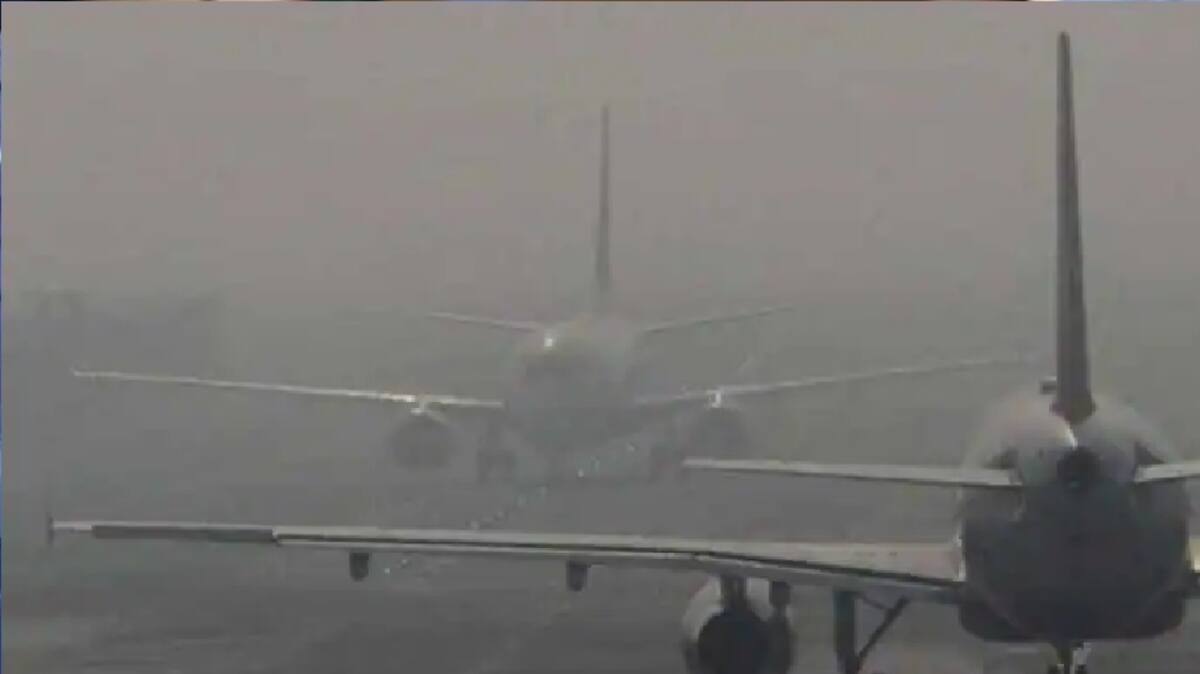
Heavy rainfall has once again left Delhi-NCR paralysed, with widespread waterlogging disrupting daily life and flight operations at the city’s international airport. The downpour, persisting over the last few days, has intensified urban flooding across key residential and commercial districts, forcing commuters and businesses into yet another cycle of disruption.
By Thursday evening, flight operations at Indira Gandhi International Airport were severely affected. According to data from aviation trackers, more than 273 departures and 73 arrivals were delayed. Passengers were left stranded inside terminals and aircraft alike as airlines scrambled to reschedule operations. Airport authorities issued advisories citing the Indian Meteorological Department’s forecast of continuing inclement weather, urging passengers to monitor real-time updates.
Also Watch: An Exclusive Interview with Sanjeev Jaiswal (IAS), CEO MHADA
The city’s road network was equally hard hit. Waterlogging was reported from Safdarjung, Kashmere Gate, Connaught Place and India Gate, creating traffic snarls across central and northern districts. Visuals from arterial routes showed vehicles stranded in knee-deep water as storm drains failed to cope with the relentless rainfall.Meanwhile, Delhi’s long-standing vulnerability to rising river levels resurfaced as discharge from upstream barrages surged. Data from the Irrigation Department revealed outflows of 1,65,211 cusecs at Hathni Kund Barrage, 1,76,850 cusecs at Wazirabad Barrage, and a staggering 2,09,439 cusecs at Okhla Barrage. These volumes have pushed the Yamuna river closer to danger levels, sparking concerns of fresh flooding in low-lying neighbourhoods.
Officials from the Flood and Irrigation Department were seen inspecting the ITO Barrage to monitor real-time water levels. Relief measures have been placed on standby, with evacuation plans for vulnerable riverbank communities being actively reviewed. Experts warn that if the barrage discharges remain high, the risk of overflow into nearby colonies could intensify over the coming days.The crisis reflects deeper challenges for Delhi as an urban ecosystem. Experts stress that a mix of outdated drainage infrastructure, unchecked construction on floodplains and weak disaster management planning has left the city ill-prepared for increasingly erratic monsoon cycles. The mounting number of delayed flights at IGI Airport also raises questions on the capital’s transport resilience, as critical nodes of connectivity continue to falter under pressure.
Environmental planners emphasise that solutions must move beyond short-term relief measures. The focus, they argue, should shift towards eco-sensitive infrastructure, better integration of natural water channels into urban design, and climate-resilient planning that aligns with the realities of heavier monsoons and volatile discharge cycles.For now, Delhi remains in a state of cautious watch. While airport staff, traffic police and flood control authorities race to manage immediate challenges, residents continue to brace themselves for the monsoon’s next move a reminder of the capital’s urgent need for sustainable resilience.
