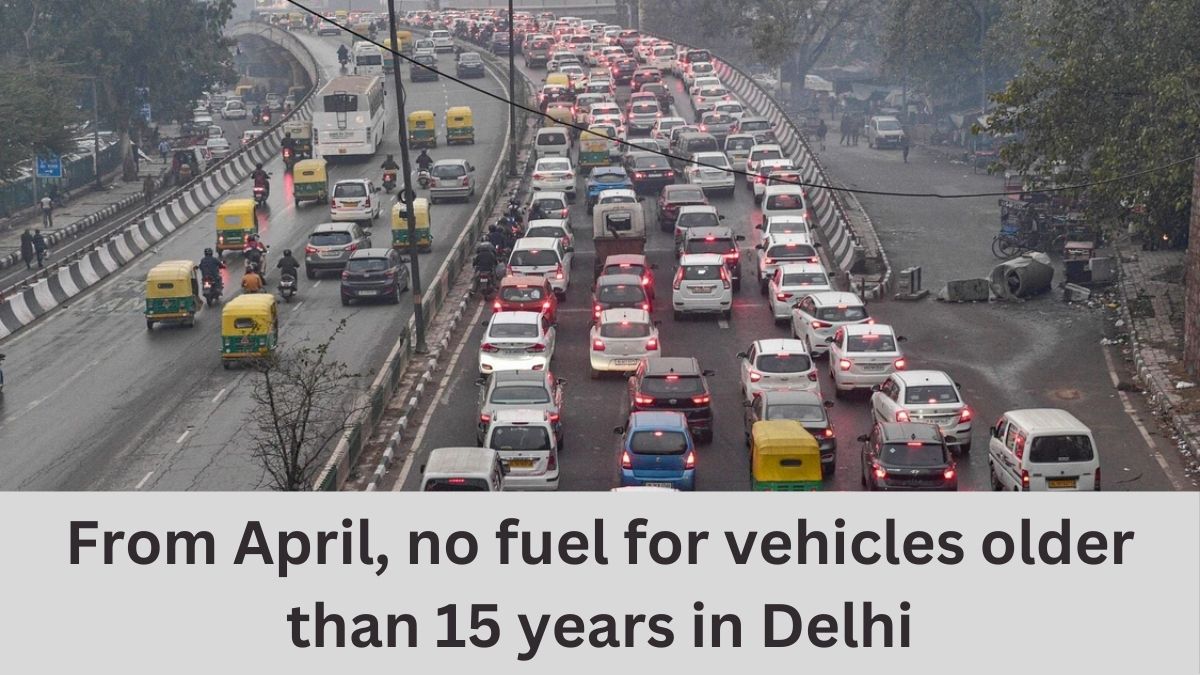
Delhi is on the brink of enforcing a pioneering crackdown on ageing vehicles as it finalises plans to prohibit fuel sales to petrol and diesel vehicles that have exceeded their legal age limit.
The move, designed to curb hazardous vehicular pollution, is expected to take effect within the next two weeks, pending a green signal from the Commission for Air Quality Management (CAQM). Once enforced, the policy will mark a first-of-its-kind implementation in India, combining regulatory oversight with cutting-edge technology to address one of the capital’s most persistent air quality threats. Officials confirmed that Automatic Number Plate Recognition (ANPR) cameras have been installed at 485 of Delhi’s 500 fuel stations. The remaining stations are expected to go live shortly.
The new mechanism will rely on real-time number plate scanning, with ANPR systems automatically cross-referencing vehicle data from the national mParivahan database. If a vehicle is flagged as an “End-of-Life Vehicle” (ELV)—defined as petrol vehicles older than 15 years and diesel vehicles older than 10 years—it will be denied refuelling at any Delhi-based petrol pump, irrespective of where it is registered. Authorities have underscored that this enforcement aligns with longstanding environmental directives, including the National Green Tribunal’s 2015 ruling and the Supreme Court’s 2018 judgement mandating the removal of aged vehicles from Delhi’s roads. The city has already impounded over 22,000 such vehicles in 2023, with an additional 2,300 seized in the first three quarters of 2024. Yet lakhs of ELVs reportedly continue to operate unlawfully, exacerbating Delhi’s already hazardous air quality index (AQI).
This strict measure forms a critical part of Delhi’s broader clean air strategy, with the transport department aiming to drastically cut down vehicular emissions, one of the primary contributors to the city’s winter smog. While Delhi has adopted electric buses and implemented pollution-control norms for industries, ELVs remain a stubborn challenge. Experts within the sustainable mobility sector have welcomed the move as a significant step forward but raised practical concerns about its rollout. Among them is the lack of sufficient public awareness about the scheme, the complexity of managing cross-border ELV entries, and the absence of a dedicated scrappage facility within the city limits. Some analysts have suggested the government must accompany the crackdown with clear exemptions—for instance, for certified vintage vehicles or those granted special permits for commercial or emergency services.
Officials familiar with the matter acknowledged these gaps and confirmed that comprehensive public communication guidelines are under preparation. A senior administrative official involved in the implementation noted that while the technological infrastructure is nearly complete, smooth execution will require inter-departmental coordination and ongoing monitoring. Beyond technical enforcement, there is also a human element at play. Many Delhiites, particularly from lower-income groups, still rely on older two-wheelers or cars that fall under the ELV category. A sudden denial of fuel could adversely affect livelihoods unless accompanied by affordable alternatives such as scrappage incentives or easy financing for electric vehicles. Environmental planners argue that without a socio-economic buffer, such initiatives could risk widening urban inequalities, especially in a city already grappling with class-based mobility gaps.
That said, the overarching objective of improving public health and reducing toxic emissions remains central. Delhi consistently ranks among the world’s most polluted capitals, and vehicular emissions contribute significantly to this public health crisis. The ELV fuel ban, once in place, is expected to act as both a deterrent and a catalyst—pressuring residents to transition to cleaner mobility options while nudging manufacturers and financiers towards greener alternatives. As the countdown begins for CAQM’s final nod, Delhi’s fuel station operators are preparing to enforce the mandate, trained to respond to system prompts and guide motorists flagged under the ANPR system. Enforcement agencies are also reportedly gearing up for the next phase: on-road monitoring to catch fuel scofflaws and ensure wider compliance.
If implemented effectively, Delhi’s ELV fuel ban could serve as a blueprint for other Indian cities, marking a paradigm shift in how urban India enforces environmental accountability—not just through policy, but through proactive, tech-led public infrastructure.
Delhi Finalises Fuel Ban for Over-Age Vehicles to Tackle Toxic Emissions