


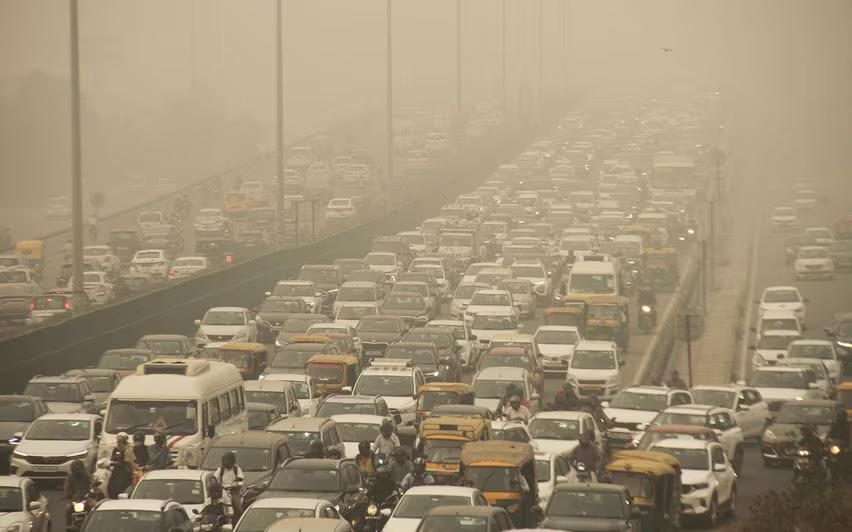
Delhi has once again been blanketed in a thick layer of smog, with the city’s air quality index (AQI) soaring to a hazardous 442 on Wednesday morning. This marked a significant return to the ‘severe’ category, just days after a brief period earlier this month when the capital experienced the cleanest air it had seen in five years. A total of 32 out of 37 monitoring stations recorded alarming AQI levels, with Anand Vihar and Burari Crossing reporting the highest readings at 481 AQI.
The intense fog, compounded by calm winds and low temperatures, severely impacted visibility, with readings at the Safdarjung station dropping to just 50 meters at 6:30 am. This extreme weather pattern, combined with poor air quality, has triggered the implementation of stringent anti-pollution measures under the Graded Response Action Plan (GRAP-IV). These measures include the banning of construction activities, restrictions on truck entry, and limitations on BS III petrol and BS IV diesel vehicles. Schools have shifted to a hybrid learning model for junior classes to mitigate health risks, reflecting the dire conditions faced by residents.
The return of such hazardous pollution levels raises urgent questions about the city’s air quality management and the ongoing struggle to balance rapid urbanisation with environmental sustainability. While the measures under GRAP are designed to reduce pollution, experts argue that long-term solutions require a shift towards sustainable urban planning, more green spaces, and cleaner technologies. The immediate actions may provide short-term relief, but only a more comprehensive approach to pollution control will ensure a future where residents don’t face such extreme conditions.
The India Meteorological Department (IMD) has also issued a cold wave warning for the next 5-7 days, marking an early onset of winter conditions compared to the past two decades. These cold wave conditions, which occur when temperatures dip significantly below the average, are expected to further deteriorate air quality, as the cold air traps pollutants close to the surface. This presents an additional challenge for the city’s already overstretched environmental systems, making it imperative to explore sustainable solutions that address both climate and air quality concerns in parallel.
