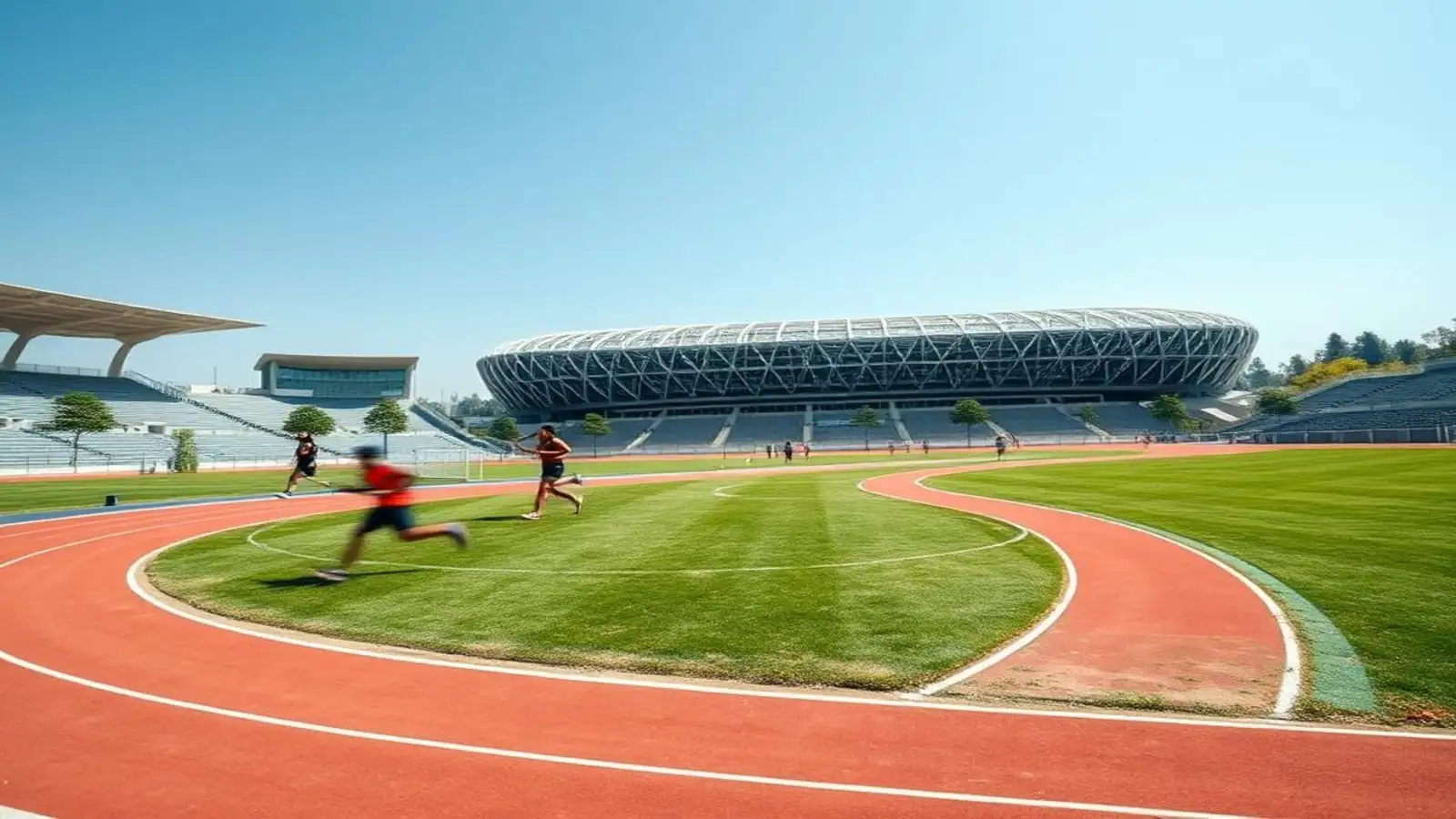
Delhi’s cricket administration has initiated formal discussions with both the city and Union governments to secure land for a proposed mega cricket stadium, a project that could reshape sports infrastructure and urban development priorities in the national capital. The planned venue, designed to seat between 60,000 and 70,000 spectators, would significantly expand Delhi’s capacity to host international fixtures and large-scale events.
According to senior officials familiar with the proposal, multiple land parcels across Okhla, Dwarka, Rohini and Narela are under consideration.
The association is seeking approximately 45 acres to accommodate not only the main arena but also a dedicated academy, practice facilities and an auxiliary ground. The emphasis, officials say, is on identifying a site with strong Metro access, arterial road connectivity and proximity to hospitality and healthcare services. The proposed Delhi mega cricket stadium emerges at a time when Indian cities are increasingly leveraging sports infrastructure to anchor mixed-use development and stimulate local economies. Urban planners note that modern stadium projects are no longer standalone structures; they often catalyse transit-oriented development, commercial real estate activity and neighbourhood regeneration.
Delhi currently relies on an ageing central-city venue with a seating capacity of roughly 35,000. Its dense urban surroundings restrict expansion, prompting administrators to explore greenfield options. A larger venue would align Delhi with other metropolitan centres that have invested in high-capacity arenas capable of hosting global tournaments, entertainment events and community programmes.
From a planning perspective, location will be decisive. Dwarka and Narela offer larger land parcels and evolving residential clusters, while Okhla and Rohini provide established connectivity. Transport economists argue that situating the Delhi mega cricket stadium along high-frequency public transit corridors could mitigate match-day congestion and lower the carbon footprint associated with private vehicle use.
The proposal also raises questions about sustainable construction and long-term operational efficiency. Experts in climate-responsive design suggest that new stadiums must integrate solar generation, water recycling systems and passive cooling features to remain viable in an era of rising temperatures and tightening environmental regulations. Incorporating green buffers and multimodal access would further align the project with Delhi’s broader air quality and mobility goals.
Industry analysts indicate that large sports venues can unlock employment during construction and create permanent roles in facility management, hospitality and event services. However, they caution that financial viability depends on diversified usage beyond cricket, including cultural events and community engagement.
Discussions between the cricket body and government stakeholders are ongoing, with land allocation seen as the critical next step. If approvals materialise within the year, planning and environmental clearances would follow. For Delhi, the Delhi mega cricket stadium represents more than an expansion of sporting capacity. It presents a test case in how the capital integrates major infrastructure into a dense urban fabric while balancing economic opportunity, environmental responsibility and equitable access to public spaces.
Delhi Eyes New Sports Infrastructure Hub