


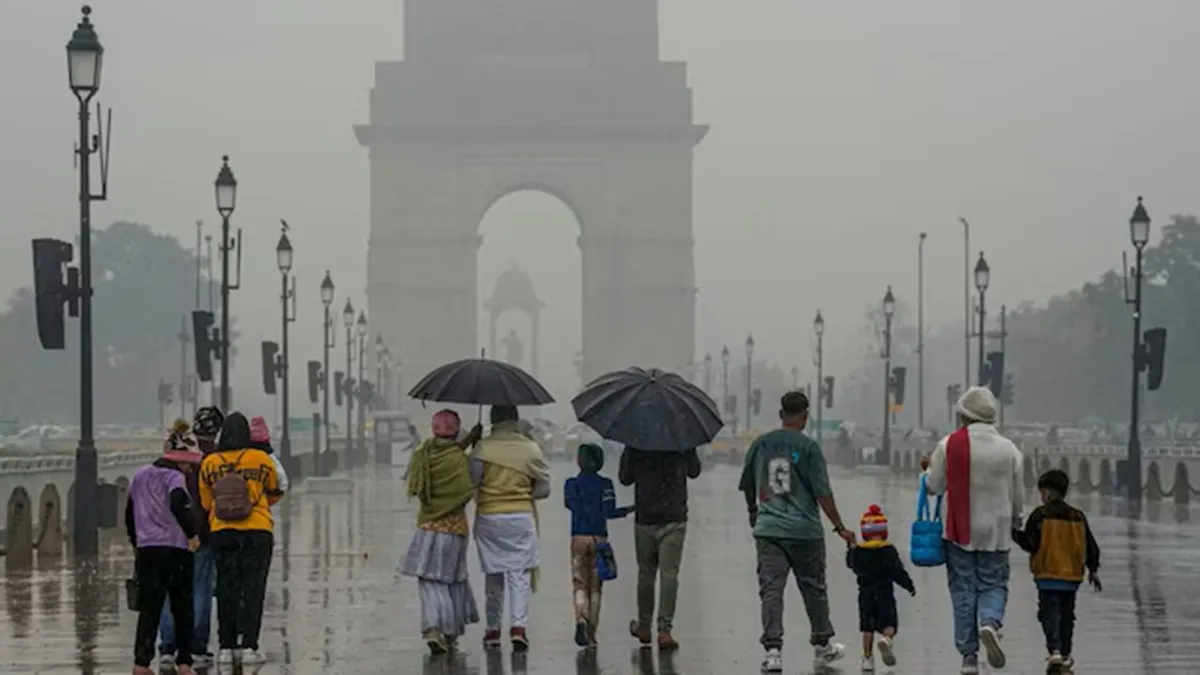
Heavy monsoon showers on Sunday morning drenched Delhi, leading to severe waterlogging across key localities including Deoli, Connaught Place, Moti Bagh, ITO, Mukherjee Nagar and Pul Prahladpur. Meanwhile, residents found some solace in the improved air quality which remained within the satisfactory range.
Data from the India Meteorological Department (IMD) shows Mayur Vihar received the highest rainfall at 27 mm between 11:30 pm Saturday and 2:30 am Sunday, followed by Pusa with 24.5 mm, Najafgarh at 22 mm, and Pragati Maidan registering 18.7 mm. Lower volumes of 14.2 mm at Palam and 8.2 mm at Safdarjung were also recorded. Satellite reports confirmed lighter showers at Ridge, Ayanagar and Lodi Road during the same window. These rains came after subdued activity on Friday and Saturday, but intensified late Saturday night, resulting in sudden flash flooding in several transit corridors. The minimum temperature fell to 24.2 °C, approximately 2.9 degrees below the seasonal norm.
Despite the disruption, the Central Pollution Control Board’s (CPCB) Air Quality Index (AQI) reading hovered at 78–79 around 9 am—categorised as ‘satisfactory’. According to government forecasts, air quality is expected to remain within the ‘satisfactory’ to ‘moderate’ range through early August. The rainfall provided short-term relief from Delhi’s oppressive heat and helped wash away surface pollutants, echoing expert reports from June indicating how wind and rain temporarily improved the city’s air quality to its best levels in months
However, urban planners warn that such episodes underline systemic vulnerabilities in stormwater and drainage infrastructure. Even brief spells of rain triggered urban flooding, exposing gaps in municipal preparedness and prompting calls for robust green drainage solutions and urban resilience planning. With the IMD forecasting more moderate showers and isolated thunderstorms over the coming days—including light rains between August 4 and 8—residents are advised to remain alert. Local authorities have also been urged to monitor waterlogging risks and keep traffic routes clear during peak hours.
The city’s dual scenario—flooded streets paired with clean air—underscores contrasting environmental challenges. While rainfall offers temporary relief from pollution, permanent improvement demands better urban planning, reduced emissions, and sustained investments in metro‑driven, low‑carbon mobility frameworks. Overall, Sunday’s downpour brought both disruption and a breath of fresh air. As the monsoon pattern steadies, Delhi must leverage such events to build more climate‑resilient infrastructure and ensure equitable urban living conditions for all.
Also Read : Kolkata Authorities Act Promptly to Save 50‑ft Kadam Tree
