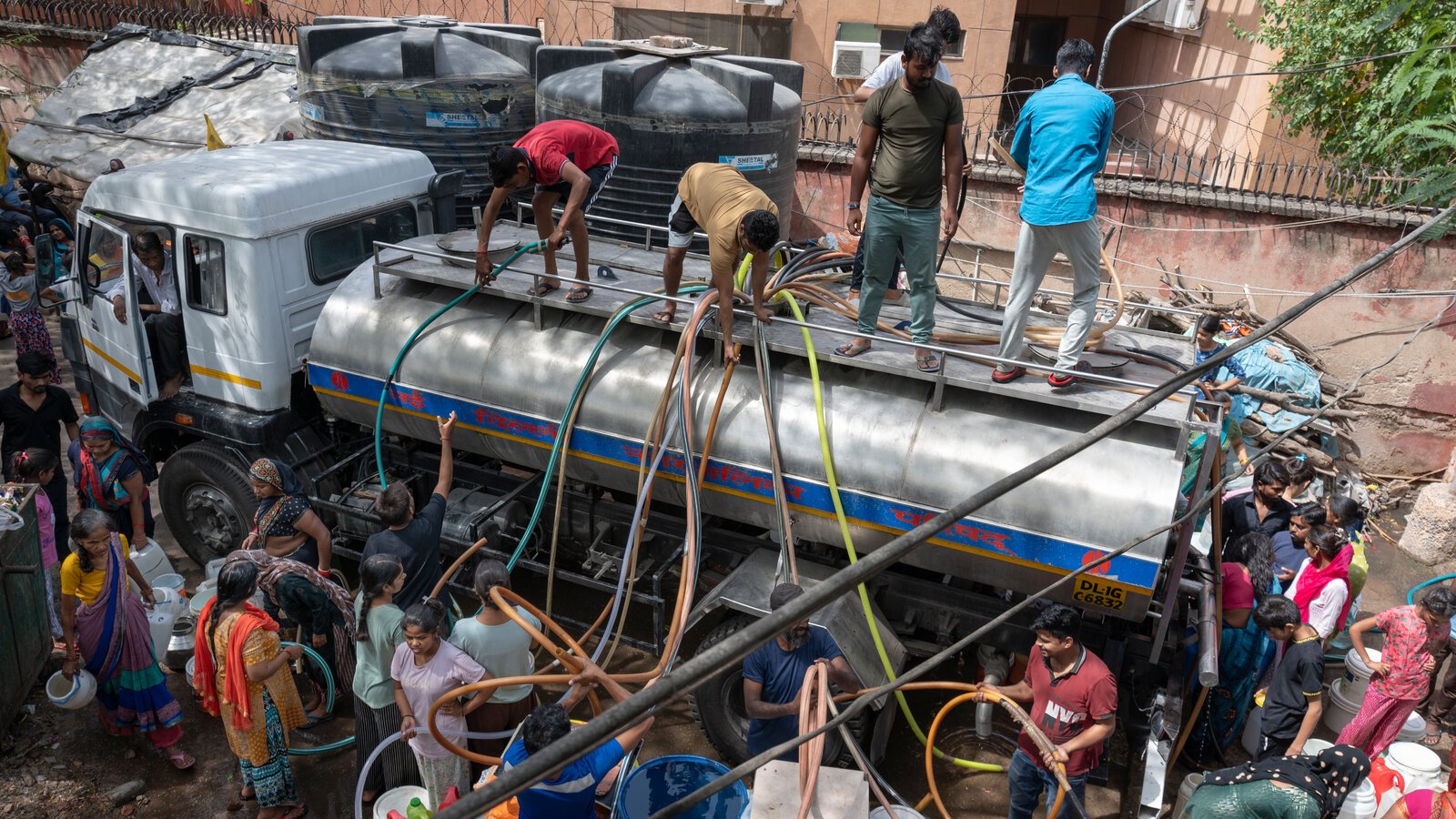
Delhi Expands Summer Water Supply With Tankers Push
Delhi is preparing for peak summer stress on its water systems with a significant scale-up in supply and distribution, as authorities aim to stabilise access across a rapidly growing urban population. The city’s latest summer action plan targets water production of just over 1,000 million gallons per day, alongside an expanded tanker network, underscoring the widening gap between demand and available resources in one of India’s most water-stressed megacities. Officials indicate that the Delhi summer water supply strategy is being recalibrated to manage both seasonal spikes and structural shortages. The plan includes deploying more than 1,200 water tankers and increasing fixed distribution points across neighbourhoods, particularly in areas with limited pipeline coverage. This reflects a shift towards decentralised delivery models where piped infrastructure remains insufficient or unreliable.
The rising pressure on water systems is closely linked to urban expansion and population growth. Recent data shows a steady increase in household connections, pushing the network closer to its operational limits. While nearly all households are now linked to piped supply, inconsistencies in distribution continue to affect peripheral and informal settlements, where tanker dependency remains high during summer months. Urban planners point out that the Delhi summer water supply approach highlights a broader challenge: balancing immediate relief measures with long-term sustainability. Tankers, while essential in emergencies, are resource-intensive and often inequitable in distribution. Experts suggest that without parallel investments in groundwater recharge, leak reduction, and reuse systems, such interventions risk becoming permanent rather than transitional solutions. The plan also includes the addition of several hundred new tubewells to augment supply. This move is expected to increase groundwater extraction capacity, raising concerns about long-term aquifer health.
Environmental analysts caution that excessive reliance on groundwater, particularly in a city already facing declining water tables, could undermine resilience unless accompanied by strong recharge mechanisms such as rainwater harvesting and restoration of urban water bodies. Technology is being positioned as a key enabler in managing demand and improving service delivery. Authorities are introducing digital tools for real-time complaint tracking and customer engagement, aiming to reduce response times and improve transparency. This aligns with a broader push towards data-driven urban governance, where service efficiency and citizen feedback play a larger role in infrastructure planning. The emphasis on scaling treatment capacity to higher levels also signals a strategic pivot towards future-proofing the city’s water infrastructure. Decentralised sewage treatment and reuse systems are expected to play a role in reducing freshwater demand, particularly for non-potable uses such as landscaping and construction.
As temperatures rise, the effectiveness of the Delhi summer water supply plan will be closely watched, not only for its ability to meet immediate needs but also for how it shapes longer-term urban water resilience. The coming months are likely to test whether short-term supply augmentation can align with the city’s broader goals of sustainability, equity, and climate adaptation.