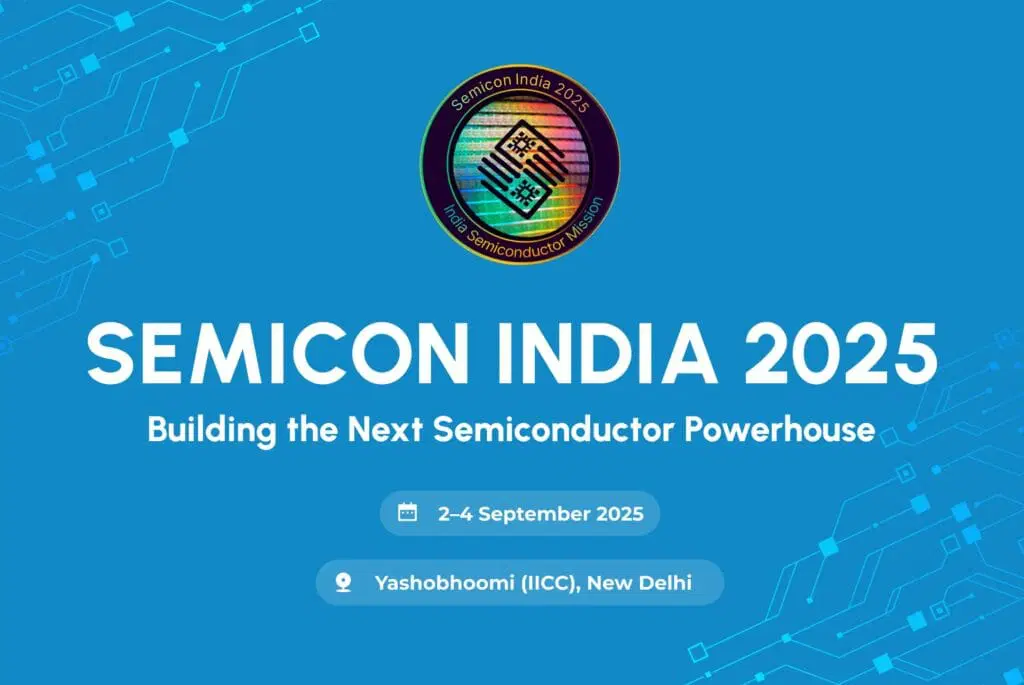
Delhi Expands Semicon India Programme Strengthening Full-Scale Semiconductor Design And Fabrication
Delhi is rapidly advancing its semiconductor ambitions through the Semicon India Programme, aiming to build a complete chip ecosystem encompassing design, fabrication, assembly, testing, and packaging. Union Minister of State for Electronics and IT, Jitin Prasada, highlighted that ten units approved under the programme have attracted ₹1.6 lakh crore in investments, targeting strategic sectors such as consumer electronics, automotive, telecom, aerospace, and industrial electronics, while boosting domestic capability and positioning India as a global semiconductor hub.
The government’s Production Linked Incentive (PLI) schemes have been instrumental in accelerating electronics manufacturing. Large-scale electronics manufacturing PLI, focused on mobile phones and essential components, has drawn ₹14,065 crore in investments as of October 2025, while IT hardware PLI, supporting laptops, tablets, servers, and ultra-small form factor devices, has garnered ₹846 crore. These initiatives have helped expand manufacturing output sixfold over the past decade, from ₹1.9 lakh crore in 2014-15 to ₹11.32 lakh crore in 2024-25, and propelled electronics exports to ₹3.26 lakh crore, now India’s third-largest export category.To strengthen domestic chip design, the Design Linked Incentive (DLI) Scheme has supported 23 companies developing 24 chip and SoC designs for satellite communications, drones, IoT devices, AI applications, LED drivers, smart meters, and telecom equipment. Additionally, 94 startups have received free access to Electronic Design Automation (EDA) tools, enabling nearly 47 lakh hours of design activity, a senior industry official noted.
Talent development is central to the programme’s success. The Chips to Startup (C2S) initiative has provided advanced design tools to 397 universities and startups, resulting in 56 chip designs at the Semiconductor Laboratory (SCL), Mohali, and training over 67,000 students and researchers. Complementing this, AICTE has introduced B.Tech in Electronics Engineering (VLSI Design), a Diploma in IC Manufacturing, and a Minor in VLSI Design and Technology, aligning academic pathways with industry needs. The SMART Lab at NIELIT Calicut has trained more than 62,000 engineers, targeting nationwide capacity for 1 lakh trainees.Industry-academia collaboration is further exemplified by the Indian Semiconductor Mission’s partnership with Lam Research, which aims to train 60,000 professionals in nanofabrication and advanced packaging over the next decade. The FutureSkills PRIME programme, a MeitY-NASSCOM initiative, complements these efforts by upskilling India’s digital workforce in emerging technologies, including semiconductors, through flexible, industry-aligned online learning.
By combining infrastructure development, strategic incentives, design support, and workforce training, the Semicon India Programme is positioning India as a self-reliant, globally competitive semiconductor hub. Experts suggest that this integrated approach will not only meet domestic demand but also create opportunities for India to capture a significant share of the international semiconductor market.