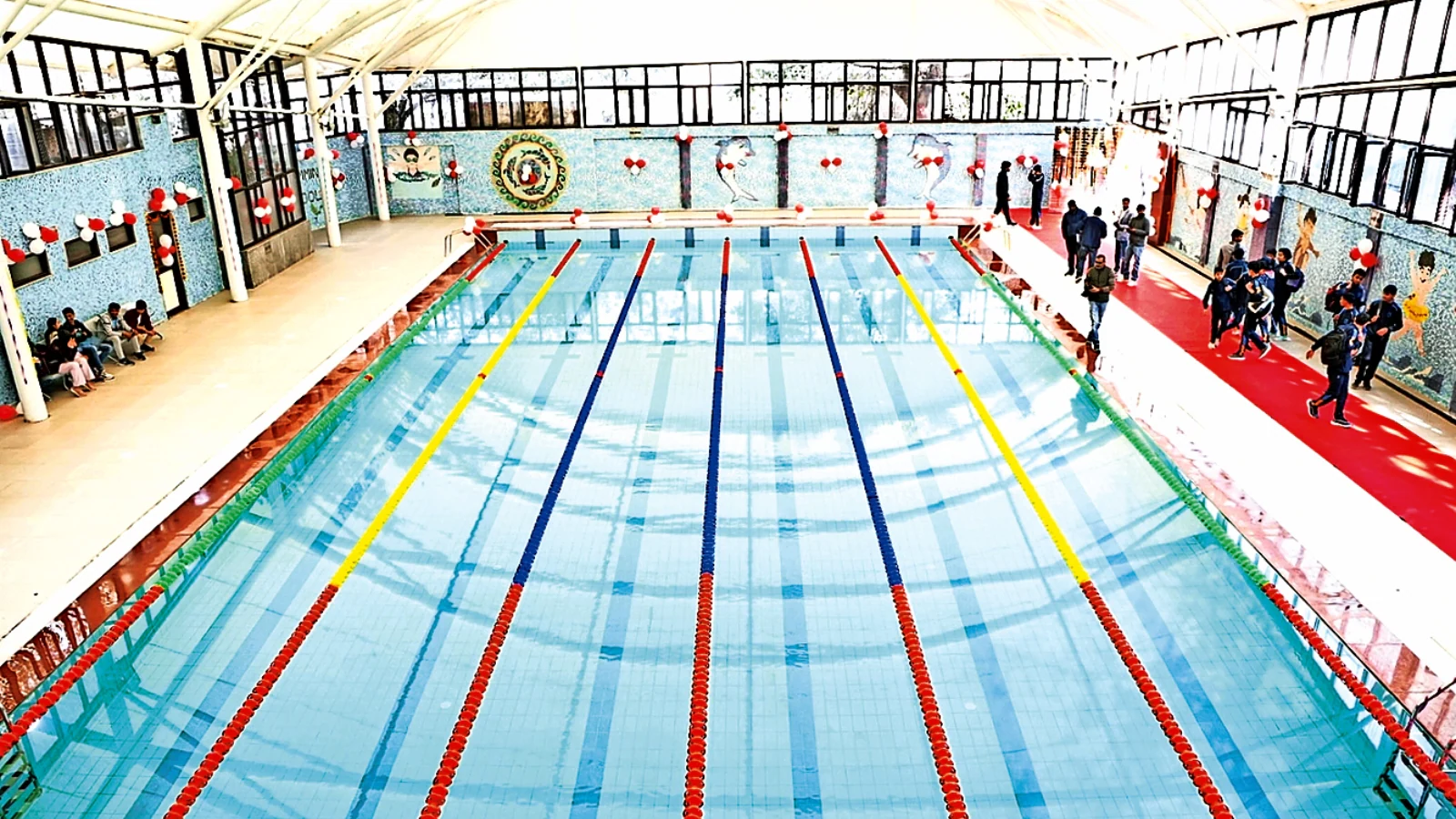
Delhi Expands School Sports Infrastructure With New Facility
Delhi has added a new public school sports facility in northwest Delhi, marking a step towards strengthening grassroots athletic infrastructure within the education system. The project, located at a government school campus in Saraswati Vihar, reflects a growing emphasis on integrating physical development with academic learning in urban schooling environments. The newly operational facility, developed as part of a broader push for school sports infrastructure, is expected to serve not only enrolled students but also young residents in surrounding neighbourhoods. Officials indicate that the aim is to expand access to structured sports training in areas where such facilities are limited, particularly for students from economically diverse backgrounds.
Urban education planners highlight that investments in school sports infrastructure can play a significant role in improving both physical well-being and educational outcomes. Access to dedicated sports amenities within school premises reduces dependency on private training centres, which often remain inaccessible to many families due to cost or distance constraints. The project has been in the pipeline for several years, reflecting broader challenges in executing public infrastructure within dense urban settings. Delays in delivery are not uncommon, particularly where multiple agencies are involved or where funding cycles evolve over time. However, the completion of such facilities is increasingly seen as essential to meeting the changing expectations of urban education systems. Beyond sports development, the initiative ties into wider efforts to upgrade public school infrastructure in the Capital. Authorities have been focusing on improving learning environments, enhancing teaching standards and introducing performance benchmarks across schools.
Education experts suggest that combining academic improvements with physical development infrastructure can lead to more balanced student outcomes. From a city planning perspective, embedding sports facilities within school campuses also contributes to more efficient land use. In densely populated areas like Delhi, where open spaces are limited, integrating recreational infrastructure into existing institutional land parcels is seen as a practical approach. This model can help maximise the utility of public assets while promoting healthier urban lifestyles. There are also broader social implications. Access to structured sports environments can create pathways for talent identification and competitive participation at district, state and national levels. Financial support mechanisms for students pursuing sports are being aligned with these infrastructure upgrades, enabling more inclusive participation. Experts note that such developments, while modest in scale individually, collectively contribute to building a more resilient and people-centric urban ecosystem. As cities grapple with rising health concerns and limited recreational spaces, investments in school-level infrastructure can have long-term benefits for community well-being.
Looking ahead, the effectiveness of these initiatives will depend on maintenance, accessibility and integration with training programmes. If sustained, the expansion of school sports infrastructure could play a key role in shaping a more inclusive and health-oriented urban education model in Delhi.