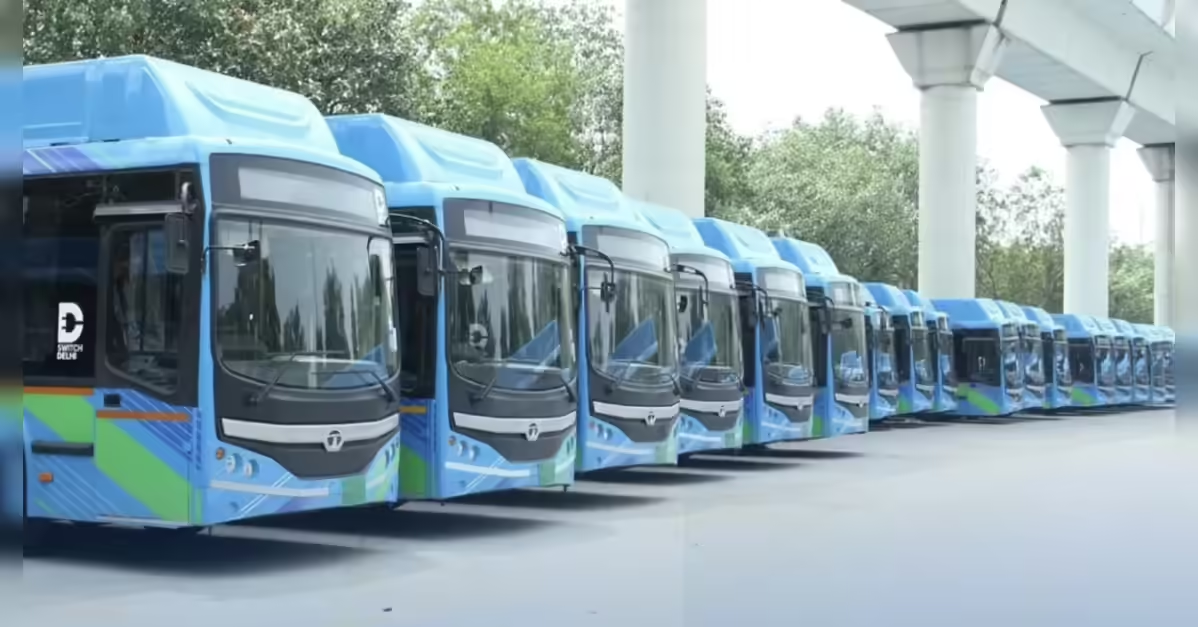
Delhi has taken a significant step towards reshaping its public transport ecosystem with the induction of 500 electric buses into the city fleet and the restoration of a direct bus connection with Panipat. The move strengthens the capital’s clean mobility ambitions while signalling a renewed focus on regional connectivity within the National Capital Region and neighbouring growth corridors.
With the latest addition, Delhi’s operational bus fleet has crossed the 4,000-mark, according to transport officials. The expansion comes at a time when the city is grappling with rising travel demand, persistent air quality concerns, and pressure on road infrastructure. Urban planners view the scale-up of electric buses as a crucial lever to reduce tailpipe emissions while improving last-mile accessibility across dense residential and employment clusters. Officials involved in transport planning say the longer-term objective is to significantly increase fleet capacity over the next three years. A larger, cleaner bus network is expected to ease congestion, lower per-capita transport emissions, and support a shift away from private vehicle dependence particularly in outer districts where metro coverage remains limited.
The resumption of the Delhi–Panipat bus service after nearly two decades is equally significant from a regional planning perspective. Panipat sits along a rapidly urbanising industrial corridor connecting Haryana’s manufacturing hubs with the capital’s labour and consumer markets. Regular, affordable bus services are expected to improve workforce mobility, reduce informal travel arrangements, and ease pressure on private intercity vehicles. Transport economists note that interstate public bus services play a critical role in enabling equitable access to employment and education, particularly for daily and weekly commuters. Reliable services can also reduce the carbon footprint of short-distance intercity travel, which is often dominated by diesel-powered cars and minibuses.
The electric bus rollout is closely linked to broader policy changes underway in the capital. Officials indicated that an updated electric vehicle framework is expected to guide future procurement, charging infrastructure deployment, and private sector participation. Industry experts say clarity on fleet electrification timelines and depot upgrades will be key to sustaining operational efficiency as the network scales. Beyond mobility, the expansion carries implications for urban development and real estate. Improved public transport connectivity tends to raise the viability of mixed-use development along bus corridors, particularly in peripheral zones where land values are more affordable and infrastructure investment is still catching up.
As Delhi accelerates its transition towards cleaner transport, the challenge will lie in ensuring service reliability, financial sustainability, and integration with metro and non-motorised transport networks. How effectively these systems align will shape not only daily commutes, but also the capital’s ability to grow as a climate-resilient and inclusive metropolitan region.
Delhi Expands Electric Bus Network and Regional Links