


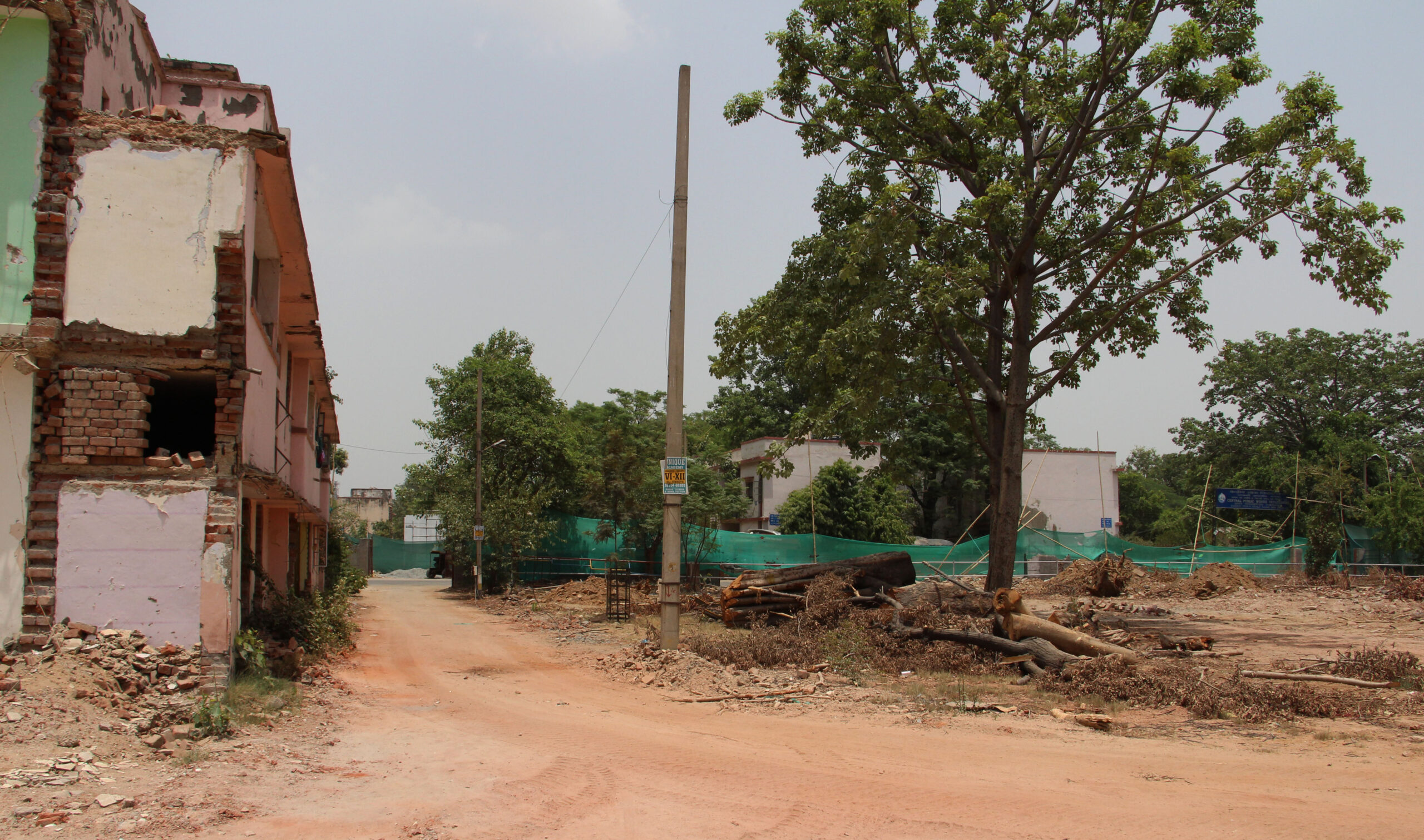
A key government housing project in Kasturba Nagar has moved one step closer to construction following a formal exemption granted under Delhi’s tree preservation laws. The clearance potentially paves the way for felling or transplantation of 856 trees on an 8.9-hectare site allocated for General Pool Residential Accommodation (GPRA) — reigniting a debate on balancing infrastructure development with environmental conservation in one of the world’s most polluted capital cities.
The exemption, granted under Section 29 of the Delhi Preservation of Trees Act, 1994, lifts the existing restriction that limits tree clearance consideration to sites of up to one hectare. With this order in place, the Central Public Works Department (CPWD) can now apply for removal or transplantation of trees on the large-scale Kasturba Nagar site, subject to a final decision by the designated Tree Officer. Officials clarified that the exemption itself does not translate into immediate permission to axe or relocate trees. A detailed inspection and compliance process under the Act remains necessary, as do adherence to court rulings concerning urban greenery and environmental accountability. Nonetheless, the move signals a shift in administrative stance, indicating a prioritisation of built infrastructure in a city already struggling with reduced green spaces and alarming pollution metrics.
The redevelopment of Kasturba Nagar is part of a broader initiative to modernise seven GPRA colonies across South Delhi. Managed by CPWD, the plan involves construction of modern, high-density housing blocks to replace ageing residential infrastructure, largely intended for government officials. Of these seven colonies, two — in Mohammadpur and Thyagraj Nagar — have already been completed. This recent exemption marks the fourth such decision in recent months, following similar clearances granted for the redevelopment of New Delhi Railway Station, the Common Central Secretariat, and a flyover in northeast Delhi. The frequency of these exemptions is raising concern among conservationists and political opposition figures who argue that Delhi’s green cover is shrinking at a time when it should be expanding.
Critics have flagged the exemption as another setback for environmental and social equity in the capital. They contend that while tree protection rules are waived for elite development projects, stringent pollution-control restrictions continue to be enforced on the general public. Further, allegations have surfaced suggesting that the redevelopment plans mask a larger agenda to reshape urban land use in favour of vertical high-rise development, often at the cost of the city’s poorer communities and green buffers. Environmentalists argue that Delhi’s deteriorating air quality, frequent heatwaves, and declining biodiversity demand a more cautious, eco-sensitive approach to redevelopment. They stress that mature urban trees — particularly those older than 20 years — play an outsized role in carbon sequestration, air purification, and thermal regulation, making them irreplaceable even when compensatory plantations are undertaken.
At the heart of the controversy lies a fundamental question: Can a rapidly growing city meet its infrastructure demands without degrading its natural assets? For many urbanists and planners, the answer lies in adopting vertical yet verdant development strategies — blending high-density housing with mandatory green infrastructure, integrated biodiversity planning, and community accountability. The Kasturba Nagar case now awaits a technical evaluation by the Tree Officer, who will assess not just the number but the species, ecological value, and health of the trees on-site. Should permission for felling or transplantation be granted, it is expected to come with conditions requiring compensatory plantation and long-term ecological monitoring.
While no formal cutting has commenced, the exemption decision already marks a critical moment for Delhi’s urban planning framework. As the capital continues to urbanise, the choices made today in balancing growth and greenery could define the quality of life for generations to come.
Also Read :Telangana Begins Forest Revival to Reclaim Green Cover
