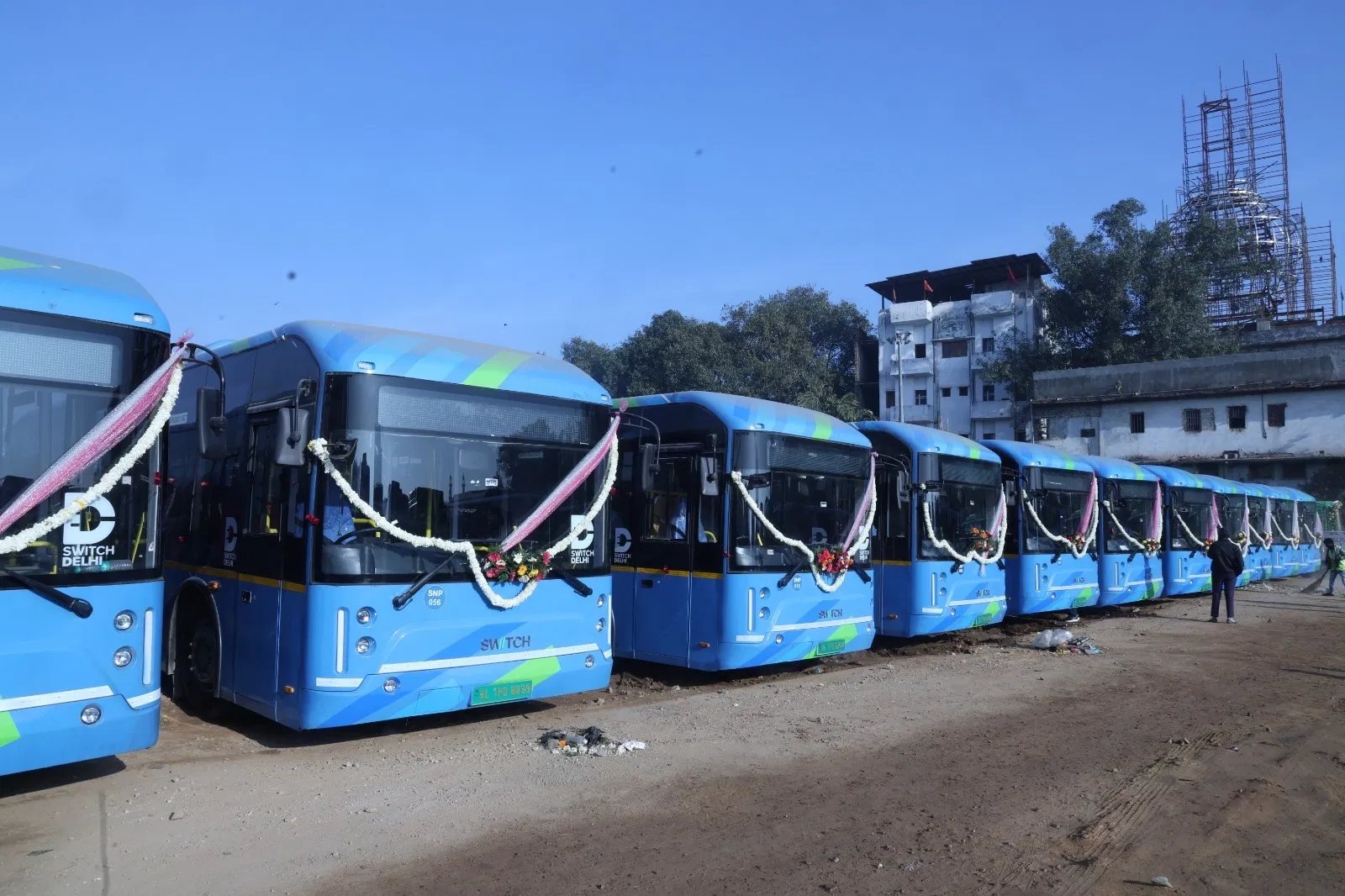
Delhi has advanced its clean mobility agenda with a fresh rollout of electric buses, new cross-border transit links, and the revival of financial incentives for electric vehicles, signalling a coordinated push to modernise urban transport systems. The latest phase of the Delhi electric bus expansion adds 300 zero-emission buses to the capital’s fleet while introducing an interstate service connecting key commuter corridors with neighbouring Ghaziabad. The expansion takes the city’s public bus fleet to over 6,000 vehicles, with a growing share powered by electricity. Transport planners indicate that scaling the network to nearly 14,000 buses over the next few years could significantly reduce reliance on private vehicles, easing congestion and lowering transport-related emissions.
For a city grappling with air quality challenges, the Delhi electric bus expansion is increasingly central to its climate and public health strategy. The newly introduced buses are designed for high-frequency urban operations, featuring low-floor access, onboard surveillance, and real-time tracking systems. Accessibility features for persons with disabilities have also been incorporated, aligning with inclusive mobility goals. Urban transport experts note that such upgrades are critical to improving user confidence in public systems, particularly among women, elderly passengers and daily wage commuters. A key component of the initiative is the launch of an interstate electric bus route linking eastern Delhi with Ghaziabad. The corridor, spanning over 20 kilometres, passes through dense residential and industrial zones, providing an alternative to informal and often unreliable transport options. Initially deployed as a pilot with limited buses and scheduled services, the route is expected to inform future regional electric transit planning across the National Capital Region.
Officials suggest that improving last-mile and intercity connectivity is essential for sustaining economic activity across urban clusters. By integrating electric buses into these routes, authorities aim to balance mobility demand with environmental considerations, especially in rapidly urbanising peripheries. Parallel to fleet expansion, the government has also reactivated its electric vehicle subsidy mechanism, addressing a backlog of pending disbursements. The revised system, integrated with direct benefit transfer infrastructure, is intended to streamline payments and restore confidence among EV buyers. Early disbursals have already reached thousands of beneficiaries, with further clearances planned in phases. From an infrastructure standpoint, the development of a new transport administration facility near the central depot reflects efforts to upgrade institutional capacity alongside service delivery. Officials indicate that energy-efficient design and modern communication systems will support operational efficiency as the network scales. Urban policy analysts point out that the success of the Delhi electric bus expansion will depend on sustained investment in charging infrastructure, depot modernisation, and grid readiness.
While the current rollout marks a step forward, long-term gains will require coordinated planning across transport, energy, and urban development agencies. As cities across India look to decarbonise mobility, Delhi’s evolving approach offers a test case in aligning public transport expansion with climate resilience and equitable access, particularly in one of the country’s most densely populated urban regions.