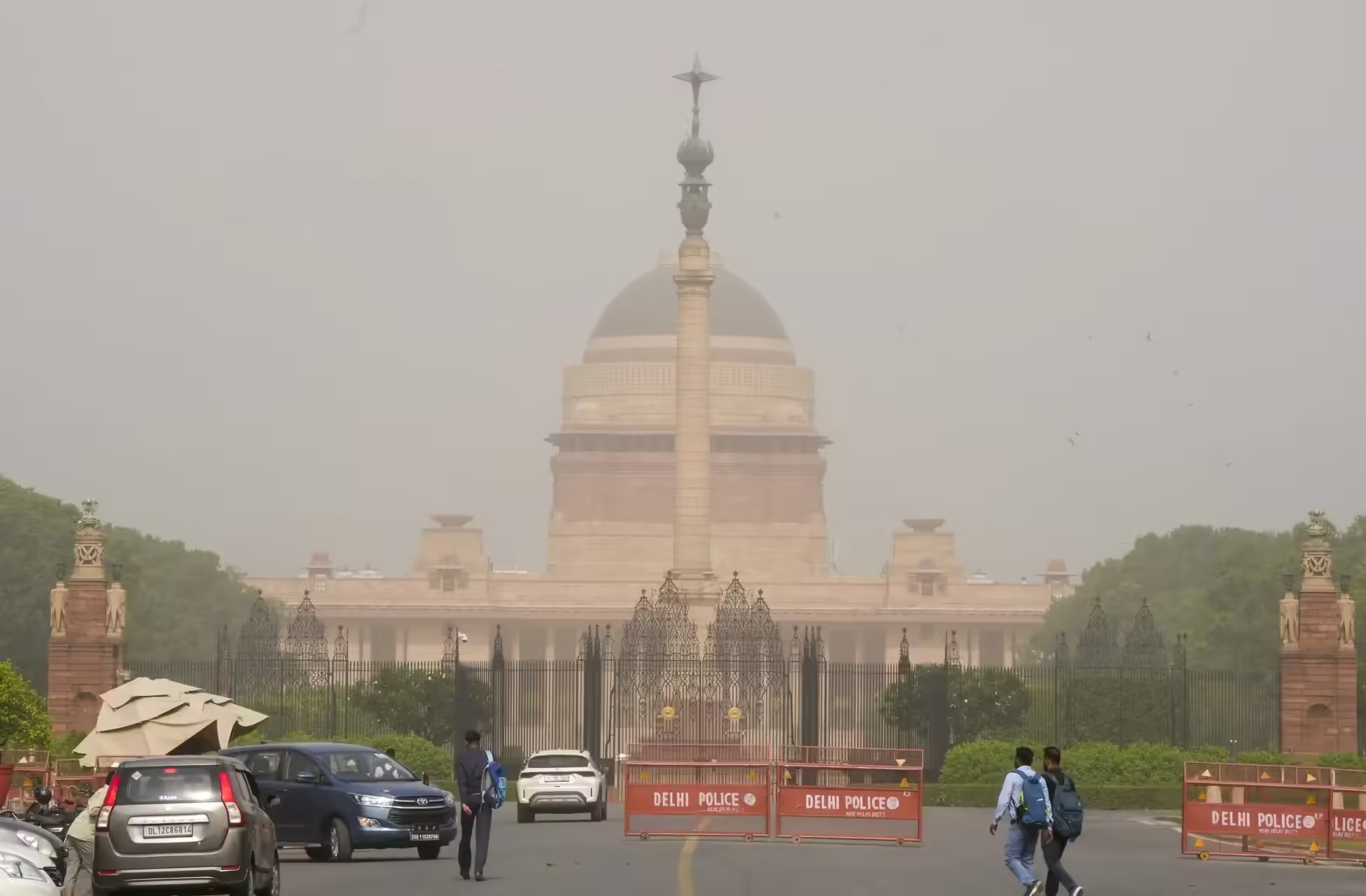
A sudden Delhi dust storm swept across the National Capital Region this week, reducing visibility, disrupting daily activity and worsening already fragile air quality conditions. The episode, driven by a seasonal western disturbance interacting with rising temperatures across northern India, underscores the growing vulnerability of large urban regions to climate-linked atmospheric events and cross-border pollution sources. According to meteorological experts, strong winds moving across northern India triggered the storm, with gusts estimated between 40 and 50 kilometres per hour. These winds lifted large quantities of fine sand and dust from arid landscapes in western India and neighbouring regions, carrying them hundreds of kilometres before depositing them across Delhi and surrounding NCR cities.
Environmental researchers note that the Delhi dust storm phenomenon is rarely confined to the city itself. Instead, the dust plume typically originates in desert regions such as western Rajasthan and parts of Balochistan and central Pakistan. Once winds slow over the Indo-Gangetic plains, the suspended particles remain trapped in the lower atmosphere, creating the hazy skyline frequently observed across the capital during pre-monsoon months. Urban planners say the event highlights a deeper challenge facing rapidly expanding metropolitan regions: the intersection of climate variability, land degradation and urban air pollution. While dust storms are natural weather events, their impact on megacities like Delhi is amplified by existing pollution sources including road dust, construction activity and vehicular emissions. Scientists point out that dry conditions preceding the summer season often worsen dust activity. Limited rainfall leaves soil surfaces loose and vulnerable to wind erosion, enabling large quantities of particulate matter to enter the atmosphere. Rising temperatures across northern India have further intensified atmospheric instability, making such events more frequent during seasonal transitions.
For city authorities, the storm also raises questions about resilience planning in dense urban environments. Poor visibility during dust events can disrupt road and air transport, while spikes in particulate matter increase respiratory health risks for residents. Public health specialists advise vulnerable groups, including children and the elderly, to limit outdoor exposure during such episodes. Urban climate researchers emphasise that improving green cover, stabilising exposed soil surfaces and managing construction dust can help reduce the intensity of locally generated particulate pollution during dust storms. Although the incoming dust may originate far from the city, local environmental management plays a crucial role in limiting the cumulative impact on air quality. Meteorologists indicate that the unsettled weather pattern could persist for several days as the western disturbance continues to move across northern India. There is also a possibility of rainfall following the storm system, which typically helps settle airborne particles and gradually improves atmospheric conditions.
For Delhi and the wider NCR, the Delhi dust storm serves as a reminder that urban air quality is shaped not only by local emissions but also by regional weather dynamics. As climate variability intensifies, experts suggest that integrated regional planning and climate-resilient urban policies will become increasingly critical to protecting both public health and environmental stability.