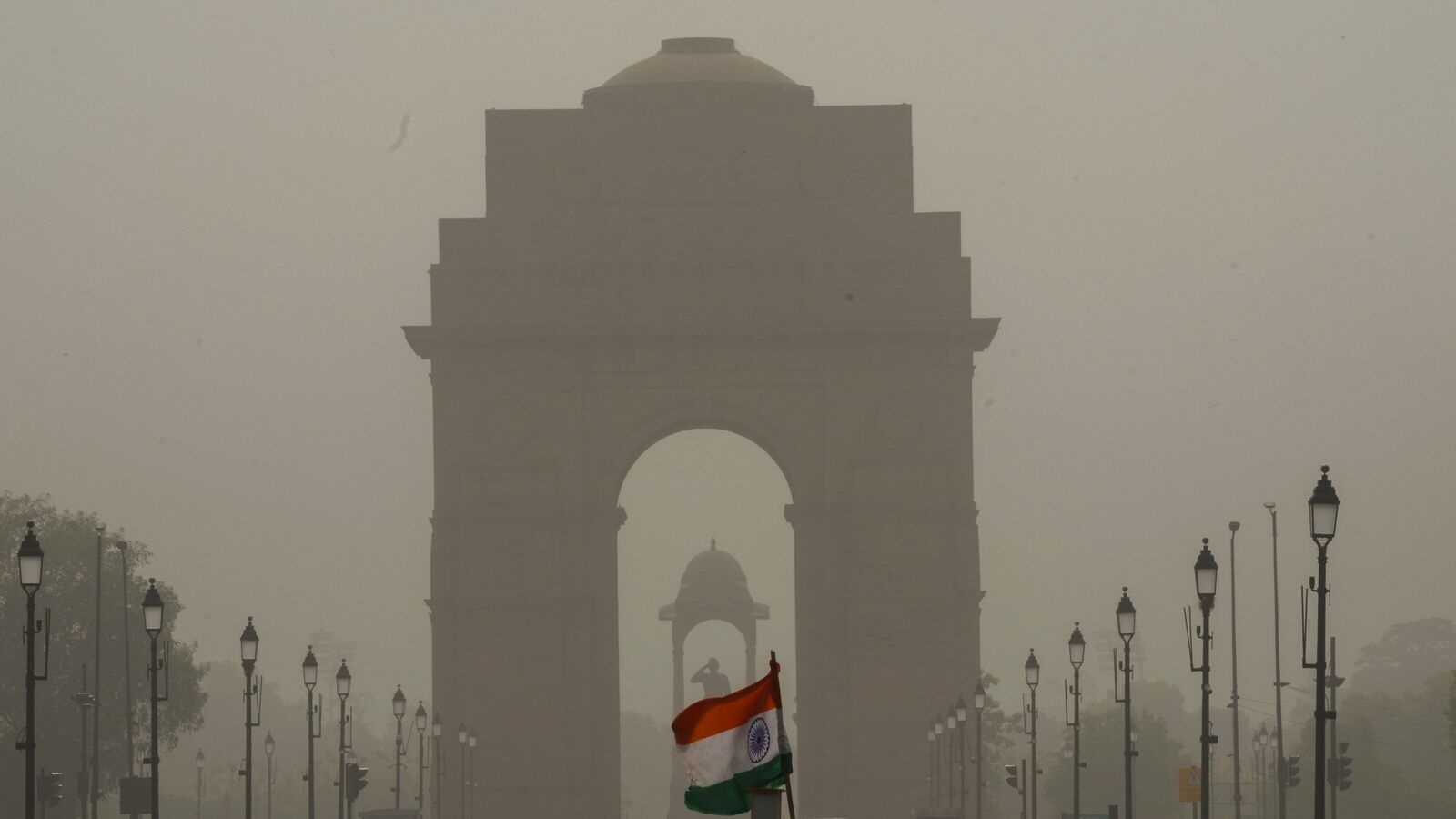
A sudden Delhi dust storm swept across the national capital early Friday, blanketing large parts of the city in haze and prompting weather officials to warn of thunderstorms, rain and gusty winds over the coming days. The event highlights the recurring climate and environmental pressures facing rapidly expanding urban regions in northern India. Meteorological observations indicated warmer-than-usual early morning conditions alongside dense dust movement across the city. Minimum temperatures across several monitoring stations remained above seasonal averages, reflecting a shift in atmospheric patterns often linked to pre-monsoon weather activity in north India.
Weather authorities indicated that unstable atmospheric conditions are likely to persist for at least two days. Thunderstorms accompanied by strong winds and isolated rainfall are expected to influence the region, which could temporarily improve visibility but also disrupt transport and outdoor activities. For urban planners and environmental experts, the Delhi dust storm once again underscores how weather volatility and urban expansion intersect in major metropolitan areas. Dust storms in the Indo-Gangetic plains are frequently driven by strong winds lifting loose soil from arid regions in neighbouring states, but construction activity and exposed urban land surfaces can intensify their impact inside cities. The capital’s air quality readings reflected the immediate consequences. Monitoring stations reported pollution levels falling within the “poor” category during the morning hours, a level associated with potential health risks for sensitive groups. Air quality experts note that particulate matter often spikes during dust events because large volumes of coarse particles remain suspended in the air before settling. Urban environmental specialists say such weather events highlight the importance of stronger dust management strategies in rapidly growing cities.
Measures such as covering construction materials, stabilising exposed soil surfaces, expanding green buffers and enforcing dust-control protocols at infrastructure sites are increasingly seen as essential components of urban resilience. Meteorologists also pointed to seasonal atmospheric changes as a contributing factor. The transition between winter and the pre-monsoon period often brings sudden wind shifts and unstable air masses, which can trigger dust storms followed by thunderstorms or scattered rainfall. While short spells of rain may temporarily wash out suspended dust particles and improve air quality, experts caution that such improvements are usually brief. Persistent sources of urban pollution, including traffic emissions and construction dust, can quickly reverse gains unless broader mitigation efforts remain in place. City authorities and environmental planners are increasingly emphasising climate-resilient urban infrastructure that can respond to both extreme heat and sudden weather disturbances. Investments in green cover, improved urban drainage and better dust-control mechanisms are being considered critical to managing these environmental pressures.
As the capital braces for possible storms and rainfall over the weekend, officials are advising residents to stay alert to weather advisories and air quality updates. The Delhi dust storm serves as another reminder that climate variability, combined with urban growth, continues to shape the environmental challenges confronting India’s largest metropolitan regions.