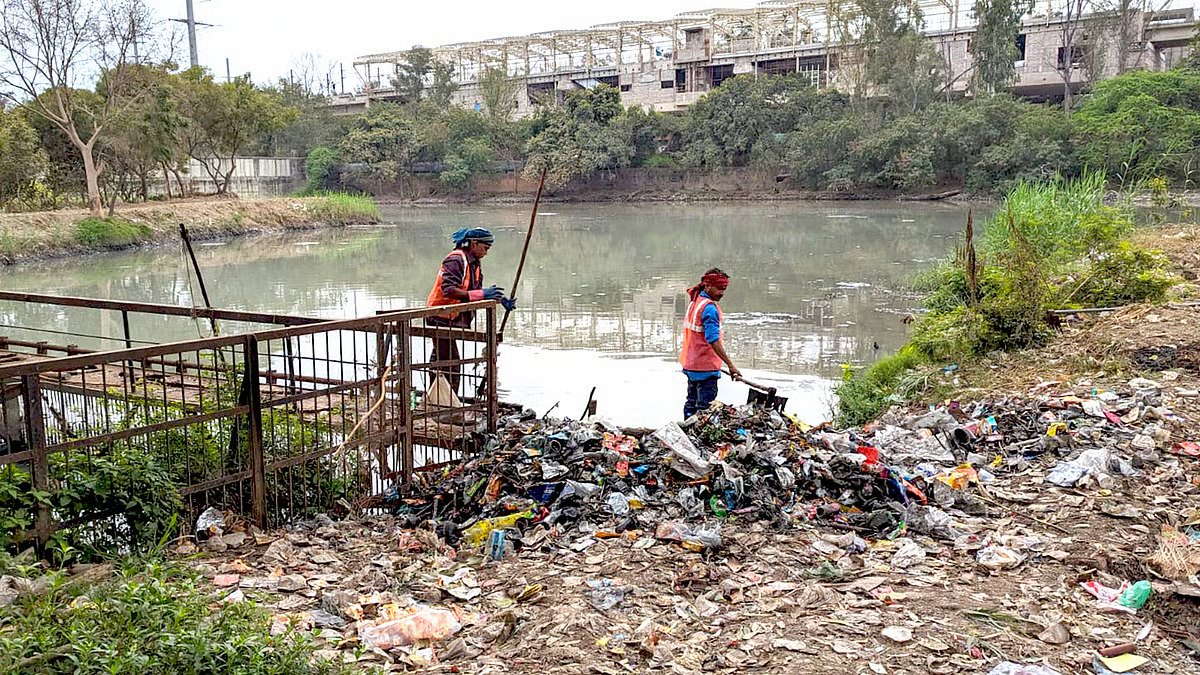
The Delhi government has initiated a cluster of local infrastructure works in northwest Delhi, focusing on stormwater management, road improvements and neighbourhood-level public services, as part of a broader push to strengthen urban resilience ahead of the monsoon season. The projects, concentrated in a key residential constituency, are anchored around drainage upgrades designed to address chronic waterlogging and surface flooding. For residents, this translates into reduced disruption during heavy rainfall, while for the city, it reflects a shift towards more climate-responsive infrastructure planning.
Officials overseeing the programme confirmed that a major component involves redesigning stormwater drains using precast reinforced concrete structures. These factory-built elements are intended to improve durability, reduce construction time and ensure consistent quality compared to conventional on-site construction. The upgrades are aligned with a larger drainage master plan that aims to modernise ageing networks across the capital. Alongside drainage upgrades, road infrastructure is being reworked at multiple junctions and corridors. This includes road widening, redesign of underpasses, and the addition of slip roads and turning loops to streamline traffic flow. Urban mobility experts say such interventions, while localised, can significantly improve travel efficiency by reducing bottlenecks and unsafe turning movements—particularly in dense neighbourhoods where road space is limited. The integration of drainage upgrades with road redevelopment is a notable feature of the initiative. Engineers point out that poorly synchronised works in the past have often led to repeated digging and short-lived solutions.
By planning drainage and road improvements together, authorities are attempting to create longer-lasting infrastructure that performs better during extreme weather events. In parallel, the opening of a neighbourhood health and wellness centre highlights an effort to combine physical infrastructure upgrades with social services. Public health specialists note that improved drainage can also reduce the risk of waterborne diseases, reinforcing the link between urban design and community wellbeing. From an economic perspective, such localised infrastructure investments can influence property values and rental demand in surrounding areas. Better roads, reduced flooding and access to healthcare services tend to enhance liveability, making neighbourhoods more attractive for both residents and small businesses. Real estate analysts suggest that incremental improvements across multiple localities can cumulatively reshape urban growth patterns. However, urban planners caution that execution will determine long-term impact. Ensuring construction quality, minimising disruption to residents, and maintaining upgraded systems will be critical.
There is also a need for continuous monitoring to ensure that drainage networks remain unclogged and functional during peak rainfall periods. As Delhi faces increasing climate variability, particularly intense and erratic monsoon events, such drainage upgrades represent an essential layer of urban adaptation. The challenge ahead lies in scaling these interventions across the city while integrating them with broader goals of sustainable mobility, water management and equitable access to infrastructure.