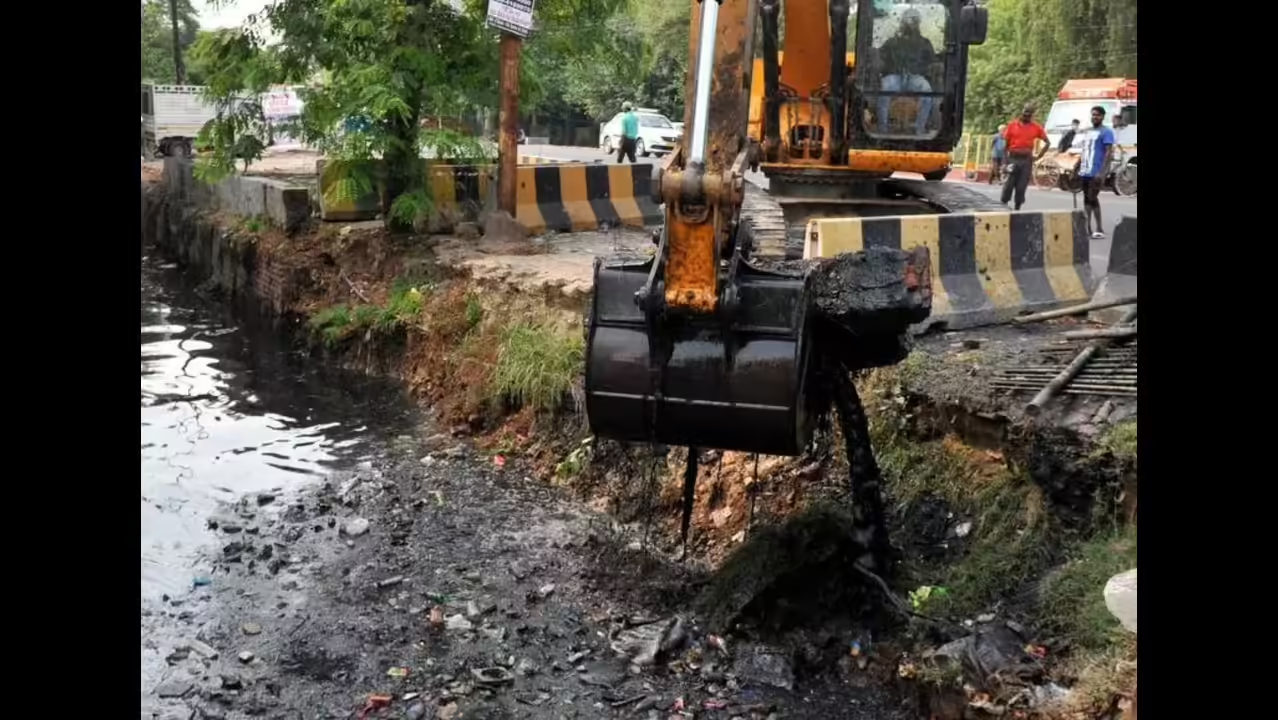
Delhi has moved to fast-track four critical stormwater projects under a renewed drainage strategy, signalling a shift in how India’s capital prepares for heavier rainfall, rapid urban expansion, and climate volatility. The initiative, spread across west, south and northwest Delhi, aims to unclog long-stressed trunk drains and reduce monsoon waterlogging that routinely disrupts neighbourhoods, transport corridors and local commerce.
At the core of the push is the Delhi drainage master plan, a long-term framework designed to modernise infrastructure originally laid out more than five decades ago. Since the 1970s, Delhi’s population has multiplied and paved surfaces have expanded dramatically, shrinking natural absorption zones while placing severe pressure on drains never built for today’s runoff volumes. Urban planners say this mismatch has turned routine downpours into economic and civic emergencies.
One of the largest interventions is underway in west Delhi, where a new trunk drain running several kilometres along a railway corridor is being developed to consolidate flows from multiple secondary drains. By integrating fragmented channels into a single system, the project is expected to protect densely populated residential and industrial pockets that frequently experience standing water, traffic paralysis and property damage during peak rains.
Officials involved in the project say coordination with rail authorities has been critical, reflecting the growing need for inter-agency planning in land-scarce cities.
In south Delhi, a long arterial road notorious for flooding is set to undergo a comprehensive stormwater redesign. Beyond drain construction, the project includes utility realignment, pedestrian infrastructure and ecological mitigation such as regulated tree transplantation. Infrastructure analysts note that bundling drainage with street-level upgrades can deliver broader economic value, improving walkability and reducing repeated repair costs after every monsoon.
Northwest Delhi is seeing a separate trunk drain development linking peripheral settlements to larger discharge channels. Delays caused by environmental clearances have eased, allowing construction to resume on a corridor that urban planners consider essential for future housing growth in the zone. Once completed, the drain is expected to carry significantly higher runoff volumes, reducing the risk of sewage backflow into residential areas. Along a major national highway corridor, stormwater improvements funded partly through central capital support are progressing toward a 2026 deadline. This stretch is a vital freight and commuter route, and recurrent flooding has had spillover effects on logistics efficiency and daily mobility.
Collectively, these projects illustrate a broader recalibration of the Delhi drainage master plan from reactive desilting to capacity-led design aligned with climate projections. Experts caution, however, that engineering upgrades must be matched with maintenance discipline, protection of floodplains, and stricter controls on construction over natural drains. As rainfall patterns grow less predictable, Delhi’s experience may become a test case for how Indian cities balance growth, resilience and economic continuity.
Delhi Drainage Overhaul Targets Monsoon Flooding