


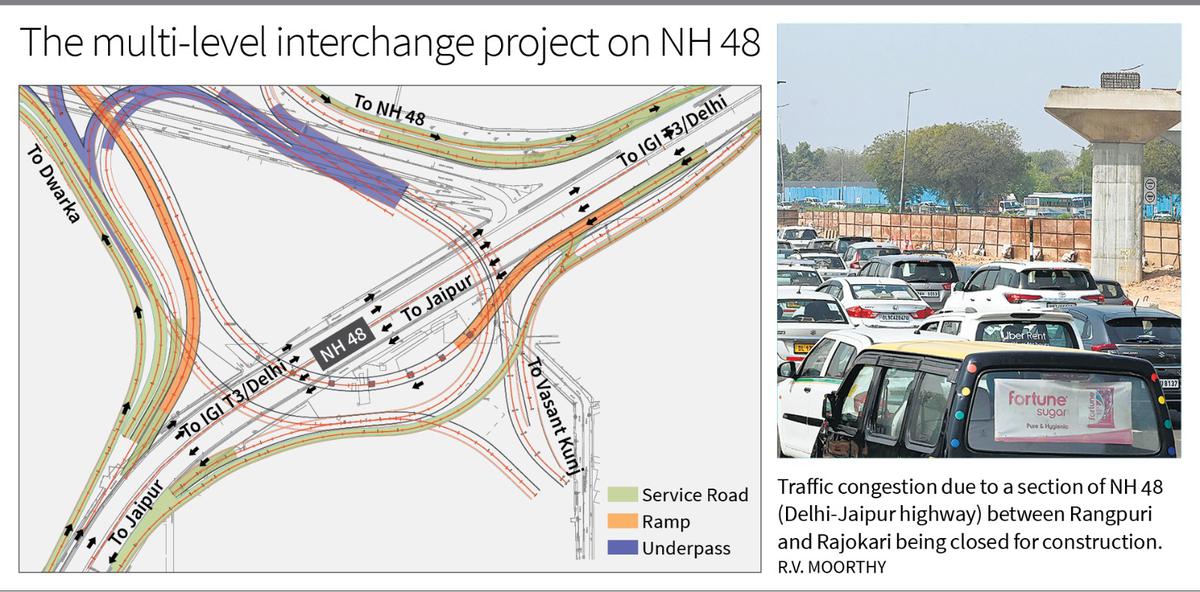
Delhi’s most congested traffic junction, Dhaula Kuan, may finally see relief as infrastructure agencies push ahead with a comprehensive decongestion plan. The National Highways Authority of India (NHAI) has proposed widening sections of National Highway 48 (NH-48), building a three-lane slip road, and addressing chronic waterlogging that cripples the area during heavy rains. Officials confirmed that land has been sought from the Delhi Police to enable the project, which will also involve minor relocation of a police post.
The initiative comes after years of piecemeal measures at the junction, which connects central Delhi to the airport corridor and major arterial routes in south Delhi. Despite past improvements, the intersection continues to be a bottleneck, with commuters often stuck in hour-long snarls. Urban mobility experts argue that without sustainable traffic interventions, the situation will worsen as the city adds thousands of vehicles every month.A crucial element of the project is the creation of a dedicated three-lane slip road from NH-48 towards Naraina, designed to smoothen traffic flow and reduce conflict points. To execute this, the NHAI has requested nearly 800 square metres of land from the Subroto Park police post. Officials stated that a draft memorandum of understanding has already been exchanged and the plan is under review.
Also Watch: An Exclusive Interview with Sanjeev Jaiswal (IAS), CEO MHADA
Parallelly, the authority plans to widen the NH-48 stretch near the Subroto Park Air Force station, which requires felling or transplantation of approximately 78 trees. While environmental approvals were earlier delayed due to a court stay, the matter has now moved forward. Experts stress that any such project must balance traffic needs with environmental safeguards by ensuring tree transplantation and compensatory plantation in equal measure, to prevent further carbon burden on Delhi’s already strained air quality.Waterlogging, another recurring nightmare for commuters at Dhaula Kuan, is also on the radar. Field inspections revealed that clogged drains without proper outlets near pillar 156 are the chief cause.
