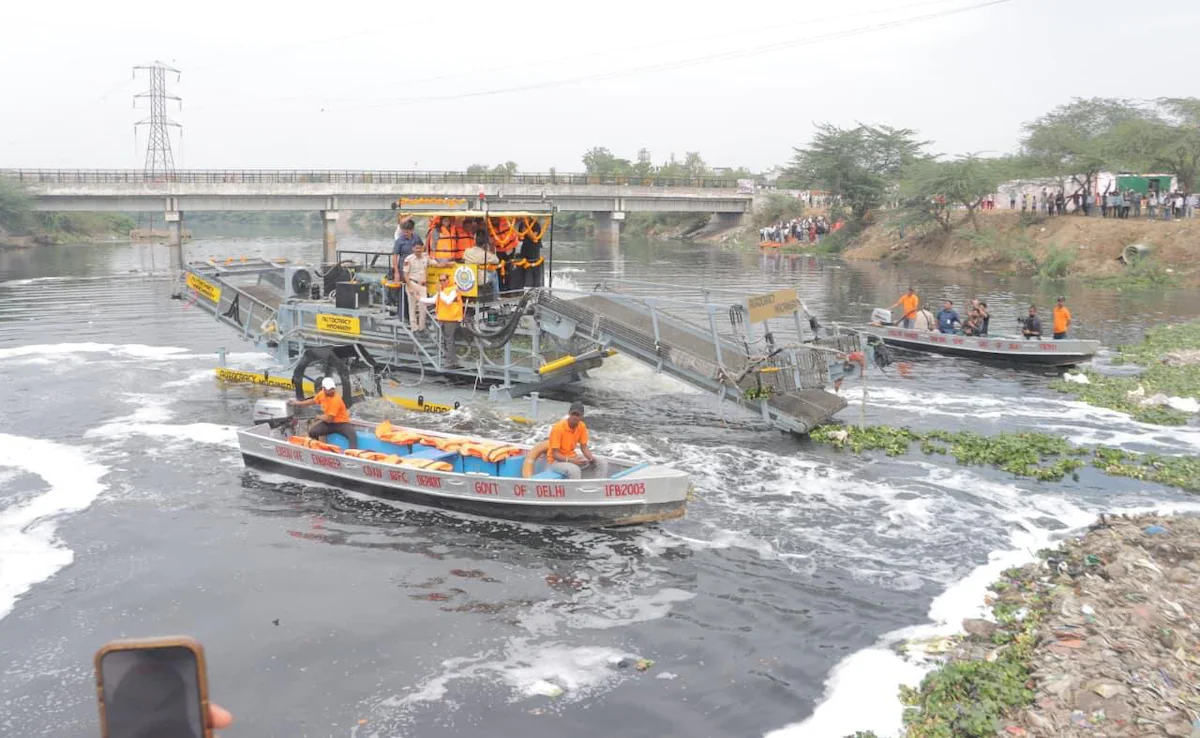
Delhi Deploys Weed Harvester Machines For Yamuna Cleanup
Authorities in the national capital are preparing to deploy specialized weed harvester machines to address pollution entering the Yamuna river from one of its largest feeder drains. The initiative will focus on the Najafgarh drain, a major channel that carries untreated wastewater, floating waste, and dense aquatic vegetation into the river system. Officials responsible for water and drainage infrastructure say the introduction of weed harvester machines is intended to tackle pollution at the upstream level rather than relying solely on downstream river clean-up measures. By removing invasive plants such as water hyacinth along with floating debris, the machines are expected to improve water flow in the drain and reduce the volume of contaminants reaching the Yamuna.
Urban water management experts note that the Najafgarh drain plays a critical role in the capital’s hydrological network. It acts as a large stormwater channel while simultaneously carrying wastewater from multiple urban settlements. Over time, heavy silt deposits, plastic waste, and uncontrolled vegetation growth have reduced the drain’s carrying capacity, contributing to both flooding risks and increased pollution discharge into the river. The new weed harvester machines are designed to operate directly within the water channel. Equipped with powerful engines and onboard storage systems, the equipment can cut and collect floating vegetation while simultaneously gathering solid waste trapped within plant clusters. Once collected, the material is transferred to designated disposal sites for further treatment or processing. Officials involved in the programme say such mechanised systems are increasingly used in large drainage and water bodies where manual removal of aquatic plants is inefficient and hazardous. In dense urban environments like Delhi, mechanical harvesting can help maintain water channels more consistently, especially in drains that receive high volumes of organic and plastic waste.
Environmental planners believe this step could support broader efforts aimed at restoring the Yamuna river, which remains heavily polluted along its Delhi stretch. A significant share of pollutants entering the river originates from major drains, making upstream interventions critical for long-term river health. Removing vegetation buildup can also prevent stagnation, which often worsens odour, mosquito breeding, and water quality issues in surrounding neighbourhoods. The deployment of weed harvester machines also aligns with wider urban infrastructure goals related to climate resilience and flood management. Maintaining clear drainage channels improves stormwater flow during intense rainfall events, reducing the risk of overflow and urban flooding in nearby residential and commercial areas. However, experts caution that mechanical removal alone will not fully resolve pollution challenges. Sustainable improvements will depend on parallel measures such as expanding sewage treatment capacity, preventing illegal waste discharge, and strengthening monitoring systems across the drainage network.
As the city continues to invest in river restoration and pollution reduction initiatives, authorities say technology-led interventions like the use of weed harvester machines could become an important component of integrated urban water management. The coming months will determine whether such mechanised solutions can deliver measurable improvements in both drainage efficiency and river pollution levels.