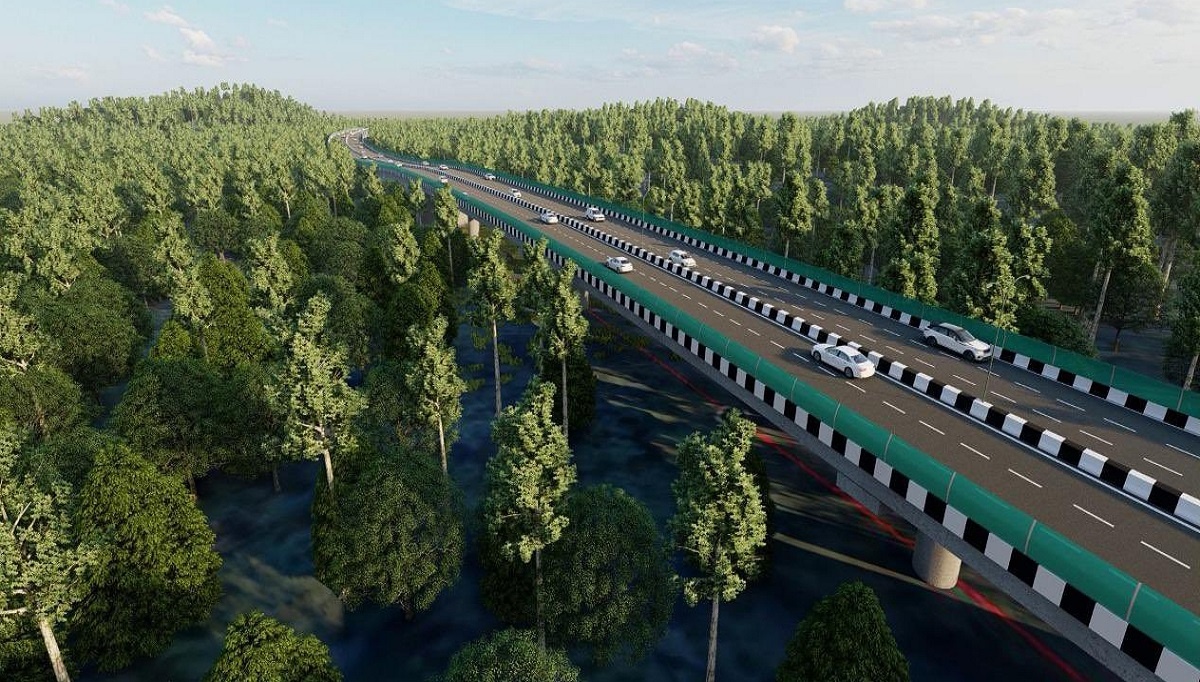
The Delhi Dehradun Expressway wildlife corridor, designed to balance highway expansion with ecological protection, is set to be inaugurated this week, marking a significant milestone in India’s evolving approach to environmentally sensitive infrastructure. The new corridor will connect the national capital region with Uttarakhand’s capital through a high-speed route while incorporating one of the largest wildlife-friendly highway designs in Asia. Spanning roughly 210 kilometres, the expressway aims to significantly cut travel time between Delhi and Dehradun. Once fully operational, road journeys that previously required most of a day could be reduced to a few hours, improving access between the two cities and supporting tourism, trade and regional mobility.
What distinguishes the project, however, is the integration of an extensive Delhi Dehradun Expressway wildlife corridor along sections passing through forest landscapes and ecological zones. The highway alignment includes specially designed underpasses and elevated stretches that allow animals to move safely beneath traffic corridors. Preliminary ecological assessments conducted along an 18-kilometre forested section of the expressway have already documented wildlife activity in the underpasses. Cameras installed in the area recorded species such as elephants, deer, nilgai and jackals using the passageways designed beneath the road. Infrastructure experts say such features are becoming increasingly important as transport networks expand into environmentally sensitive areas. Roads and railways often fragment habitats, disrupting animal movement and increasing the risk of wildlife collisions. Wildlife corridors attempt to address this by reconnecting ecosystems that would otherwise be separated by major infrastructure. Officials associated with the project indicate that the monitoring study was intended to evaluate how effectively the Delhi Dehradun Expressway wildlife corridor supports animal movement and ecological continuity.
The findings are expected to inform similar design approaches in future highway projects across India. Urban planners also highlight the broader significance of the corridor in demonstrating how mobility infrastructure can incorporate sustainability measures without compromising connectivity. India’s growing highway network is expected to carry increasing traffic volumes, making the integration of environmental safeguards essential for long-term resilience. Beyond ecological considerations, the expressway is expected to reshape travel patterns between the plains and hill regions of Uttarakhand. Faster road connectivity will improve access to tourist destinations and hill towns that attract large numbers of visitors from the national capital region. Tourism analysts suggest the improved highway network could encourage shorter weekend trips to Himalayan foothill destinations, potentially boosting local economies dependent on hospitality and small-scale tourism services.
However, experts caution that infrastructure expansion in fragile landscapes requires continuous oversight. Monitoring wildlife movement, maintaining underpasses and preventing encroachment around ecological zones will be critical to ensure that the Delhi Dehradun Expressway wildlife corridor functions effectively over time. As India accelerates highway construction across diverse terrains, the project represents an emerging model where transport efficiency and ecological preservation are designed together rather than treated as competing priorities.