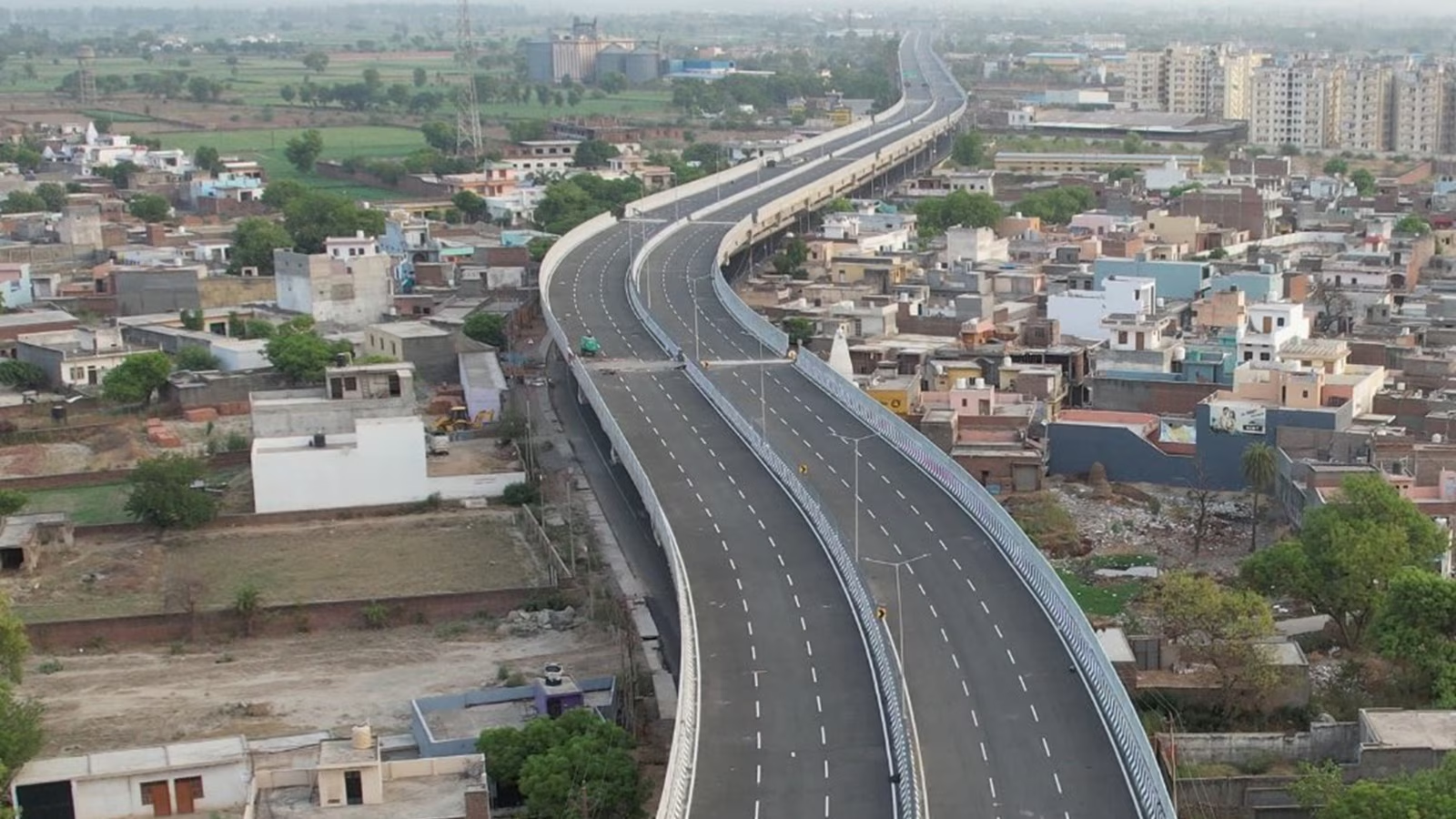
The Delhi–Dehradun Expressway is approaching full operational readiness, marking a significant milestone in North India’s regional connectivity push. Designed to dramatically cut travel time between the national capital and Uttarakhand’s capital, the corridor is expected to alter commuting patterns, logistics flows and real estate dynamics across western Uttar Pradesh and the Himalayan foothills.
Developed as a high-speed, access-controlled highway, the 210-kilometre Delhi Dehradun Expressway links east Delhi with Dehradun via multiple districts in Uttar Pradesh. Once fully opened to traffic, the route is projected to reduce travel time from over six hours to roughly two-and-a-half hours, easing pressure on congested national highways and the Delhi–Meerut corridor. Infrastructure planners involved in the project say the expressway is not merely a faster road, but a redistribution mechanism for regional traffic. By diverting long-distance and freight movement away from urban stretches, the corridor is expected to improve travel reliability within Delhi while opening new economic opportunities along its alignment.
The expressway has been built in multiple sections to accommodate varied urban, rural and ecological conditions. The Delhi stretch connects seamlessly with existing expressway infrastructure, while central sections pass through agricultural and semi-urban districts that have historically lacked high-quality road access. Urban economists note that such corridors often trigger logistics parks, warehousing clusters and new housing demand, provided land-use planning keeps pace. One of the project’s defining features is its elevated wildlife corridor through forested zones near the Shivalik range. This section has been designed to allow uninterrupted animal movement beneath the roadway, reflecting a growing emphasis on balancing infrastructure expansion with ecological safeguards. Environmental planners view this as a test case for future highway projects passing through sensitive landscapes.
The Delhi Dehradun Expressway has been engineered for higher cruising speeds with modern safety features and a closed tolling system that charges users based on distance travelled. Planned wayside amenities at regular intervals are intended to support long-distance travellers while improving road safety through designated rest zones.Partial stretches have already seen trial operations, with finishing work continuing on remaining segments, including service roads, safety installations and landscaping. Officials familiar with the timeline indicate that full-scale public use could begin soon, subject to final clearances and notifications.
Beyond mobility gains, the expressway carries implications for tourism and regional labour markets. Faster, more predictable travel is expected to encourage weekend tourism to Uttarakhand while also making inter-city business travel more viable. For towns along the route, improved connectivity could translate into new investment, provided local infrastructure and governance frameworks are strengthened. As India accelerates expressway development, the Delhi Dehradun Expressway stands out for its scale and environmental design choices. Its real impact, urban planners caution, will depend on how well growth along the corridor is managed—ensuring that speed and access translate into inclusive, climate-resilient development rather than unchecked sprawl.
Delhi Dehradun Expressway Nears Full Opening