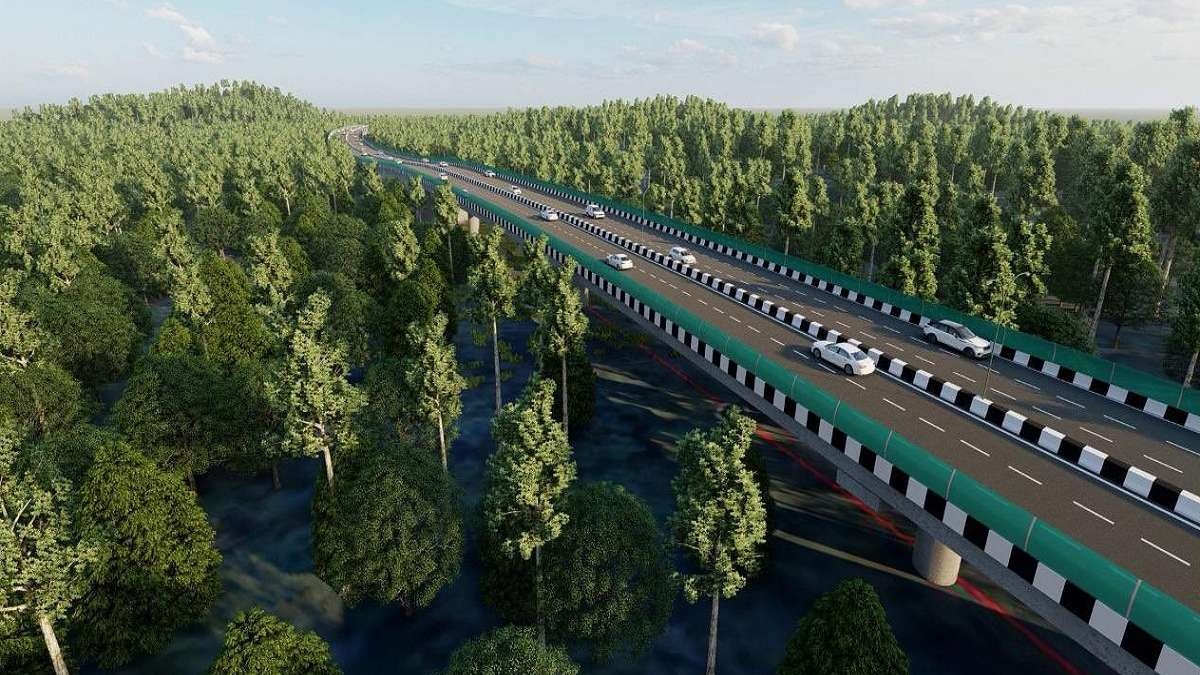
Delhi Dehradun Corridor Infrastructure Supports Wildlife Movement
Wildlife monitoring along a section of the Delhi–Dehradun expressway has revealed that animals are actively using specially designed passages beneath the highway, offering early evidence that ecological safeguards built into the corridor are helping reduce the impact of large infrastructure projects on forest habitats. The findings highlight how wildlife-sensitive engineering can support mobility for animals while allowing strategic road connectivity between northern cities. The observations come from a recent field assessment conducted along a forested stretch of the Delhi Dehradun Corridor passing through the Shivalik landscape in Uttarakhand. Researchers installed an extensive network of camera traps inside wildlife underpasses across a short monitoring segment near the forest edge to understand how species navigate around the highway infrastructure.
Over a 40-day monitoring period, thousands of photographic records were collected showing multiple animal species moving through these structures. The dataset documented at least eighteen distinct wildlife species using the underpasses at different times of day and night. Larger herbivores such as antelope and deer appeared frequently, while carnivores and smaller mammals were also recorded passing through the crossings. Environmental researchers say the early results demonstrate that the Delhi Dehradun Corridor incorporates design features capable of reducing one of the most common ecological impacts of highways — habitat fragmentation. When transport infrastructure cuts through forest landscapes, it can disrupt natural migration routes and isolate animal populations. Underpasses and wildlife corridors are intended to preserve connectivity between ecosystems separated by roads. Field observations also indicate that animals tend to use the passages primarily during quieter hours, suggesting that human activity levels influence movement patterns. Wildlife specialists monitoring the project say continued observation will be required to understand long-term behavioural changes and to assess whether animals consistently rely on the underpasses across seasons.
The corridor passes through a biologically sensitive belt that forms part of the Shivalik foothills, an area known for its diverse wildlife and its proximity to several protected forest regions. Because of this ecological importance, the national highway authority commissioned ecological assessments during the planning phase and incorporated mitigation measures including extended underpass stretches and elevated road segments in key areas. Urban infrastructure experts say the project offers an important test case for balancing rapid connectivity projects with biodiversity protection. India is expanding highway networks to improve logistics efficiency, tourism access and regional economic integration. However, many planned corridors intersect wildlife habitats, making ecological safeguards a growing priority for transport planners. Sustainable infrastructure specialists emphasize that wildlife passages must be designed with species behaviour, landscape patterns and vegetation cover in mind to be effective. In addition to physical structures, complementary strategies such as fencing, habitat restoration and reduced night-time lighting can further improve outcomes.
As highway development continues across ecologically sensitive regions, the experience from the Delhi Dehradun Corridor may help inform future road projects. Long-term monitoring of animal movement and habitat connectivity will remain critical to ensure that large infrastructure investments align with environmental conservation and climate-resilient development goals.