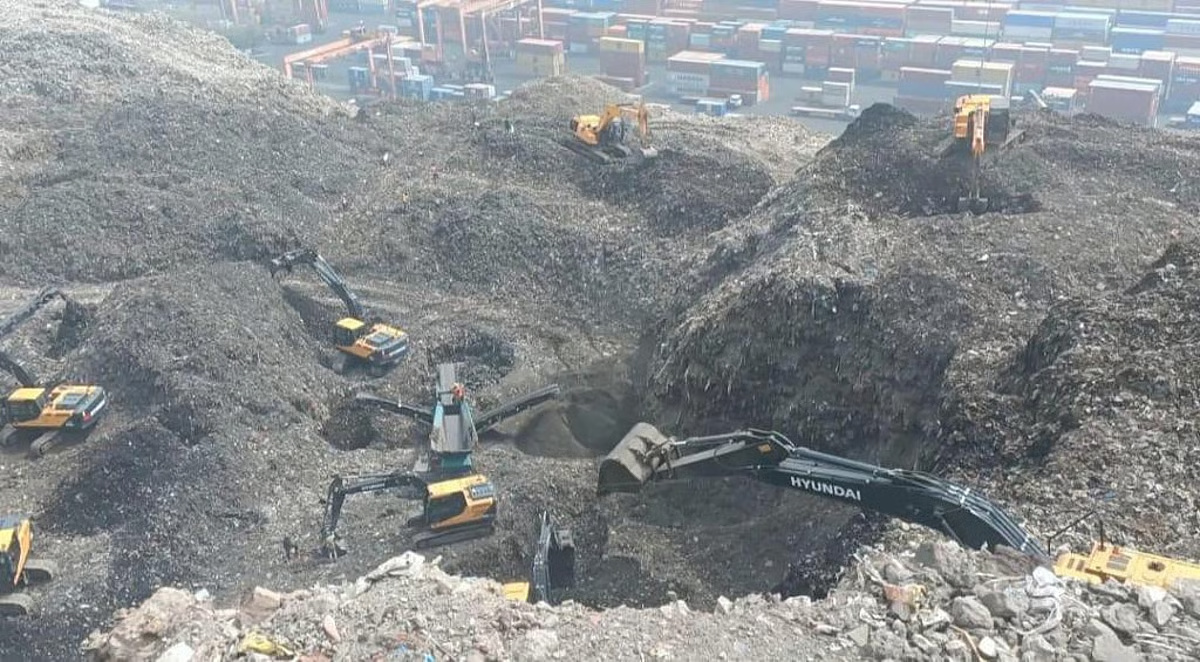
Delhi Defends Processed Waste Disposal At Okhla Landfill
Authorities in Delhi have clarified that only scientifically processed material is being transported from the Okhla Landfill as part of an ongoing waste remediation programme aimed at reducing the environmental footprint of the city’s legacy dumpsites. Municipal officials said that the material currently being moved from the landfill site consists primarily of inert debris and construction-related waste that has already undergone treatment through biomining and bioremediation processes. The processed material is being relocated to a designated site near the Badarpur area, where it is used to fill low-lying land identified for controlled dumping.
The clarification follows concerns raised by residents living near the disposal site, where piles of mixed debris were reportedly observed during recent visits to the area. Officials, however, maintain that the waste being transported from the Okhla Landfill has already been segregated and processed in accordance with environmental guidelines. According to municipal authorities, the biomining process involves separating legacy waste accumulated at landfill sites into different fractions such as refuse-derived fuel, recyclable construction material and inert components suitable for safe disposal. These processes are designed to reduce the volume of legacy garbage while recovering useful materials and minimising environmental risk. Urban waste management experts say biomining and bioremediation have become central strategies for addressing the problem of ageing landfills across India’s largest cities. Decades of uncontrolled dumping created large garbage mounds that now pose risks to groundwater, air quality and nearby communities. Treating this legacy waste allows cities to reclaim land while reducing pollution associated with unmanaged dumpsites.
Officials involved in the project say the processed waste from the Okhla Landfill is being transported in a regulated manner to a designated site spanning approximately 42 acres. The land has been earmarked for controlled filling and is not located within the Yamuna floodplain, according to authorities. The site has also received necessary approvals from relevant government departments responsible for land management. Environmental planners emphasise that managing landfill waste through scientific methods is crucial for improving urban sustainability. By extracting recyclable materials and isolating inert fractions, biomining helps reduce the volume of waste that ultimately requires disposal. The approach also supports broader climate and environmental goals by limiting methane emissions that typically arise from untreated landfill waste. Delhi’s municipal authorities have set specific timelines for clearing the city’s three major legacy dumpsites. The remediation of the Okhla Landfill is scheduled for completion by July 2026, while similar clean-up operations at the Bhalswa and Ghazipur landfill sites are expected to continue through 2026 and 2027 respectively. Urban policy analysts say the success of these initiatives will depend not only on waste processing technology but also on improvements in everyday waste management practices across the city. Reducing landfill dependence requires stronger waste segregation, recycling infrastructure and responsible disposal systems that prevent new garbage mountains from forming.
As Delhi continues efforts to address decades of accumulated waste, authorities say scientific landfill remediation remains a key component of the city’s broader strategy to create cleaner, more resilient and environmentally responsible urban spaces.