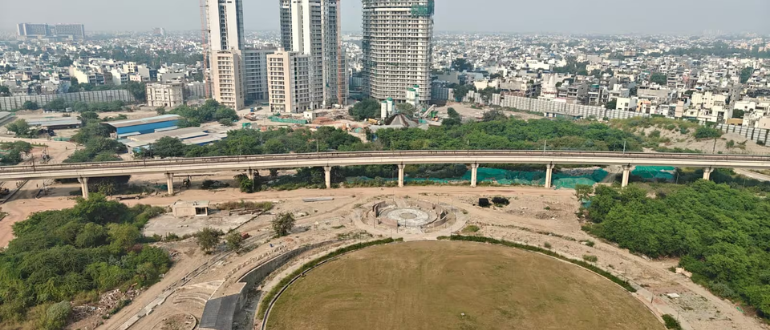
Delhi: The Delhi Development Authority is set to take back control of 123 disputed plots in South Delhi after the Supreme Court affirmed its powers to reclaim land under statutory acquisition and planning laws. The move is expected to unlock high-value urban land that has remained tied up in encroachment and litigation, strengthening the capital’s ability to implement its master plan and infrastructure pipeline.
According to senior officials, the parcels are spread across residential, commercial and open-use zones in South Delhi, where contested occupation and irregular construction have stalled planned development for years. The court’s ruling provides legal clarity, enabling the Authority to proceed with formal steps including notice issuance, record verification and statutory transfer of title. Delhi DDA land reclamation is significant not only for enforcement, but for long-term urban governance. Planning experts say fragmented land ownership and prolonged disputes have historically impeded infrastructure delivery in dense metropolitan areas. When land remains outside clear public control, projects ranging from drainage upgrades to green space creation are delayed, raising both environmental and social costs.
Officials indicated that the re-acquisition process will follow due process under applicable land and development statutes. This includes verification of claims, assessment of compensation where legally mandated and coordination with revenue and municipal departments. Any physical clearance will be undertaken only after procedural timelines are met. Urban economists note that South Delhi’s land values make such parcels strategically important. Reintegrating them into the planning framework could support civic amenities, institutional facilities or even carefully structured housing aligned with zoning norms. In a city grappling with land scarcity, reclaiming underutilised plots is often more efficient than pushing expansion into peripheral areas lacking trunk infrastructure.
Delhi DDA land reclamation also signals a renewed emphasis on regulatory certainty. Industry observers argue that predictable enforcement of land use rules is essential for responsible real estate development. Unauthorised occupation and unclear titles not only distort local markets but also discourage formal investment in compliant projects. However, the exercise carries social implications. Community representatives in affected areas have raised concerns about rehabilitation and clarity on compensation, particularly where families or small enterprises have operated for extended periods. Urban policy specialists stress that transparent communication and adherence to rehabilitation norms will be critical to avoid protracted disputes.
From a climate resilience perspective, planners point out that recovered land can help restore designated open spaces or enable infrastructure such as stormwater systems and public transport support facilities. As Delhi faces rising heat stress and flooding risks, protecting planned land use becomes integral to environmental management. While timelines for completion remain fluid, initial notices are expected in the coming weeks. The broader outcome will depend on how efficiently the Authority balances enforcement with procedural fairness. If executed transparently, the initiative could strengthen land governance in the capital and set a template for other metropolitan regions confronting similar legacy disputes.
Delhi DDA Land Reclamation Reshapes Planning