


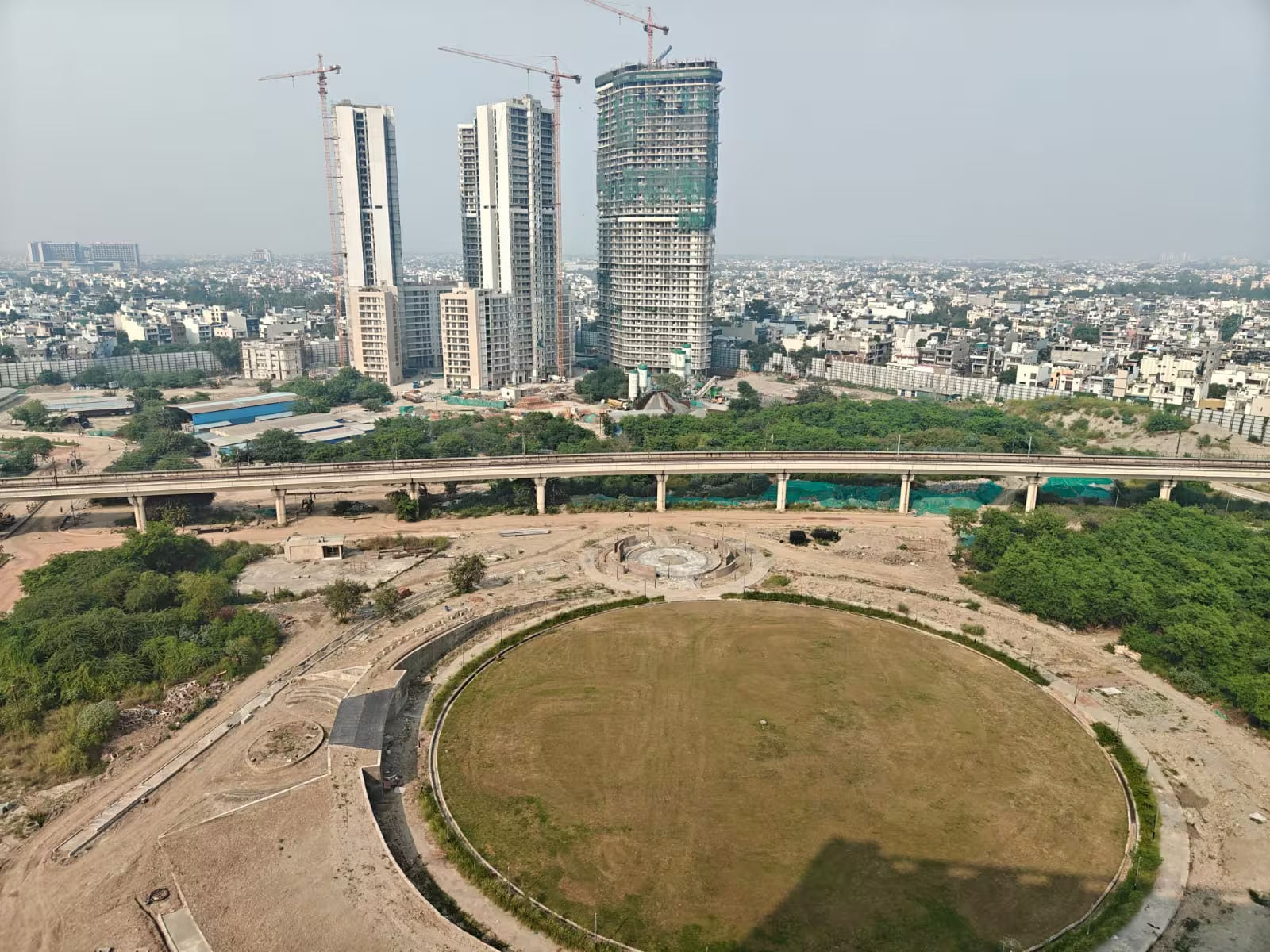
Delhi’s public housing authority has moved ahead with the next stage of a high-density residential project at Karkardooma in East Delhi, adding fresh supply to one of the capital’s most transit-connected urban corridors. The latest rollout expands a premium housing development embedded within a larger transit-oriented district, reflecting a broader shift in how the city plans vertical growth around mass transport infrastructure.
The second phase introduces several hundred new residential units into an area already shaped by metro interchanges, arterial highways and inter-city bus terminals. Urban planners note that such locations are increasingly being prioritised to accommodate growth without extending the city’s physical footprint, a challenge that has long strained Delhi’s land and infrastructure systems. Officials associated with the project indicated that most homes are being offered directly to individual buyers, while a smaller share has been set aside for institutional allocation. The pricing places the homes firmly in the upper end of Delhi’s formal housing market, underlining the authority’s strategy to monetise premium public land to cross-subsidise wider urban development goals. What sets the Karkardooma development apart is its scale and typology. The residential tower rises significantly above surrounding built form, marking a rare instance of true high-rise living within the city’s administrative limits. Industry experts see this as a test case for vertical densification under the Transit-Oriented Development framework, which aims to cluster homes, jobs and services within walking distance of public transport.
The project sits within a multi-hectare hub planned as a mixed-use district, integrating housing with commercial activity and transit facilities. Its location above a major metro interchange connecting multiple lines allows residents to access employment centres across Delhi and neighbouring cities without dependence on private vehicles. Transport economists argue that such integration is essential if Indian cities are to curb congestion and reduce transport-related emissions. From a market perspective, demand for the earlier phase of the project indicated strong appetite for centrally located, well-connected housing despite premium pricing. Analysts suggest that this reflects a post-pandemic preference for legally secure, infrastructure-rich developments over peripheral sprawl, particularly among professional households. However, urban researchers caution that transit-oriented housing must also address inclusivity. While premium units help unlock land value, long-term success of the TOD model depends on a mix of income segments, rental options and everyday services that support diverse urban communities.
As Delhi continues to recalibrate its growth strategy, developments such as Karkardooma will be closely watched for how effectively they balance density with liveability. The coming years will reveal whether vertical, transit-linked housing can meaningfully reshape the city’s carbon footprint, commuting patterns and access to opportunity.
Also Read: Delhi West Housing Search Moves Onto Digital Platforms
Delhi DDA Advances Karkardooma TOD Housing Expansion
