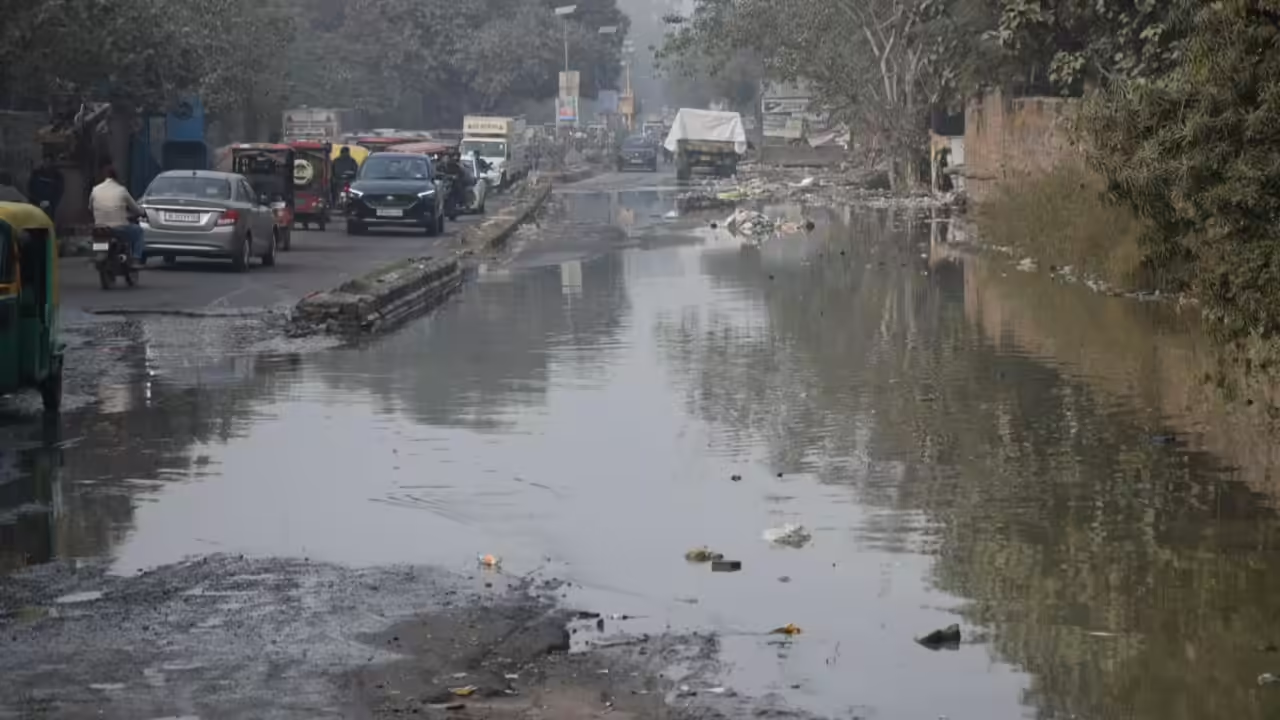
Judicial scrutiny has returned to Delhi’s fragile urban services after the city’s high court directed immediate corrective action to address an open sewer leak in the Shaheen Bagh–Okhla belt. The order places responsibility on the city’s water utility to resolve a long-standing sanitation failure that has disrupted daily movement and raised public health concerns in one of south Delhi’s densely populated neighbourhoods.
The intervention came during ongoing proceedings related to urban flooding and drainage preparedness in the capital. During the hearing, the court took note of field conditions in the Shaheen Bagh area, where untreated wastewater has reportedly been flowing onto a public road, limiting pedestrian access and exposing residents to safety and hygiene risks. The court instructed the water utility to coordinate with other civic agencies to ensure the leakage is contained without delay. Urban infrastructure experts say the case highlights a recurring governance challenge in Indian cities fragmented accountability for underground services. Sewer lines, stormwater drains, and road infrastructure often fall under different authorities, leading to delayed responses even when hazards are visible. In high-density neighbourhoods like Shaheen Bagh, such lapses can quickly escalate into public health emergencies, particularly ahead of the monsoon season.
Officials familiar with the matter indicated that multiple agencies, including the municipal corporation and the road-owning authority, have been asked to jointly inspect the affected stretch and submit an action report to the court. The emphasis, according to observers, is on immediate containment rather than temporary patchwork repairs that fail under seasonal stress. Beyond the immediate sanitation concern, the episode underscores broader risks linked to climate resilience in Delhi’s built environment. Open sewage, combined with uneven road surfaces, increases the likelihood of waterlogging, vector-borne disease, and infrastructure degradation. Urban planners warn that without systematic upgrades to sewer capacity and maintenance regimes, such incidents will continue to surface across informal and formal settlements alike.
The court also reviewed progress reports from various departments on the wider issue of waterlogging across the capital. It directed civic bodies to hold inter-agency coordination meetings to resolve unresolved bottlenecks, signalling judicial impatience with siloed functioning. Analysts note that such coordination is critical as Delhi faces more intense rainfall events driven by changing climate patterns. As the matter returns to court later this month, residents and civic watchers will be looking for evidence of on-ground improvement rather than procedural compliance alone. For neighbourhoods like Shaheen Bagh, the outcome will be measured by whether streets become walkable again and sanitation risks are removed. More broadly, the case reinforces the need for Delhi’s urban utilities to move from reactive fixes to preventive infrastructure planning that places people, health, and environmental resilience at the centre of city management.
Delhi court flags sewer risk in Shaheen Bagh