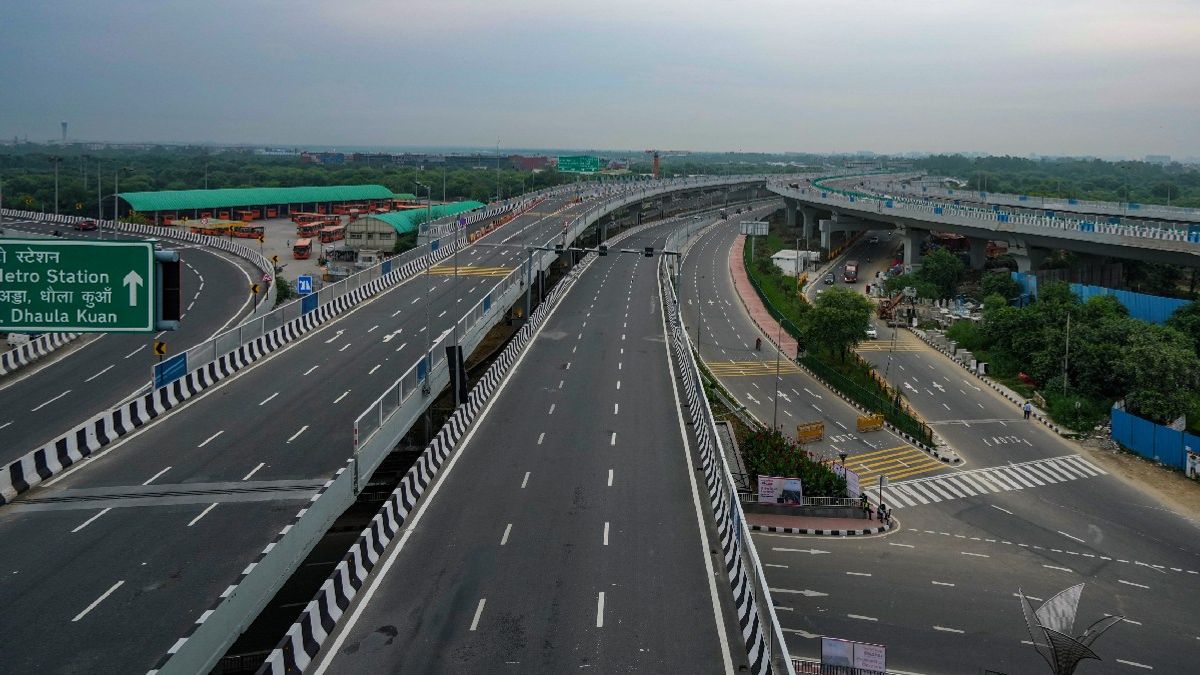
Long-distance road connectivity between eastern Uttar Pradesh and the national capital region is set to improve with plans for a new highway designed to integrate major expressway corridors. The proposed Lucknow Link Expressway will connect the Agra–Lucknow Expressway with the Purvanchal Expressway, enabling vehicles travelling toward Delhi to move through a continuous high-speed road network without passing through crowded urban routes.
Transport officials say the Lucknow Link Expressway will act as a critical missing connector within the state’s rapidly expanding expressway system. The planned corridor, stretching roughly 50 kilometres, is designed as a six-lane access-controlled highway with scope for expansion to eight lanes as traffic volumes grow in the coming years. For commuters and freight operators travelling to Delhi, the project is expected to simplify movement from eastern districts such as Azamgarh, Ghazipur and Mau. At present, vehicles often encounter bottlenecks while transitioning between highways or navigating city traffic before reaching major national routes. The new connector will allow smoother travel from the Purvanchal corridor to the Agra–Lucknow Expressway and onward to routes leading to the Yamuna Expressway and the wider Delhi-NCR region.
Infrastructure planners note that the corridor is being developed as a greenfield expressway built on newly acquired land using modern highway design standards. Controlled entry points, grade-separated interchanges and wider carriageways are intended to ensure uninterrupted high-speed travel while improving road safety. The project carries an estimated investment of nearly ₹4,700 crore and forms part of a broader strategy to create an interconnected expressway grid across Uttar Pradesh. Over the past decade, the state has accelerated highway construction with the aim of linking regional economies through faster road corridors that connect to major metropolitan markets such as Delhi.
Urban economists say such connectivity upgrades often influence economic geography beyond the immediate project area. Delhi’s large consumer market and industrial base make it a central destination for freight from northern and eastern India. By improving road access to the capital region, expressway connectors can shorten delivery times for agricultural goods, manufactured products and e-commerce shipments. For businesses located in eastern Uttar Pradesh, easier access to Delhi’s logistics ecosystem may also encourage the growth of warehousing, food processing and manufacturing clusters along expressway corridors. Real estate analysts note that highway connectivity frequently leads to new logistics parks and industrial estates emerging near key interchanges.
At the same time, planners stress the importance of integrating expressway development with sustainable land-use planning. High-speed highways can accelerate urban expansion if surrounding regions lack coordinated zoning, public transport access and environmental safeguards. With several large highway projects underway across northern India, the Lucknow Link Expressway could play an important role in strengthening the transport relationship between eastern Uttar Pradesh and the national capital region. For Delhi, improved regional connectivity may help streamline freight movement and reduce pressure on congested arterial roads entering the city.
Delhi Corridor Gains Boost From Lucknow Link Expressway