


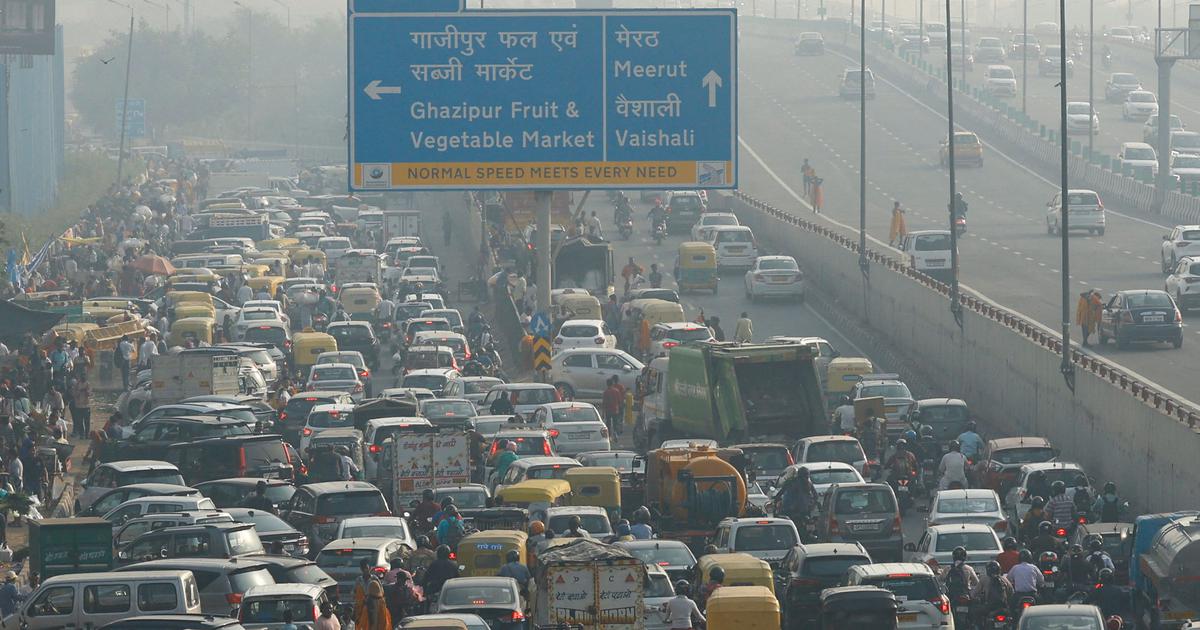
Delhi, India’s bustling capital, is poised for a significant infrastructure overhaul with a monumental Rs 27,000 crore initiative aimed at alleviating its persistent traffic congestion. This ambitious undertaking, a collaborative endeavour between the Delhi and central governments, signals a strategic commitment to optimising urban mobility and fostering a more sustainable metropolitan environment. The National Highways Authority of India is slated to execute six pivotal road projects, spanning 128 kilometres, backed by a substantial fiscal commitment of Rs 23,850 crore, promising a paradigm shift in the city’s transport landscape.
The comprehensive blueprint targets key arterial routes and notorious bottlenecks, promising enhanced connectivity and reduced commuting times across the National Capital Region. A significant component involves a 65-kilometre eastern extension of the Urban Extension Road-II, strategically designed to link the Delhi-Dehradun Expressway with Noida, Ghaziabad, and Faridabad. This extension, alongside a 17-kilometre connector from NH344M to Tronica City, is anticipated to streamline inter-city movement, diverting heavy traffic and mitigating pollution hotspots, thereby contributing to cleaner air and a healthier urban ecosystem.
Further enhancing the city’s infrastructure is a proposed 5-kilometre underground tunnel, connecting the Dwarka Expressway to Nelson Mandela Marg. This subterranean passage is specifically engineered to decongest the perennially jammed Dhaula Kuan and Rao Tula Ram Marg corridors, offering a smoother, more predictable commute for thousands daily. Such targeted interventions are crucial not only for traffic flow but also for reducing vehicle idling, a major contributor to carbon emissions, aligning with the city’s net-zero aspirations.
A 20-kilometre elevated corridor from AIIMS to Faridabad Road stands as another cornerstone of this initiative, set to dramatically reduce congestion on NH48 and bolster connectivity across central and south Delhi. Elevated structures, when designed with foresight, can free up ground-level space for pedestrian pathways, cycling tracks, and green spaces, promoting equitable access and encouraging active, eco-friendly modes of transport. The plan also incorporates the vital Delhi-Amritsar-Katra Expressway extension and the Kalindi Kunj Interchange, critical for regional connectivity and seamless intra-city movement.
Officials have underscored the imperative of seamless coordination between the Centre and the state government, with the Delhi administration assuming responsibility for critical aspects such as permissions, land acquisition, and traffic diversions. This synergistic approach is expected to significantly enhance project efficiency, curtail potential delays, and ultimately deliver substantial dividends for public infrastructure development. The emphasis on timely execution and collaborative governance is paramount to realising the full socio-economic and environmental benefits of this monumental investment.
This infrastructure drive transcends mere traffic management; it represents a foundational step towards building a more resilient, accessible, and environmentally conscious Delhi. By prioritising projects that reduce congestion, minimise emissions, and potentially create opportunities for green infrastructure, the city is laying the groundwork for a future where urban development is intrinsically linked to ecological stewardship and enhanced quality of life for all its inhabitants. The success of this initiative will serve as a blueprint for sustainable urban planning in other rapidly growing Indian metropolises.
Also Read :Pune Zilla Parishad Plans to Convert Junnar and Baramati Wadas into Heritage Homestays
