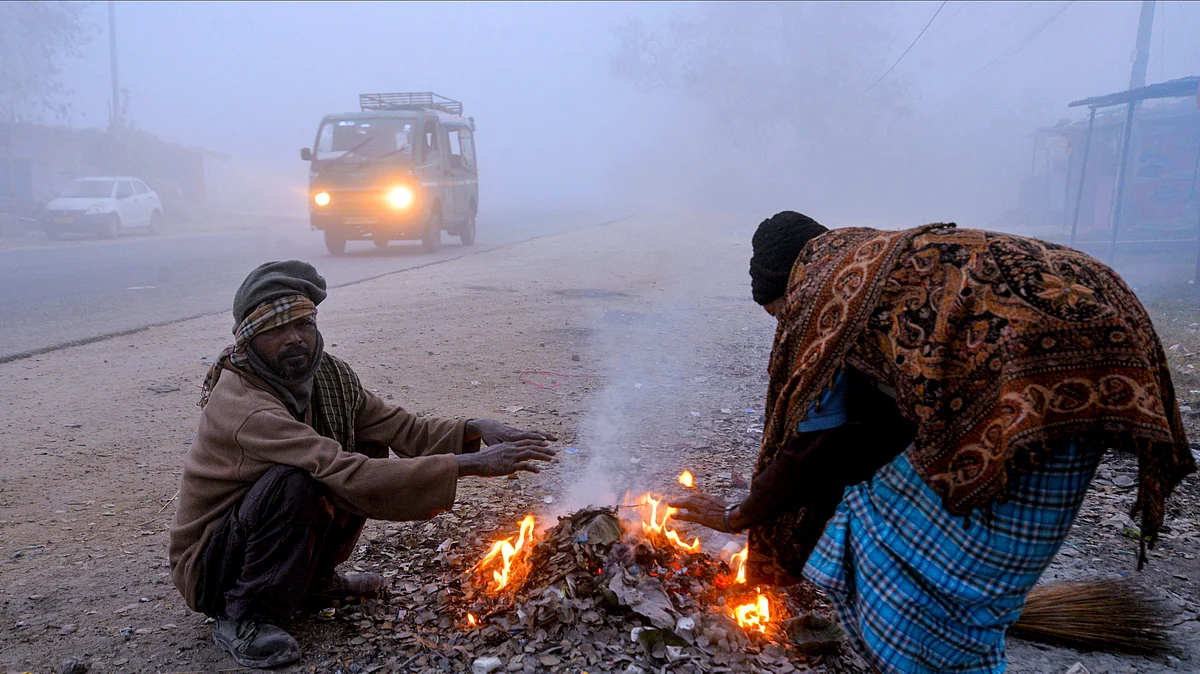
Delhi is continuing to experience intense winter conditions as the Delhi cold wave grips the national capital, with temperatures dropping well below seasonal averages and visibility disruptions affecting transport and daily urban activity. Weather authorities reported that early morning temperatures remained unusually low even as a slight increase was recorded midweek, signalling that harsh winter conditions may persist for several more days. According to meteorological assessments, minimum temperatures in the city hovered close to 4°C during the early hours, remaining several degrees below the normal seasonal range. Forecasts suggest that the Delhi cold wave is likely to continue across multiple parts of the city for the next few days before a gradual warming trend begins later in the week.
Weather specialists say cold waves in northern Indian cities often intensify when clear skies combine with calm winds, allowing surface heat to escape rapidly overnight. In dense urban regions such as Delhi, these conditions can create sharp temperature fluctuations between day and night, affecting both vulnerable populations and urban infrastructure operations. Authorities indicated that daytime temperatures are expected to stay within the typical winter range of roughly 19°C to 21°C. However, night-time conditions are forecast to remain significantly cooler than normal, particularly in areas with open land or limited built-up heat retention. Such weather patterns frequently contribute to frost-like conditions in surrounding regions and can intensify urban air stagnation. The continuing Delhi cold wave has also contributed to fluctuating fog conditions during morning hours, reducing visibility at times and affecting aviation schedules at regional airports serving the National Capital Region. Travel authorities have advised passengers to check flight schedules before departing for terminals, as dense fog can lead to operational delays or slower turnaround times for aircraft.
Public health specialists warn that sustained exposure to severe winter conditions increases the likelihood of seasonal illnesses such as respiratory infections, cold-induced fatigue, and nose or throat irritation. In urban environments where air quality is already a concern during winter months, colder weather can further aggravate respiratory conditions by trapping pollutants closer to ground level. Urban planners and climate researchers note that extreme winter episodes highlight the importance of resilient city infrastructure, including shelters for vulnerable communities, efficient public transport operations during low-visibility conditions, and adequate emergency health preparedness. As cities continue to expand, managing weather-related risks has become a key component of climate-resilient urban governance. Meteorological projections indicate that minimum temperatures across Delhi could gradually rise by several degrees over the next five days. If this trend materialises, the current Delhi cold wave is expected to weaken, bringing more stable winter conditions across the capital.
Until then, authorities are urging residents to take precautions against prolonged cold exposure while urban services continue operating under winter preparedness protocols designed to minimise disruption during extreme seasonal weather.