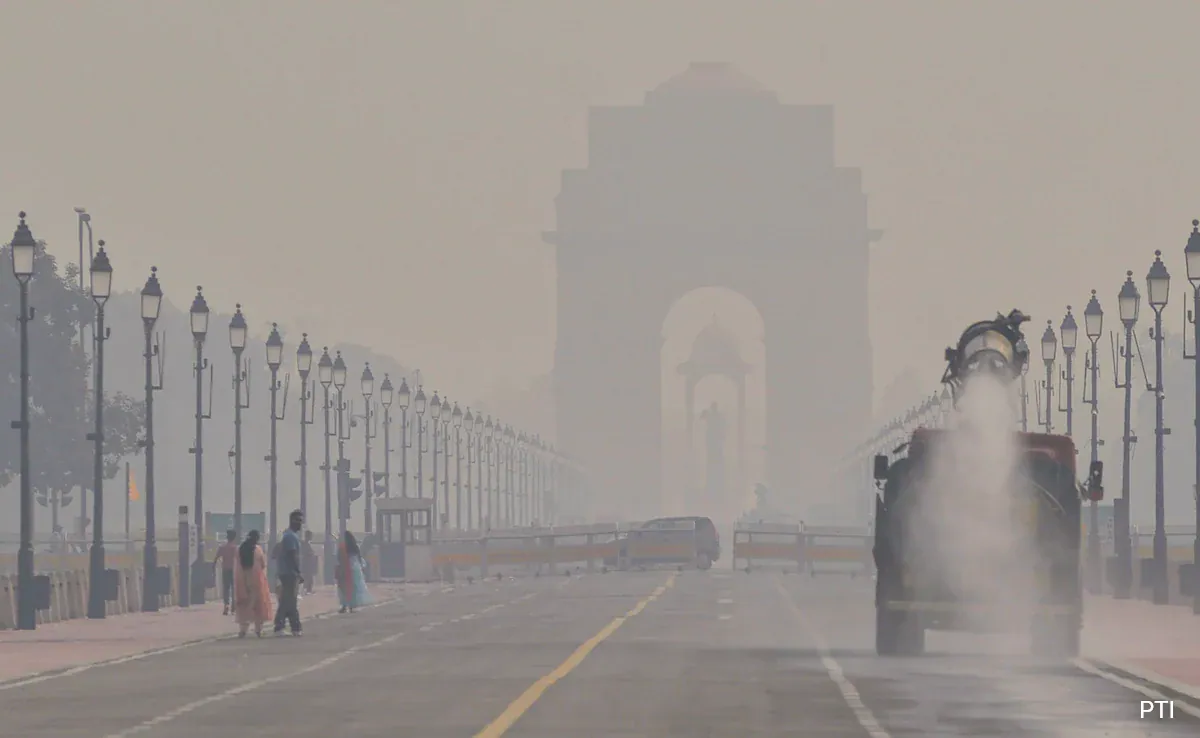
Delhi entered another cold January morning with air quality lingering in the “poor” range, underscoring how winter weather patterns continue to shape daily life, public health and urban productivity in the capital. For the second consecutive day, temperatures stayed well below seasonal averages, while pollution levels showed only marginal improvement highlighting the fragile balance between meteorology and emissions in one of the world’s fastest-growing cities.
Weather officials have indicated that cold day conditions are likely to persist through the end of the week, with daytime temperatures struggling to rise despite largely clear skies. Maximum readings have hovered in the mid-teens, significantly lower than normal for early January, while night-time temperatures have remained slightly above long-term averages. This unusual split has limited atmospheric mixing, preventing pollutants from dispersing efficiently. Morning visibility has also been affected, with shallow fog reported in parts of the city. Though not severe enough to disrupt routine operations across the board, reduced visibility reflects the broader winter stagnation that often traps particulate matter close to the ground. Environmental analysts note that even moderate fog combined with low wind speeds can prolong pollution episodes, particularly during peak traffic hours.
Air quality data from national monitoring agencies showed Delhi’s average Air Quality Index remaining near the upper end of the “poor” category. While this marks a modest improvement from earlier in the week, experts caution that such gains are often temporary during winter. Residential heating, vehicle emissions and construction activity continue to contribute to particulate levels, especially when colder air limits vertical dispersion. For the city’s workforce, these conditions have tangible economic implications. Cold days accompanied by poor air quality can reduce outdoor productivity, increase health-related absenteeism and place additional strain on healthcare services. Urban economists point out that even short-lived pollution spikes can carry hidden costs for businesses, particularly in sectors reliant on informal labour and outdoor activity.
From an infrastructure perspective, the episode reinforces the importance of climate-responsive urban planning. Delhi’s winter pollution is not solely a weather issue but a systemic challenge tied to land use, transport design and energy choices. Planners argue that improving public transport electrification, strengthening dust control at construction sites and expanding green buffers can reduce the city’s vulnerability to seasonal pollution traps.Meteorological projections suggest a brief moderation in temperatures around mid-January, followed by another dip soon after. Such fluctuations are becoming increasingly common, complicating forecasting and response planning. As climate variability intensifies, cities like Delhi must prepare for longer periods of environmental stress rather than isolated events.
Looking ahead, the persistence of cold days and poor air quality serves as a reminder that resilience is built through coordination between weather forecasting, pollution control and urban governance. Incremental improvements in air quality will depend not only on favourable winds or temperature shifts, but on sustained investments that align growth with cleaner, healthier urban living.
Delhi cold spell strains air quality gains