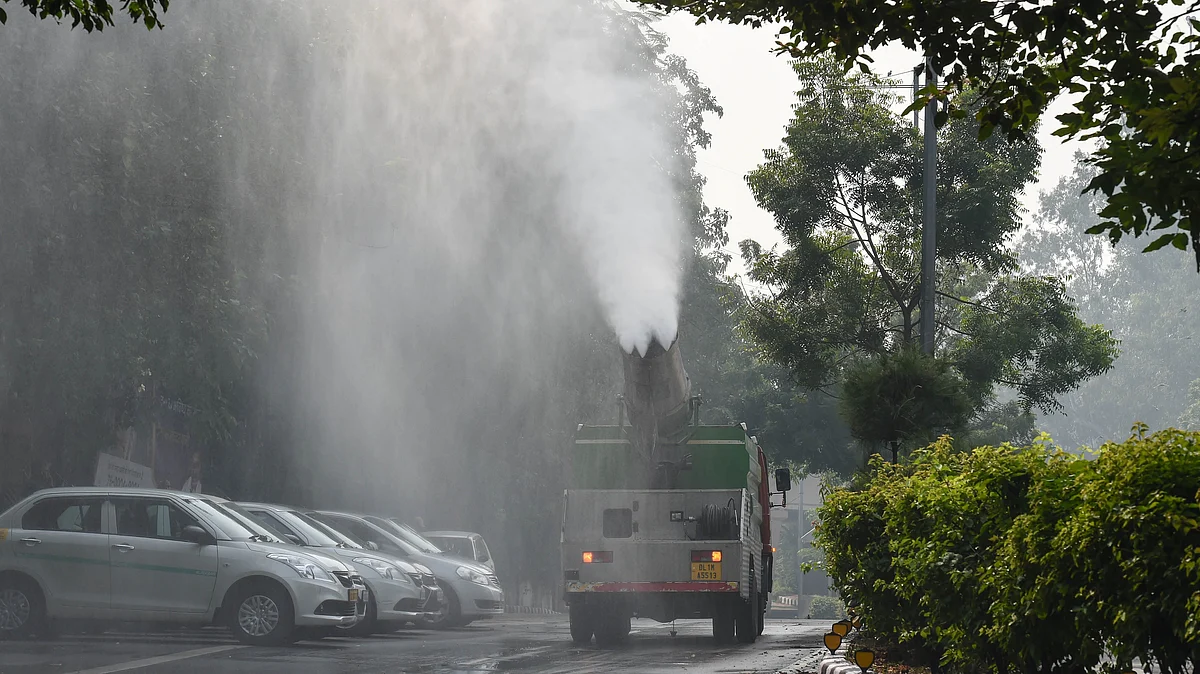
Delhi’s construction-related air pollution has come under renewed scrutiny after the Chief Minister cautioned the city’s transport agencies over persistent dust emissions at Metro Rail project sites. During a high-level review meeting on Friday, the government warned that non-compliance with dust-mitigation protocols could invite strict action, underscoring the capital’s broader push for cleaner, more sustainable urban development.
Officials from the Metro Rail Corporation and key departments of the Delhi Government were directed to follow mandatory dust-suppression measures, including covering loose construction materials, ensuring regular water spraying, and preventing soil run-off onto surrounding roads. The Chief Minister noted that the city continues to receive complaints about unmitigated dust plumes at active Metro construction zones, despite established guidelines intended to safeguard public health. Senior government representatives present at the meeting observed that incomplete post-construction restoration such as unrepaired footpaths, broken road sections and uncleared debris often contributes to prolonged dust exposure for pedestrians, nearby residents and c ommuters. According to officials, such practices not only heighten pollution but also disrupt mobility in neighbourhoods that depend on safe walking and cycling links. The Chief Minister added that even beneath elevated Metro corridors, litter accumulation suggests a lack of coordinated upkeep.
Urban planners say the incident draws attention to the wider challenge of integrating infrastructure building with environmental governance. Large-scale public transport systems such as the Metro are central to Delhi’s ambition to curb emissions and shift commuters towards low-carbon mobility. However, experts argue that construction processes themselves must align with these sustainability goals. “If eco-friendly mobility infrastructure leads to pollution during construction, the long-term benefits risk being undermined,” noted one transport consultant.In response to concerns, Metro officials briefed the government on ongoing steps being taken to improve compliance, including upgraded monitoring systems and newer dust-control technologies. The Chief Minister, however, stressed the need for consistent implementation across all sites and insisted that no project should compromise air quality, particularly during winter months when pollution levels typically spike. She also announced plans to conduct surprise inspections to assess on-ground conditions.
Environmental specialists note that stringent construction practices—such as barricading, mechanised sweeping, and real-time air quality tracking—are now standard across several global cities pursuing net-zero pathways. For Delhi, where transport infrastructure plays a pivotal role in shaping urban growth, ensuring environmentally responsible construction is crucial for public health and for building trust in large civic projects.The government reiterated that all agencies, including municipal bodies and public works departments, will be held accountable for pollution caused due to negligence. As Delhi continues to expand its public transport network, the administration emphasised that infrastructure delivery must support, rather than contradict, the city’s vision for cleaner, more equitable and climate-responsive urban living.
Delhi CM Warns DMRC Of Action For Flouting Dust Control Norms