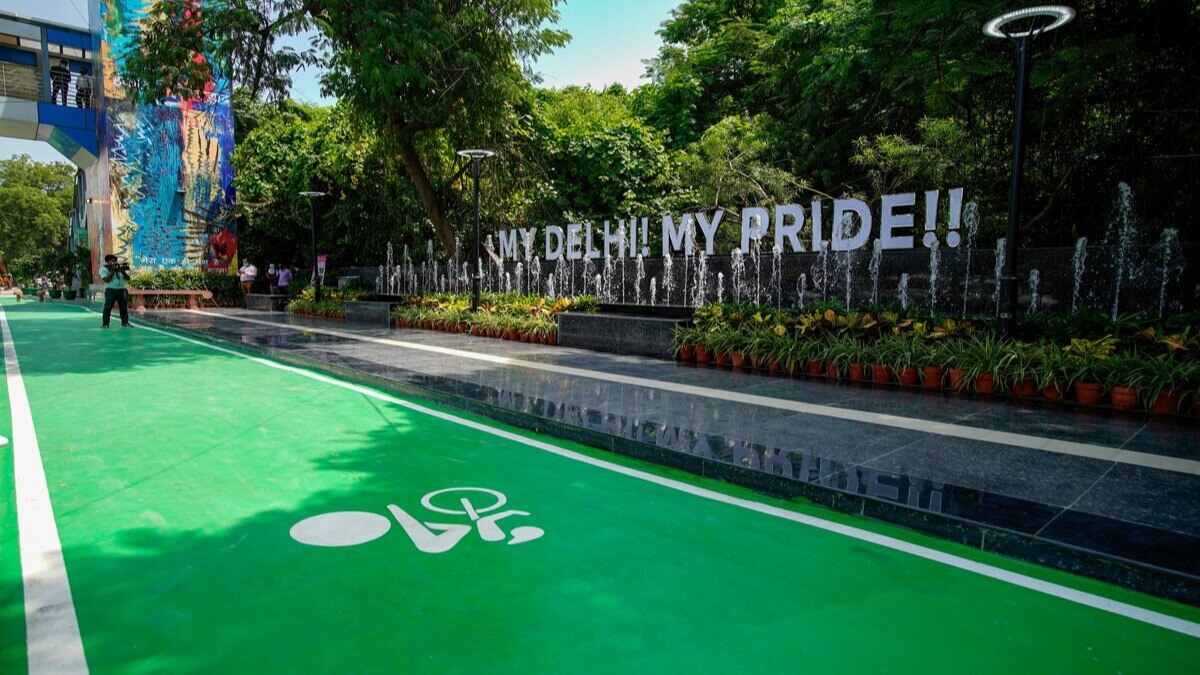
New Delhi is set for a rapid, citywide public realm upgrade as municipal authorities roll out an accelerated programme to enhance green spaces, streetscapes, lighting and civic infrastructure across key neighbourhoods. The initiative, scheduled for completion by the end of January, reflects a broader effort to improve everyday urban liveability while addressing long-standing deficits in maintenance, cleanliness and public safety in the national capital.
The plan focuses on high-footfall corridors, markets and public spaces, where environmental stress and ageing infrastructure have eroded quality of life. Municipal officials say the programme aims to balance quick-impact improvements with longer-term sustainability goals, particularly around urban greening, waste management and pedestrian safety. A major component involves expanding green cover through the planting of non-thorny flowering species in prominent parks and along market roads. In parallel, vertical gardens are being introduced on metro pillars, flyovers and bridge columns at busy junctions across south and central Delhi. Urban planners view such interventions as cost-effective ways to improve microclimates, reduce dust and soften the visual impact of dense infrastructure in land-constrained areas.
Public water features, many of which have remained non-functional for years, are also being restored in large parks and recreational spaces. Officials note that working fountains not only enhance public spaces but also contribute marginally to local cooling, an increasingly important factor as Delhi faces more frequent heat extremes. Waste and cleanliness measures form another pillar of the drive. Thousands of new litter bins are being deployed, while extensive cleaning of road medians, dividers and footpaths is underway. Informal garbage collection points along major corridors are being removed to improve hygiene and pedestrian movement. Experts say consistent waste management is critical to protecting drainage systems, particularly ahead of the monsoon season.
The programme also includes targeted road and footpath repairs, addressing damaged surfaces, unsafe manholes and broken paving that disproportionately affect pedestrians, senior citizens and people with disabilities. Improved walkability is increasingly linked to both public health outcomes and reduced dependence on private vehicles.
Electrical and lighting upgrades round out the initiative. Overhead cables are being rationalised in heritage precincts and older commercial districts, while illumination levels are being enhanced in parks, civic centres and tourist-heavy zones. Better lighting is widely recognised as a low-cost intervention that improves safety, extends usable public hours and supports evening economic activity. Urban policy specialists caution that while short-term beautification can deliver visible gains, sustained impact will depend on maintenance, inter-agency coordination and community stewardship. If implemented effectively, the current push could offer a template for people-first urban upgrades where cleaner streets, safer public spaces and greener infrastructure reinforce both environmental resilience and economic vitality.
Delhi Civic Drive Targets Greener Streets by January