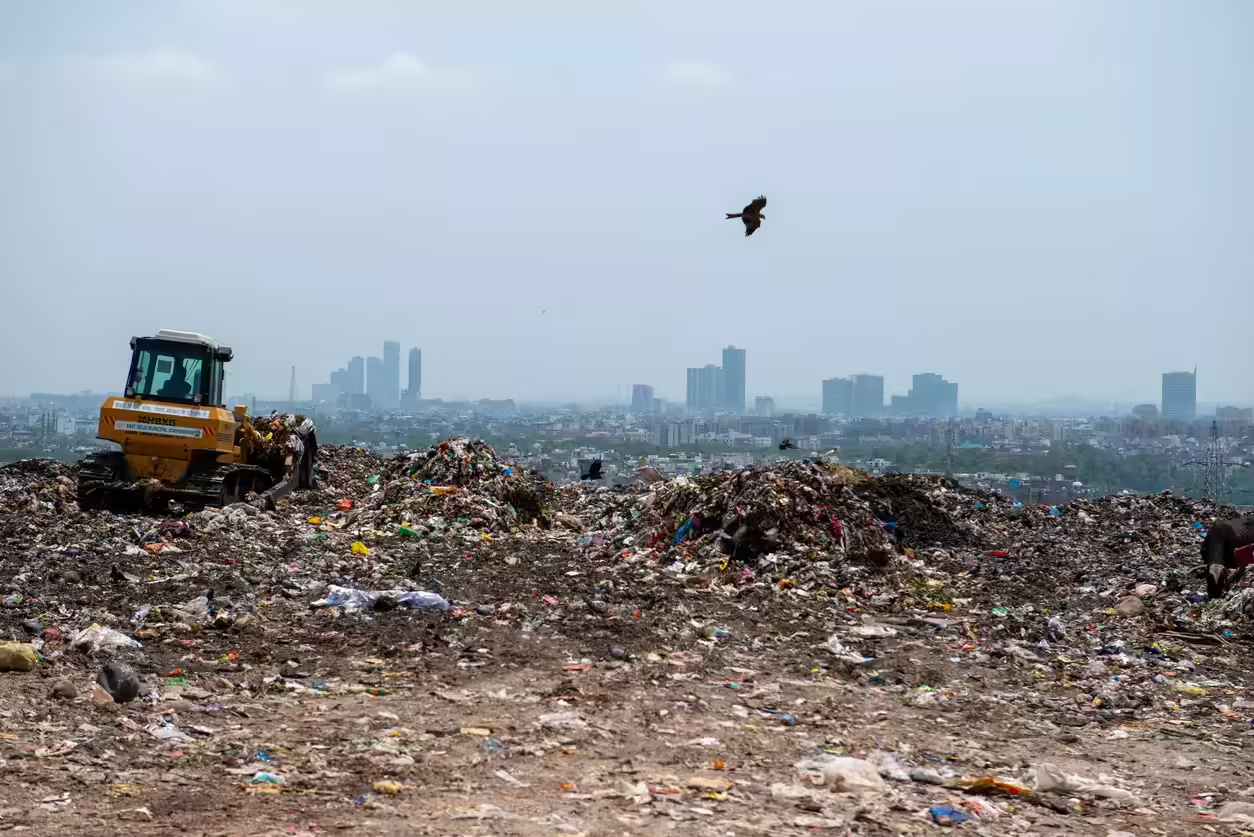
Delhi Civic Body Plans New Waste Management Contracts
Delhi’s municipal administration is preparing to overhaul sanitation operations across several key neighbourhoods as it moves closer to appointing private concessionaires to manage waste services in three major zones of the capital. The proposed contracts, estimated at nearly ₹2,939 crore, are expected to transform the way solid waste, green waste and drain silt are handled across South, Central and West Delhi, regions that collectively host dense residential clusters and significant commercial activity. Officials involved in the process said the civic authority has completed the tender evaluation stage and has now placed the proposal before its Standing Committee for approval. Once cleared, the selected concessionaires will be responsible for integrated waste collection and transportation services for a seven-year period. The move is intended to restore stability in municipal waste operations after several years of interim arrangements and contract extensions.
The planned waste management contracts come at a time when sanitation services in several parts of the capital have struggled with operational uncertainty. Previous service providers continued under temporary extensions after long-term agreements expired, and in some cases short-term stop-gap tenders were issued to prevent service disruptions. Civic officials acknowledged that these temporary measures affected fleet availability, manpower deployment and equipment maintenance, leading to visible gaps in daily waste collection. Under the proposed model, a single concessionaire in each zone will manage a broader scope of services than earlier arrangements. In addition to door-to-door collection of municipal solid waste, the agency will be tasked with removing green waste generated from gardens and trees as well as transporting silt extracted from stormwater drains. Municipal administrators say the consolidation of responsibilities is designed to minimize coordination gaps that often occur when multiple contractors operate across overlapping jurisdictions. The framework also introduces stronger monitoring mechanisms.
Agencies will be required to operate dedicated customer support centers to handle sanitation complaints and establish digital platforms where residents can register service requests or report waste-related concerns. In addition, surveillance systems equipped with infrared-enabled cameras are proposed at waste transfer facilities to track vehicle movement and ensure operational transparency. Urban planners note that improving waste management contracts is essential for a city of Delhi’s scale, where daily municipal waste generation runs into thousands of tons. Efficient collection and transport systems are critical not only for maintaining public hygiene but also for supporting downstream waste processing infrastructure such as composting plants, recycling centers and waste-to-energy facilities. Experts also highlight that reliable sanitation services play a vital role in creating healthier and more climate-resilient cities. Better waste segregation, streamlined logistics and improved monitoring can reduce landfill dependency and lower environmental risks associated with unmanaged waste.
If approved, the new contracts could mark a turning point for municipal waste management in the capital. Officials say the objective is to create a more accountable, technology-enabled system capable of meeting the sanitation demands of a rapidly growing urban population.