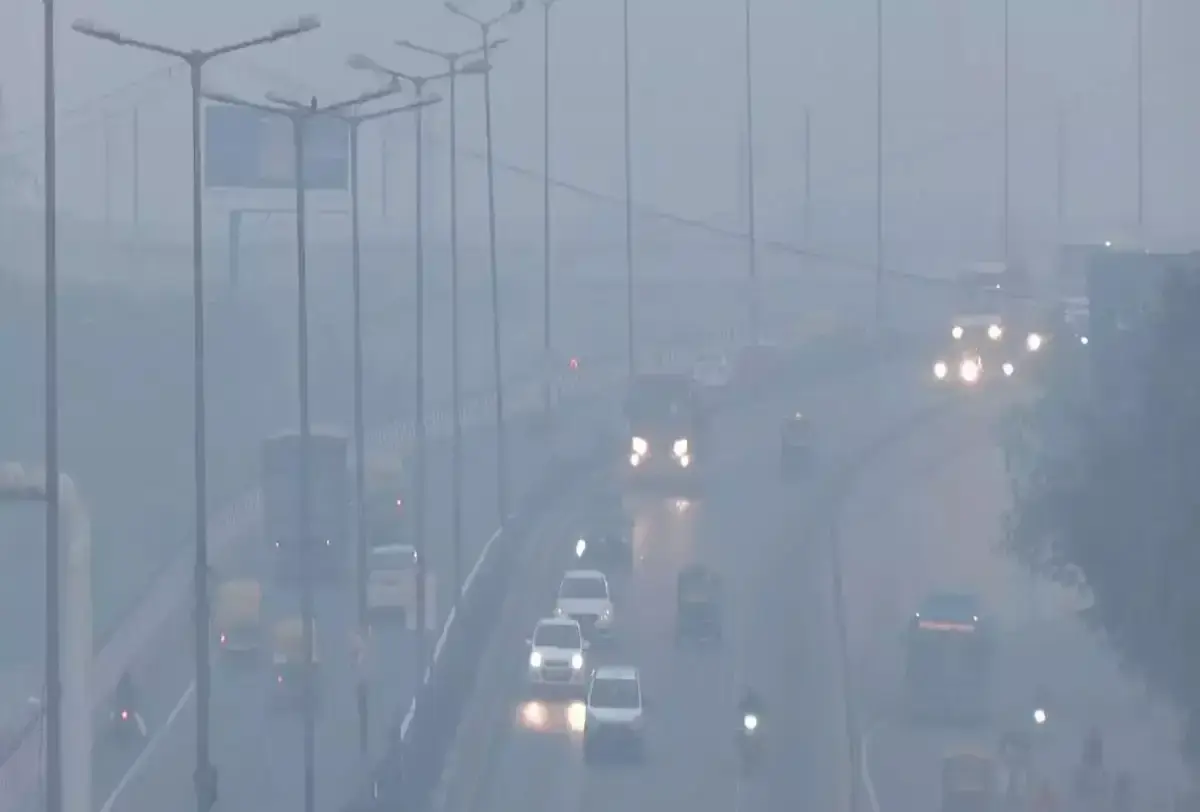
Delhi began Wednesday under a heavy blanket of smog, with the city recording an Air Quality Index (AQI) of 376 at dawn firmly in the “Very Poor” bracket. Several neighbourhoods slipped further into the “Severe” range, reviving long-standing concerns about winter pollution, rising health risks, and the capital’s slow progress toward building a cleaner, climate-resilient metropolitan region.
Real-time data from the Central Pollution Control Board showed sharp spatial disparities, though all pointed to dangerous levels of particulate concentration. Prominent public spaces such as India Gate and Kartavya Path were shrouded in smog, with monitors reading in the mid-350s. Peripheral and residential zones fared no better: Alipur, Aya Nagar and Dwarka logged readings well above 350, signalling that pollution is no longer a problem limited to congestion-heavy corridors but a citywide phenomenon.
Several northern and central clusters breached the 400 mark classified as “Severe” with Anand Vihar, Ashok Vihar, Chandni Chowk and Jahangirpuri emerging as critical hotspots. According to an official familiar with the air quality assessment, “the winter inversion layer, vehicular emissions, biomass burning and stagnant winds are jointly driving the spike, overwhelming existing mitigation measures.”Experts say the numbers are neither surprising nor temporary. Winter pollution in Delhi has remained entrenched due to a combination of planning gaps, delayed clean mobility transitions, and limited coordination across municipal and regional agencies. Urban planners argue that the recurrent crisis reflects structural issues high dependence on private transport, inadequate last-mile connectivity, and dense construction activity without adequate dust control mechanisms.
For residents, the impact is immediate and tangible. Doctors report a seasonal surge in respiratory discomfort among children, senior citizens, and people with chronic lung or heart conditions. However, the current AQI levels pose risks even to healthy individuals after prolonged exposure. Public health specialists warn that such conditions compromise workplace productivity, increase healthcare costs, and disproportionately affect outdoor workers, who face the brunt of long-term exposure.The situation also underscores the social and economic cost of delayed environmental action. Industry experts emphasise that urban centres aiming for sustainable, inclusive, and net-zero development cannot treat clean air as a seasonal issue. “Air quality must be a year-round governance priority anchored in mobility reform, green infrastructure, and energy transition,” noted a climate policy analyst.
City authorities have expanded restrictions under graded response mechanisms in recent winters, but analysts believe the long-term solution lies in reducing emissions at source accelerating electric mobility, redesigning freight movement, expanding public transit, and enforcing strict industrial norms. As Delhi pushes for more equitable, low-carbon urban development, the recurring winter smog serves as a reminder that clean air is not merely an environmental goal but a foundational element of a liveable, healthy city.
Delhi Chokes With AQI 376 As Widespread Smog Pushes Pollution Levels Higher