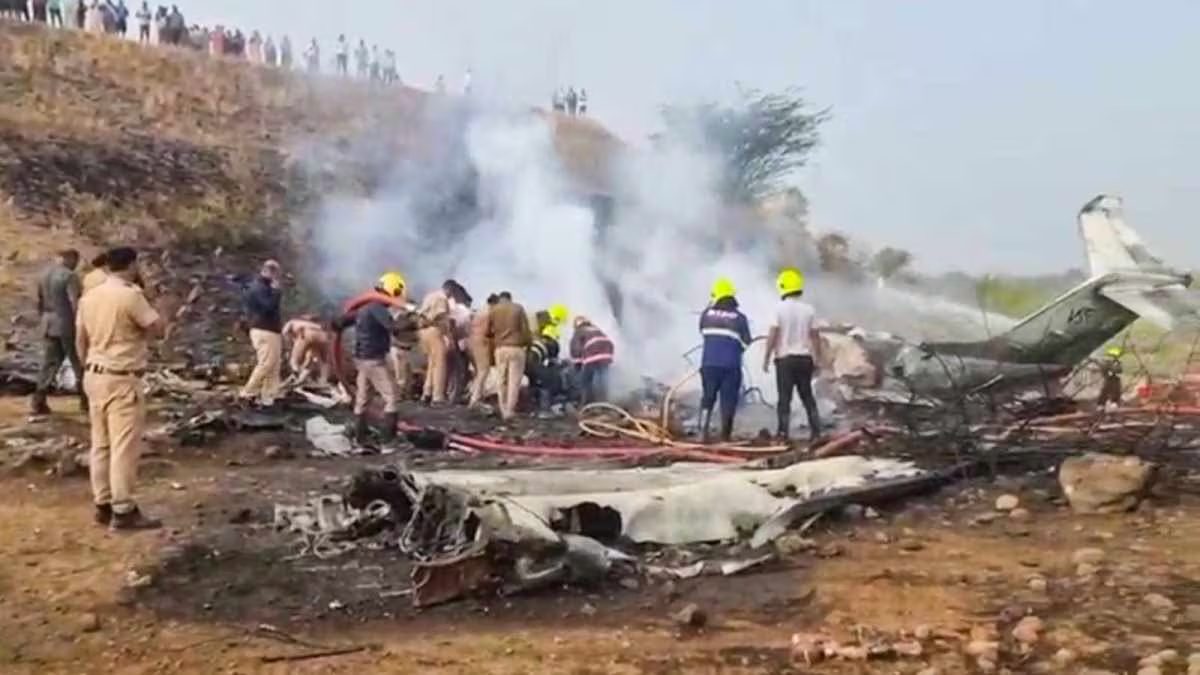
A business jet operated by a Delhi-based charter aviation company crashed near Baramati on Wednesday morning, killing Maharashtra Deputy Chief Minister Ajit Pawar and four others on board. The accident, involving a non-scheduled flight originating from Mumbai, has triggered a high-level aviation safety investigation and placed renewed focus on Delhi’s rapidly expanding private charter sector.
Flight tracking records show the aircraft remained airborne for roughly 35 minutes before disappearing from radar while approaching Baramati airport. Aviation experts familiar with flight operations say the aircraft appeared to be manoeuvring to align with the runway during descent a phase that demands precise coordination between crew, aircraft systems, and ground infrastructure. All occupants, including two pilots, a security officer and an attendant, were killed in the crash, according to preliminary regulatory information.
India’s civil aviation regulator has classified the incident as a serious accident, with the Aircraft Accident Investigation Bureau expected to lead the inquiry. Officials indicated that investigators will examine aircraft maintenance history, pilot training records, operational approvals, and airport preparedness, alongside weather and navigation data. Given the aircraft’s Delhi registration and operator base, regulatory scrutiny is also expected to extend to oversight mechanisms governing charter fleets headquartered in the national capital. The jet involved was a mid-size business aircraft widely used for executive travel across India.
Such aircraft form a critical, though lightly visible, layer of India’s transport infrastructure particularly for political leadership, corporate executives, and emergency medical services. Delhi has emerged as the country’s principal hub for non-scheduled aviation, hosting a significant share of charter operators that manage fleets across multiple states.Urban infrastructure analysts note that the growth of charter aviation has outpaced regulatory and safety capacity, especially as demand rises for point-to-point travel linking metros with smaller regional airports. “Private aviation now plays a functional role in governance and regional access,” said an aviation policy expert. “But safety systems, airport readiness, and operator accountability must keep pace with that growth.”
The Ajit Pawar plane crash also highlights broader questions around regional airport infrastructure. Smaller airports increasingly serve high-stakes travel but often lack the layered safety redundancies seen at major hubs. For cities and districts positioning aviation as an economic enabler, ensuring resilient runways, trained ground staff, and emergency response systems is becoming a core urban governance challenge. Beyond safety, the incident raises environmental and planning considerations. Charter aviation carries a higher per-passenger carbon footprint, underscoring the need for stricter operational efficiency and sustainability norms as India expands its aviation footprint. As investigators work to establish the precise cause of the Ajit Pawar plane crash, the findings are expected to influence policy discussions on Delhi’s charter aviation oversight, pilot duty regulations, and the integration of safety governance into India’s regional development strategy.
Delhi Charter Aviation Under Lens After Crash