


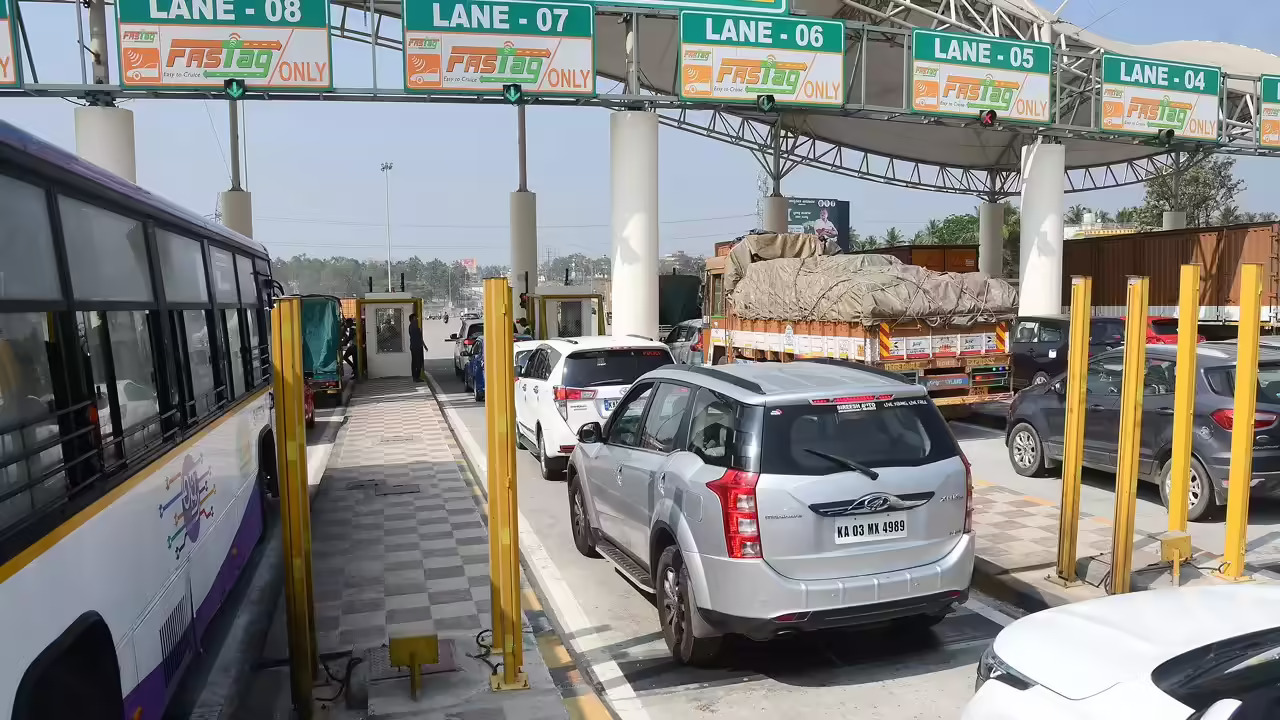
The Delhi-Chandigarh highway is emerging as a national benchmark for the adoption of the new FASTag Annual Pass, with nearly 30% of private cars now utilising the scheme. This figure is a staggering three times higher than the national average, signalling strong user confidence and a positive step towards modernising India’s highway infrastructure. The pass, which offers frequent commuters a more cost-effective and convenient way to travel, is not only simplifying toll payments but also driving a broader conversation about accountability and the long-term sustainability of the country’s road network. The success of this initiative underscores a growing public demand for transparent and efficient mobility solutions that align with the goals of creating eco-friendly and equitable cities.
The high uptake of the annual pass on the Delhi-Chandigarh route demonstrates a clear market endorsement for the new tolling model. Officials are optimistic that this trend will continue, with expectations that the number of annual passes sold will reach the one million mark soon. This scheme is a direct response to the needs of regular highway users, offering a financial incentive that makes high-frequency travel more economically viable. From a sustainability perspective, a smooth-flowing, automated toll system like FASTag helps reduce vehicle idling time at toll plazas, which directly contributes to lower fuel consumption and a reduction in vehicular emissions, thus supporting a zero-net-carbon agenda.
This success is intrinsically linked to a new paradigm of accountability being championed at the highest levels of the government. In a recent forum, the Union Minister for Road Transport and Highways emphasised that tolling should be directly proportional to the quality of service provided. He underscored the need for authorities like the National Highways Authority of India (NHAI) to ensure that roads are in prime condition, stating that without good service, toll charges lose their legitimacy. To enforce this, he has directed his ministry to display details of contractors and officials, along with the defect liability period for each highway section, making them directly answerable for the quality of their work. This is a crucial step towards fostering transparency and holding all stakeholders accountable for the entire project lifecycle.
The importance of forward-thinking and comprehensive planning was highlighted through a case study of the Gurugram-Delhi stretch of NH-48. An official noted that the original highway project report failed to anticipate future challenges and the critical need for safe pedestrian and vehicular crossings to connect a city that the highway divides. This oversight resulted in significant extra expenditure and operational hurdles, demonstrating the high cost of inadequate foresight in infrastructure development. Such examples reinforce the need for a holistic approach to highway planning that considers not only engineering parameters but also social, environmental, and urban connectivity aspects to create truly sustainable and equitable cities.
Ultimately, the high adoption of the FASTag Annual Pass and the government’s renewed focus on accountability are part of a larger, systemic shift. It is a transition from merely building roads to developing a world-class, integrated transport network that is both efficient and socially responsible. The financial viability of these mega-projects is being linked to performance metrics, ensuring that the public receives the value it pays for. By promoting schemes that ease the financial burden on commuters and simultaneously demanding higher standards from developers, the government is fostering a more robust, transparent, and user-centric highway ecosystem. This evolution is a crucial step towards building the smart, sustainable, and connected India of the future.
Also Read :Gurugram to Get New Bus Depot at Sector 103 to Boost Dwarka E-way Connectivity
