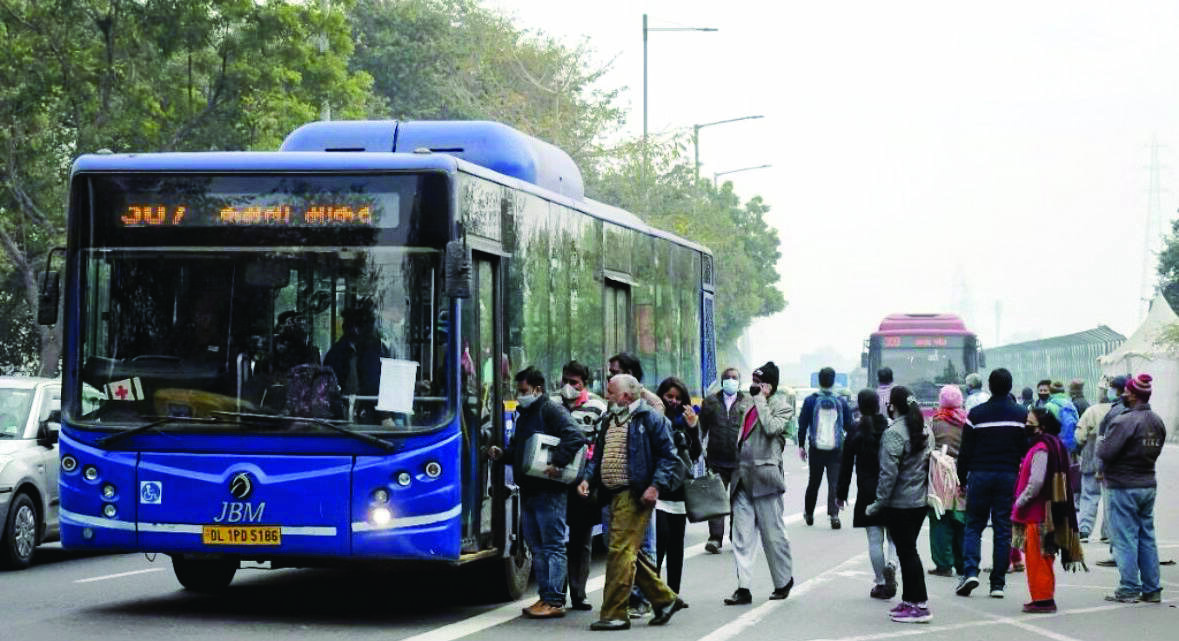
Delhi Bus Ridership Decline Raises Urban Mobility Concerns
Public bus usage in the national capital has recorded a notable decline over the past five years, even as the number of vehicles on the road has increased, raising questions about the effectiveness of current urban mobility strategies. The latest government data shows a nearly 20 per cent drop in daily passengers using city buses since 2019–20, highlighting a widening gap between infrastructure expansion and commuter demand. The trend in bus ridership decline is particularly significant given the central role buses play in Delhi’s transport ecosystem as one of the most affordable modes of travel. Daily passenger numbers have fallen sharply across both publicly operated and privately managed services, despite modest growth in fleet size. This suggests that factors beyond capacity—such as service reliability, route planning and commuter convenience—are influencing travel behaviour.
Urban mobility experts point out that increasing the number of buses alone does not necessarily translate into higher usage. Connectivity gaps, especially at interchange points, often result in longer waiting times and multiple transfers, discouraging commuters. In a city where time reliability is critical for daily travel, inefficient route integration can outweigh the benefits of low fares or expanded fleets. The bus ridership decline also comes despite policy interventions aimed at encouraging public transport use, including fare incentives and targeted subsidies. While such measures have improved affordability and inclusivity, particularly for women and lower-income groups, they appear insufficient to address operational challenges such as unpredictable schedules, inadequate passenger information systems and underdeveloped bus stop infrastructure. At the same time, the city has made progress in transitioning towards cleaner transport. The electric bus fleet has expanded rapidly in recent years, supported by new depot infrastructure and charging facilities. This shift aligns with broader climate goals to reduce emissions from the transport sector, which remains a major contributor to urban air pollution.
However, experts caution that environmental gains must be accompanied by improvements in service quality to attract and retain ridership. Some performance indicators show positive movement. Road safety outcomes have improved, with fewer reported incidents involving buses, and inter-city connectivity has expanded through additional routes. Yet, these gains have not translated into increased passenger volumes, underscoring the complexity of urban transport systems. For city planners, the bus ridership decline signals the need for a more integrated approach that combines fleet expansion with better route rationalisation, real-time information systems and improved last-mile connectivity. Investments in bus shelters, seamless interchanges and digital tracking tools could enhance commuter confidence and make public transport more competitive with private modes.
As Delhi continues to grow, strengthening its bus network will remain essential for equitable and sustainable mobility. The challenge now lies in ensuring that infrastructure investments are matched by operational efficiency and user-centric design, enabling buses to remain a viable backbone of the city’s transport future.